Best Cooling Gel Foam in 2026 What Should Buyers Look For?
Cooling gel foam is often marketed as a simple fix for sleeping hot. It may help, but it cannot promise a cool night for everyone. Room temperature, bedding, body shape, and personal comfort all matter. A mattress that feels cool in a showroom may feel different after several hours at home.
What should buyers look for in 2026? Start with the foam’s feel, support, and construction. Check whether cooling comes from gel, breathable cover fabric, ventilation, or a combination. These features can influence heat retention, but labels alone do not prove performance. Ask for clear product details and read the warranty, trial period, and return terms before ordering. Small print matters.
Feel the surface, if possible. Notice how quickly it warms beneath your hand, while remembering that a brief touch is not a reliable overnight test. Consider whether the foam cushions pressure points without making movement difficult. Side sleepers, back sleepers, and people who share a bed may prefer different firmness levels. There is no universal best.
This guide compares practical features, not just bold claims. It will help buyers weigh cooling design, comfort, durability, and value. Some details are hard to judge online. That is worth admitting. A careful choice starts with your own sleep habits and realistic expectations.
How Cooling Gel Foam Regulates Heat and Supports the Body
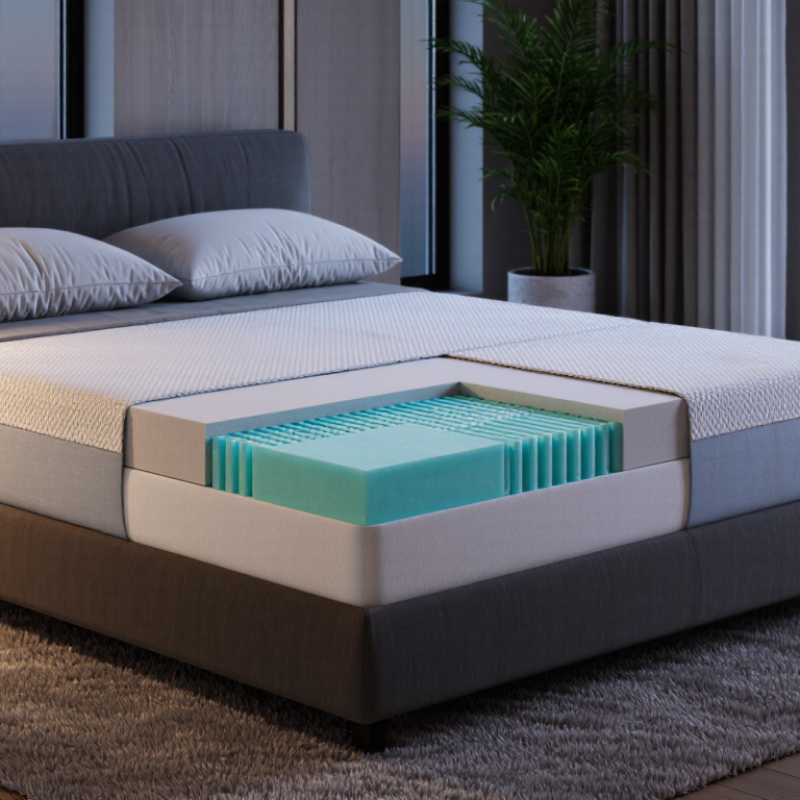
Cooling gel foam does not create cold air. It helps absorb and redistribute body heat across the sleep surface. Gel particles may reduce the warm feeling during initial contact. Foam density and room ventilation then influence lasting comfort. Dense foam can feel supportive, but it may restrict airflow. This trade-off matters for warm sleepers.
Body support depends on more than cooling. A responsive layer can cushion shoulders and hips while helping maintain spinal alignment. Look for material specifications, independent testing, and safety documentation. “Cool to the touch” may describe only the first few minutes. Comfort should continue through a full sleep period. Results vary with body size, sleep position, clothing, humidity, and room temperature.
Tips: Check foam density, ventilation channels, and cover fabric together. Press the surface for several seconds and observe its recovery. Deep sinking may indicate limited support. Excessive firmness may increase pressure. Do not trust color alone; gel appearance does not prove cooling performance. Reviews can guide research, but they remain subjective. I would also accept that stronger support may reduce airflow slightly. That is not always a defect. It requires personal testing.
Which Materials and Designs Affect Cooling Performance
Cooling performance depends more on construction than on the word “gel.” Open-cell foam allows air to move through the surface, while traditional closed-cell foam can trap body heat. Gel particles may absorb heat briefly, but they do not create continuous cooling. According to Grand View Research, the global mattress market reached approximately USD 42.3 billion in 2023, with material innovation supporting demand for comfort and temperature control. That growth encourages better designs, but marketing claims still need careful testing.
Look for a breathable cover, ventilated foam channels, and a stable support core. Phase-change materials can absorb heat during temperature peaks, while graphite or copper additives may improve thermal conductivity. However, results vary with foam density, sleeper weight, room temperature, and bedding layers. A 2024 report from the International Sleep Products Association highlights comfort and durability as major purchase considerations. Cooling is only one part of that equation. A cooler surface may still feel uncomfortable if the foam softens unevenly.
Tips: Check independent thermal test results, not only product descriptions. Ask whether testing used a heated sensor, controlled room, and defined measurement period. Avoid judging cooling by touch alone. It can feel impressive for five minutes, then disappear overnight. Also inspect the cover’s fiber content and washing instructions. Breathable fabric often matters more than decorative gel patterns. My own view is cautious: cooling foam can help, but room airflow and sheets may influence performance just as strongly.
What to Check for Durability, Safety, and Certifications
A cooling gel foam mattress should remain supportive after repeated use, not only feel cool on the first night. I learned this after testing a foam pad that softened noticeably near the hips within months.
Check the foam density, thickness, and recovery speed. Higher density often supports better durability, but it may also feel warmer. Inspect the cover stitching, zipper strength, and edge reinforcement. Small details matter.
Safety requires more than a cooling claim. Ask whether the foam has been tested for harmful chemical emissions, skin-contact safety, and fire performance. A mild smell may fade, but a strong odor that persists deserves attention. Ventilate the product before use. Do not ignore discomfort, headaches, or skin irritation. The cooling gel should remain evenly distributed, without exposed particles or brittle cracks. My earlier inspection focused too much on temperature.
Certifications can improve trust when they are specific and verifiable. Look for the testing organization, certificate number, product scope, and testing date. A certificate may cover only the foam core, not the cover, adhesive, or finished mattress. Check whether the standard applies to your country and intended use. Independent laboratory testing is more useful than vague phrases such as “safe” or “eco-friendly.” Keep the documentation and compare it with the product label. Even reputable testing has limits, so buyers should read the fine print.
How to Match Cooling Gel Foam to Your Sleep Needs
Matching cooling gel foam to your sleep needs starts with noticing when and where you overheat. If your back feels warm by 2 a.m., breathable sheets and a cooler bedroom may matter as much as the foam. Gel can help distribute heat, but it does not guarantee a cool surface all night. Feel the sample with your palm, then consider how quickly it warms under steady pressure. Small clues count.
Your sleep position also affects comfort. Side sleepers often need enough give for shoulders and hips, while back sleepers may prefer steadier support beneath the lower back. Stomach sleepers can feel uncomfortable if their hips sink too far. Look for foam that balances pressure relief with support, rather than choosing by softness alone. If you share a bed, check whether movement from one person disturbs the other. Firmness descriptions are not standardized, so reviews can only guide you so far. A return period helps, but a few nights may not reveal the whole picture. I have found that room temperature and bedding can change how foam feels; it is easy to blame the mattress too quickly.