China Top 10 Medical Grade Foam Manufacturers?
Choosing among China’s leading medical-grade foam manufacturers takes more than comparing prices or product catalogs. Medical grade foam can support cushioning, wound-care products, positioning, and other applications, but the right material depends on its intended use. Density, cell structure, compression behavior, skin contact, and cleaning requirements all deserve close review. Small details matter. A sample that feels soft in the hand may compress too quickly under repeated load.
This guide introduces ten manufacturers and considers their material ranges, customization options, quality controls, and ability to provide clear technical documentation. Atul Gawande wrote, “Better is possible. It does not take genius. It takes diligence.” His observation concerns healthcare improvement broadly, not foam specifically, but diligence is equally useful when assessing suppliers. Ask how a product is tested, whether specifications remain consistent between batches, and what evidence supports its stated performance. Do not rely on the phrase “medical grade” alone; confirm that the material suits the application and relevant market requirements.
A ranked list is only a starting point. It cannot replace testing under real conditions. A limitation is worth stating: publicly available manufacturer information may not reveal every production detail, and product claims can be difficult to compare directly. Careful buyers should request samples and supporting documents before making a decision. Our overview aims to make that comparison clearer, while leaving room for questions that a catalog cannot answer.

Define Medical-Grade Foam Using ISO 10993-1 Contact Classes: <24 h, 24 h–30 d, and >30 d
China Top 10 Medical Grade Foam Manufacturers?
For comparing medical-grade foam manufacturers, contact duration is a more useful starting point than a “medical grade” label. ISO 10993-1:2018 divides device contact into limited exposure (≤24 hours), prolonged exposure (>24 hours to 30 days), and long-term exposure (>30 days). These are exposure classes, not foam grades. The FDA’s 2023 guidance on ISO 10993-1 also emphasizes evaluating contact type, tissue, and duration. A foam pad touching intact skin for one shift may present a different biological risk from foam contacting a wound repeatedly. Duration matters.
When assessing a supplier, document where the foam touches the body, for how long, and in what finished-device configuration. Include processing details: sterilization, adhesives, coatings, and any cleaning steps. These can affect the material’s biological profile. Ask for evaluation records relevant to the finished, sterilized product, and check whether the evidence matches the intended contact category. In practice, buyers sometimes over-trust the phrase “medical grade.” That shortcut is weak. Depending on the device and risk assessment, endpoints such as cytotoxicity, irritation, and sensitization may need consideration under ISO 10993-1 and FDA guidance. Some supplier files blur raw-material data and finished-product evidence; that gap deserves a closer look.
Compare PU, Silicone, PE, and EVA Foams by Medical Application
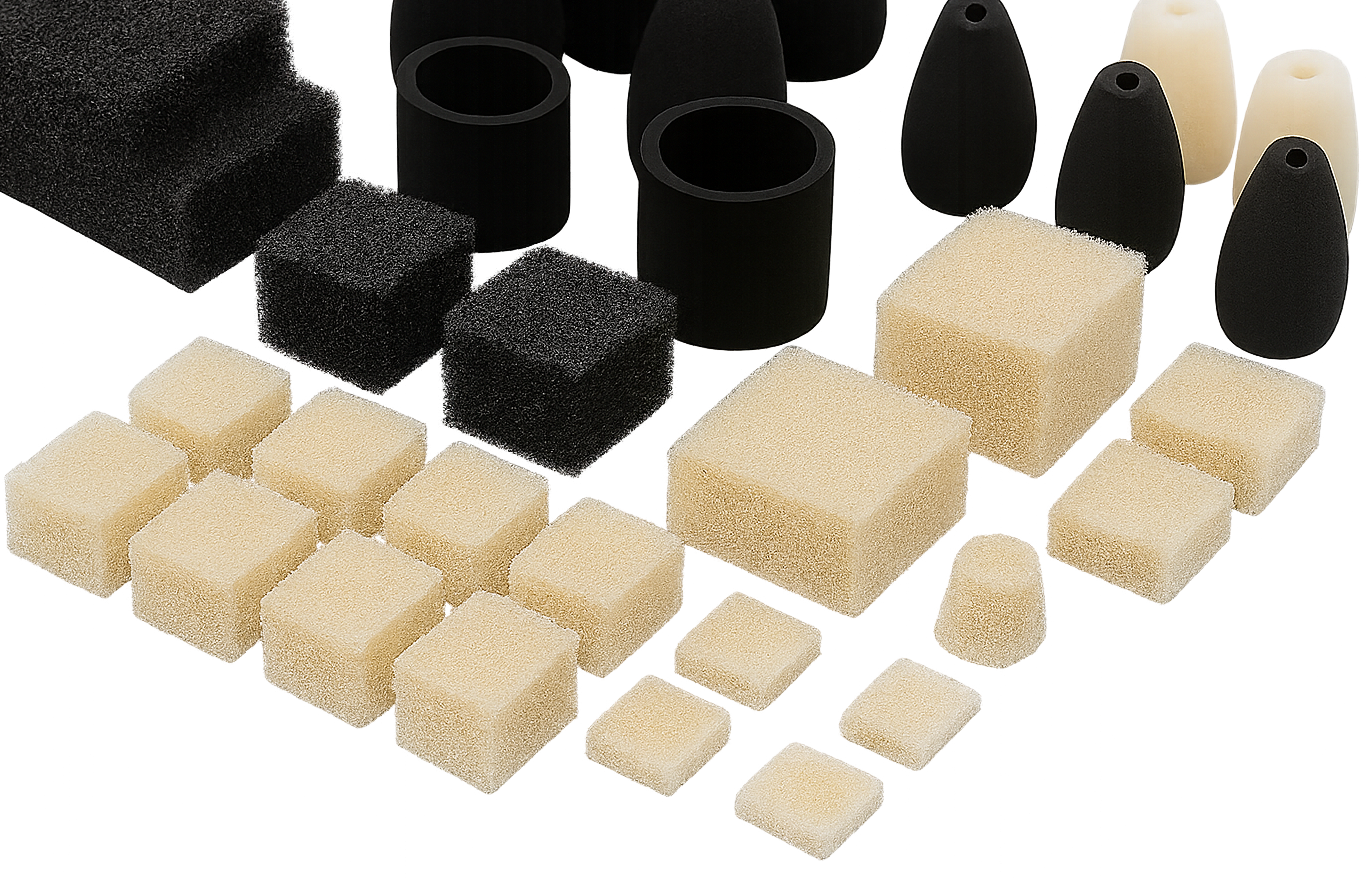
China’s medical-foam supply chain spans polyurethane (PU), silicone, polyethylene (PE), and ethylene-vinyl acetate (EVA), but the materials serve different jobs. PU’s open-cell structure can support airflow and fluid uptake, making it common in wound-contact and cushioning designs. Silicone foam is soft and conformable; its gentle contact layer may suit fragile skin, though performance depends on the full dressing construction. PE is typically closed-cell, lightweight, and moisture-resistant, so it fits positioning pads and protective components better than absorbent dressings. EVA adds flexible cushioning for masks, braces, and device interfaces. Not interchangeable.
Application should drive the specification. AHRQ’s hospital pressure-ulcer toolkit reports that about 2.5 million patients in the United States develop pressure ulcers annually, underscoring the value of pressure redistribution and skin protection. That figure describes the clinical burden, not proof that any foam prevents injury. Ask suppliers for density, compression-set, fluid-handling, and biocompatibility test data for the finished component. Also check cleaning methods and exposure to skin, adhesives, or wound fluid. A foam can look right on paper, then feel hot or lose shape in daily use. That part is easy to overlook. Grand View Research’s wound-care market reports provide useful commercial context, but market growth cannot replace application-specific testing. Choose by contact duration, required cushioning, moisture conditions, and validated test results.
Assess China’s Top 10 Manufacturers for ISO 13485:2016 Quality Systems
China Top 10 Medical Grade Foam Manufacturers?
Comparing medical-grade foam manufacturers in China requires more than checking product catalogs. ISO 13485:2016 certification can indicate a structured quality management system, but it does not prove every foam grade suits every application. Check the certificate’s validity, issuing body, covered site, and scope. The details matter.
Ask each manufacturer how it controls raw-material changes, production records, and lot traceability. A useful audit trail should connect a foam batch to its incoming inspection, processing conditions, and release checks. Request examples with confidential information removed. Look for documented risk management, equipment maintenance, and validated processes where applicable. Not every supplier presents these records clearly. That deserves follow-up.
Assess how complaints, nonconforming material, and corrective actions are handled. Ask who approves process changes and how customers are notified. These questions reveal whether the system works beyond the certificate on the wall. For a practical comparison, use the same checklist across all ten candidates, then verify key claims through document review or an audit. Certification is evidence, not a guarantee; its value depends on scope, implementation, and ongoing oversight.
Compare Foam Performance Using Relevant ASTM D3574 Test Data
ASTM D3574 provides a useful framework for comparing flexible foam, but one test result cannot describe every performance detail. For medical-use applications, request reports for the exact foam formulation and thickness under review. Test conditions matter.
Indentation force deflection, commonly reported at 25% and 65% indentation, helps show how firmly a foam responds under load. The ratio between these values indicates support as compression increases. Compare samples tested with matching dimensions, conditioning, and procedures; otherwise, small differences may reflect setup rather than material quality.
Numbers need context.
Compression set testing measures how much thickness a foam fails to recover after specified compression and exposure conditions. Lower set may be useful where repeated loading is expected, but it does not guarantee long service life in every design.
Airflow testing can help characterize cell openness, yet airflow alone does not establish comfort, cleanliness, or suitability for a medical application. That distinction is easy to miss.
Review the full method, units, sample details, and report date, then confirm performance in the finished component. ASTM data supports comparison; application-specific evaluation remains necessary.
Verify Biocompatibility, Sterilization, Traceability, and Customization Evidence
China Top 10 Medical Grade Foam Manufacturers?
Verify Biocompatibility, Sterilization, Traceability, and Customization Evidence
A supplier shortlist is only a starting point, not proof of medical suitability. Ask each candidate for biocompatibility evidence covering the finished foam, its intended contact, and any adhesives or coatings. A generic material datasheet may not reflect the final product. Check what was tested, under which conditions, and whether the report identifies the actual material grade.
Sterilization can change foam properties. Request validation data for the method you plan to use, plus before-and-after results for dimensions, color, compression, and odor. Small details matter. A sample may look unchanged but recover slowly after compression. Ask about process limits and how changes in formulation or production trigger review. One imperfect point: test reports can be technically sound yet hard to compare when methods differ. Clarify the gaps rather than treating every certificate as equivalent.
Traceability should connect each shipment to a production lot, material records, and inspection results. Request a sample record with sensitive information removed. For custom work, discuss pore structure, density, thickness tolerances, die-cut edges, and packaging early. Keep approved specifications and change notifications in writing. A capable manufacturer should explain what it can verify—and what remains untested—without promising more than the evidence supports.
China Medical-Grade Foam Supplier Evaluation: Evidence Checklist
Use documented evidence to assess biocompatibility, sterilization, traceability, and customization—not supplier claims alone.
How to read this chart: Each bar counts the three example evidence prompts listed for that area. These are evaluation prompts, not manufacturer ratings, market data, or a claim that every prompt is a regulatory requirement. Confirm applicable standards and requirements for the intended device and use.