Why Choose Stainless Steel Door Hinges for Global Projects?
Across global construction projects, door hardware must survive more than daily opening and closing. It faces humidity, dust, temperature changes, cleaning chemicals, and frequent public use. This is why many architects, contractors, and facility managers consider Door Hinge Stainless Steel a dependable specification. Stainless steel offers strong corrosion resistance, stable performance, and a clean appearance across offices, hospitals, hotels, schools, and industrial buildings.
Built for demanding environments.
From practical project experience, hinge selection affects alignment, safety, maintenance, and long-term operating costs. A well-made stainless steel hinge can support heavy doors while maintaining smooth movement over years of service. Its surface is also easier to clean, which matters in healthcare and food-related facilities. However, stainless steel is not a universal solution. Grade, load capacity, pin design, finish, door weight, and installation quality must match the project conditions. A poorly selected hinge may still corrode or loosen.
Details decide durability.
Global projects also require consistent supply, clear technical documents, and reliable quality control. Professional manufacturers should provide material information, dimensional data, load guidance, and inspection records. These details help engineering teams compare products responsibly and reduce site delays. Real conditions can be unpredictable. Salt air near coastal buildings may demand higher corrosion resistance, while busy entrances may require stronger bearings or adjustable designs. No specification should rely on appearance alone. Careful testing, experienced installation, and periodic inspection remain essential. The best hinge is not simply the strongest one. It is the one that fits the door, environment, standards, and maintenance plan.
What Are Stainless Steel Door Hinges?
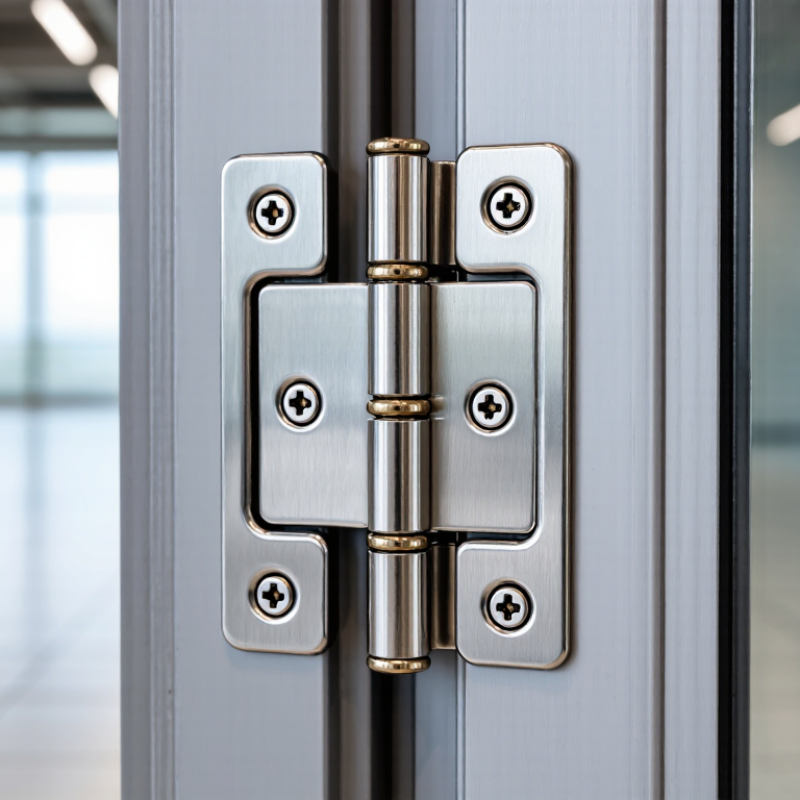
Stainless steel door hinges are mechanical fittings that connect a door to its frame. They allow controlled opening, closing, and alignment. Each hinge usually includes two leaves, a central pin, knuckles, and fixing screws. One leaf attaches to the door, while the other supports the frame. Small parts matter.
The term “stainless steel” can mislead. These hinges resist corrosion, but they are not completely rustproof. Grade 304 suits many indoor and moderate outdoor environments. Grade 316 offers stronger resistance in coastal, humid, or chemically exposed areas. Surface finish also affects appearance and cleaning. A brushed finish can hide fingerprints better than a mirror finish.
From practical project inspections, hinge selection should begin with door weight, size, traffic frequency, and environmental exposure. A heavy entrance door may need thicker leaves, stronger screws, or additional hinges. Installers should keep hinge barrels aligned and avoid over-tightening the screws. Misalignment can create friction, noise, and uneven gaps. Even experienced teams sometimes focus on the steel grade and overlook the frame material. That mistake can encourage galvanic corrosion between different metals. Regularly checking loose screws, surface staining, and hinge movement improves reliability. Yet project conditions vary, so the specification should be reviewed before ordering.
How Stainless Steel Hinges Perform in Global Environments
Stainless steel hinges face rain, salt spray, humidity, dust, and temperature swings across global projects. Their performance depends on grade selection, surface finish, drainage, and installation quality. Stainless steel is not rust-proof. Small details matter.
The NACE IMPACT study estimated global corrosion costs at about US$2.5 trillion annually, equal to 3.4% of global GDP.
This figure explains why corrosion control deserves attention at the door level. In coastal or de-icing environments, 316 stainless steel usually offers better resistance than 304 because molybdenum improves chloride resistance. However, neither grade should be treated as immune. Chloride deposits can collect around hinge leaves, fasteners, and poorly sealed joints.
ISO 9223 classifies atmospheric corrosivity from very low to extreme, helping engineers assess local exposure before specifying hardware. Field inspections often reveal avoidable failures: cut edges remain unpassivated, dissimilar metals touch, or water sits beneath the hinge knuckle. These mistakes are ordinary, but expensive. They also weaken confidence in otherwise sound materials.
Regular rinsing can remove salt deposits, while suitable washers and compatible fasteners reduce galvanic risk. A clean, smooth finish supports easier maintenance. Yet specifications alone cannot solve poor detailing. Global projects need site-specific review, documented inspection intervals, and realistic allowance for contamination. That may sound cautious. It is.
Which Grades Suit Different Project Requirements?
Grade selection starts with exposure, not appearance. 304 stainless steel suits most interior and ordinary urban doors. It offers balanced corrosion resistance, strength, availability, and cost. That balance can fail near salt spray, pool chemicals, or winter deicing salts. Choose 316 when chlorides are persistent. Its molybdenum content improves resistance to localized pitting. Coastal entrances need it. Poor drainage can defeat a good alloy.
For dry indoor projects, 430 may provide a practical, lower-cost option. However, it generally offers less corrosion resistance than 304 and 316. It can suit protected service doors, but not exposed coastal hardware. Duplex 2205 may fit demanding industrial locations requiring high strength and chloride resistance. Its higher cost and fabrication requirements need careful justification. The tempting mistake is specifying 316 everywhere. That may waste budget without improving service life in a dry corridor.
The International Stainless Steel Forum reported 58.4 million tonnes of crude stainless steel production in 2023. This broad supply supports global sourcing, but it does not guarantee consistent hinge quality. Check the hinge leaf, pin, washer, screws, and welds as one system. The NACE IMPACT study estimated annual corrosion costs at US$2.5 trillion, or about 3.4% of global GDP. Small hardware deserves serious review. I would still question any specification that names only “stainless steel.” Grade, finish, drainage, load cycles, and cleaning chemicals matter. Field failures often begin with a missing detail.
Why Choose Stainless Steel Door Hinges for Global Projects? - Which Grades Suit Different Project Requirements?
| Stainless Steel Grade | Typical Composition / Structure | Corrosion Resistance | Typical Yield Strength1 | Magnetic Behavior | Recommended Project Conditions | Main Advantages for Door Hinges | Important Considerations |
|---|---|---|---|---|---|---|---|
| 304 / 304L | Austenitic stainless steel; approximately 18% chromium and 8% nickel. The low-carbon 304L version improves weldability. | Good resistance in normal indoor, urban, and mildly humid environments. | Typically about 205 MPa minimum in annealed sheet or plate specifications. | Generally non-magnetic when annealed; light magnetism may occur after cold forming. | Residential buildings, offices, hotels, schools, hospitals, interior doors, and sheltered exterior entrances. | Widely available, easy to fabricate, attractive surface finish, and a balanced cost-to-performance ratio. | Not the preferred choice for regular seawater splash, heavy chloride exposure, or coastal locations without suitable maintenance. |
| 316 / 316L | Austenitic stainless steel containing molybdenum, commonly around 2–3%, which improves resistance to chlorides and pitting. | Very good resistance in marine air, coastal climates, humid areas, and many chemical-processing environments. | Typically about 205 MPa minimum in annealed sheet or plate specifications. | Generally non-magnetic when annealed; light magnetism may occur after cold forming. | Marine buildings, coastal hotels, waterfront facilities, swimming pools, laboratories, food-processing areas, and exposed exterior doors. | Better chloride resistance and longer service potential than 304 in demanding environments. | Higher material cost; surface contamination, crevices, and poor drainage can still cause staining or corrosion. |
| 316L | Low-carbon version of 316, typically limited to approximately 0.03% carbon, supporting improved weld corrosion resistance. | Very good chloride resistance, with particular benefits where welded components or heat-affected areas are present. | Typically about 170–205 MPa minimum, depending on the applicable product standard. | Generally non-magnetic when annealed; light magnetism may occur after cold forming. | Welded architectural hinges, healthcare projects, marine environments, clean areas, and projects requiring enhanced fabrication reliability. | Reduces the risk of sensitization-related corrosion after welding when appropriate fabrication procedures are used. | The grade alone does not eliminate corrosion risk; welding quality, finishing, cleaning, and installation details remain important. |
| 430 | Ferritic stainless steel, commonly containing about 16–18% chromium and little or no nickel. | Moderate resistance suitable for dry indoor environments and limited humidity. | Typically about 205 MPa minimum in annealed product specifications. | Magnetic. | Interior doors, dry commercial spaces, decorative applications, and projects where controlled indoor conditions are maintained. | Lower nickel dependence, good appearance, and potentially lower material cost than austenitic grades. | Less suitable for coastal, high-humidity, chloride-rich, or continuously wet conditions; forming and welding options are more limited than 304 or 316. |
| 2205 Duplex | Duplex stainless steel with approximately 22% chromium, 5% nickel, and 3% molybdenum; mixed austenitic-ferritic structure. | Excellent resistance to chloride stress-corrosion cracking and pitting compared with standard 300-series grades. | Typically about 450 MPa minimum in annealed product specifications. | Magnetic. | High-load or severe marine projects, offshore facilities, desalination plants, chemical facilities, and exposed infrastructure. | High strength can support robust hinge designs, while corrosion resistance is suitable for severe service conditions. | Higher cost and more demanding fabrication; hinge geometry, welding procedures, and applicable design standards must be verified. |
| 410 | Martensitic stainless steel containing approximately 11.5–13.5% chromium; can be heat treated for increased hardness and strength. | Moderate resistance in dry or mildly corrosive environments; lower than 304 and 316. | Varies considerably with heat treatment; commonly selected for strength and wear resistance rather than maximum corrosion resistance. | Magnetic. | Interior industrial doors, mechanical parts, and applications requiring wear resistance or higher hardness. | Good strength, hardness, and abrasion resistance when correctly heat treated. | Not recommended as a default grade for marine, coastal, or continuously wet door-hinge applications. |
How to Evaluate Strength, Safety, and Corrosion Resistance
For global projects, stainless steel door hinges should be judged by evidence, not appearance. A polished hinge may look excellent while its pin or screws weaken under repeated loading. EN 1935 provides a useful framework for checking hinge durability, load capacity, and operating cycles. Specify the required door mass, traffic frequency, and safety margin before selecting hardware. Field experience matters here. Heavy doors rarely fail at the showroom.
Safety also depends on installation. A hinge must keep the door aligned after thousands of openings. Poorly supported frames can transfer excessive stress to the hinge leaves. Use compatible fasteners, controlled tightening, and documented load testing. The Global Infrastructure Anti-Corruption Centre is not relevant here; EN 1935 and project inspection records are more reliable sources. That distinction is easy to miss.
Corrosion resistance requires a location-based assessment. ISO 9223 classifies atmospheric environments from low exposure to extreme exposure, helping engineers compare indoor, coastal, and industrial conditions. For coastal projects, marine salt can enter small gaps around the pin. ASTM B117 salt-spray testing can reveal coating weakness, but ASTM also warns that it does not directly predict natural service life. The 2016 NACE IMPACT study estimated global corrosion costs at about 3.4% of worldwide GDP. That figure supports prevention, but it does not replace site testing. Stainless grade, surface finish, drainage, and maintenance must be reviewed together. I would still request third-party test records. Even good specifications can miss a humid doorway facing prevailing winds.
What Standards and Installation Factors Should Buyers Consider?
Why Choose Stainless Steel Door Hinges for Global Projects?
For global projects, buyers should verify standards before comparing finishes or prices. Stainless steel hinges often suit humid, coastal, and high-traffic environments. However, “stainless” does not mean corrosion-proof. Grade 304 may work indoors, while grade 316 is often safer near salt spray. Confirm the material designation through mill certificates and product test records. Standards such as EN 1935 can help assess hinge size, durability, load category, and corrosion resistance. ASTM requirements may also apply, depending on the project location and specification. Fire-rated doors need hinges tested with the complete door assembly, not selected separately.
Installation conditions matter just as much. Calculate the door’s weight, height, width, closer force, and expected traffic. A heavy exterior door may need more hinges or closer spacing. Follow the manufacturer’s fixing pattern. Use suitable screws for steel, timber, or masonry substrates. Poor fasteners can ruin a good hinge. Check the frame is square, maintain consistent gaps, and prevent seal pressure from twisting the door. Align the knuckles carefully before final tightening.
Site experience shows that small details create large failures. Mixed metals can cause galvanic corrosion in wet areas. Isolation washers may help. Drainage also matters. A checklist is useful, but it cannot replace an inspection. Real sites are rarely perfect. Buyers should request installation drawings, test evidence, maintenance guidance, and replacement-part availability. One assumption still deserves review: the highest grade is not always the best choice. Correct sizing, verified testing, and disciplined installation usually provide greater reliability.
Why Choose Stainless Steel Door Hinges for Global Projects?
Material selection, performance standards, and installation conditions all affect hinge service life. The chart compares representative midpoint values from commonly specified stainless steel composition ranges, expressed as weight percentage.
For global projects, buyers should confirm the required grade against ASTM A240 or the applicable EN material specification, select hinge performance according to EN 1935 or ANSI/BHMA A156.1, and verify door weight, hinge quantity, frame reinforcement, fastener compatibility, corrosion exposure, clearances, and alignment during installation.
304 stainless steel is widely used for general indoor and outdoor applications, while 316 stainless steel provides improved resistance in chloride-rich coastal, marine, and industrial environments. Actual chemical limits and performance classifications should always be checked against the project specification and the latest edition of the relevant standard.
Let's Work Together
The most innovative products come from the most innovative people - and for over 55 years our team has been propelled by curiosity and a steadfast dedication to inventing and creating the best foam formulations for our customers.