





Why Choose an Implant Wrench for Dental Implant Systems?
An implant procedure depends on more than the implant itself. Small components, controlled handling, and clear instrument markings all matter. An Implant Wrench helps clinicians apply and manage torque when working with compatible implant-system components. Its value is practical: a well-matched wrench can support precise engagement, while a poorly matched tool may slip or make handling less predictable. Fit matters.
The right wrench depends on the implant system, connection type, and manufacturer’s instructions. Clinicians should check compatibility, inspect the tool for wear, and follow the specified torque limits. A number on a torque wrench is not a substitute for training or sound clinical judgment. Nor does a single tool suit every system. That is easy to overlook.
In practice, details such as a stable grip, readable markings, and smooth engagement can make a tool easier to use in a busy clinical setting. Cleaning and sterilization requirements also deserve attention; the manufacturer’s instructions should guide both. These considerations do not guarantee an outcome, and tools alone cannot replace careful planning. Some instrument designs may feel less intuitive than expected. That deserves honest evaluation.
This overview explains why clinicians choose an Implant Wrench, what features to compare, and how system compatibility shapes selection. It focuses on practical considerations rather than treating one design as universally best. The most useful choice is the one that matches the procedure, the system, and the documented instructions.
What an Implant Wrench Is and How It Works
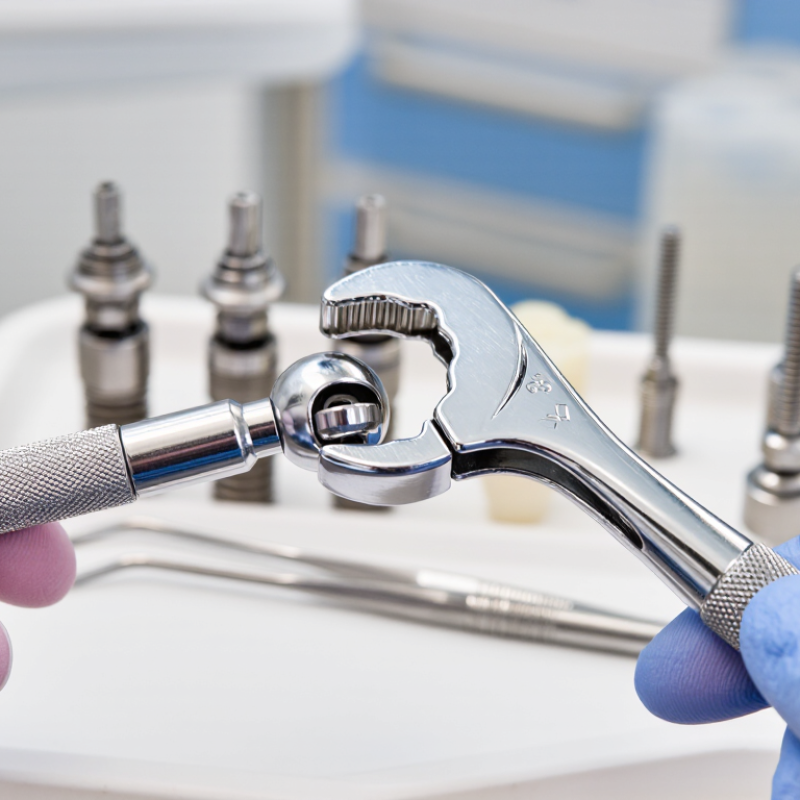
An implant wrench is a hand tool that applies controlled rotational force to an implant component. Depending on its design, it may seat an implant, tighten an abutment screw, or help clinicians assess insertion resistance. A calibrated torque wrench uses a scale, preset mechanism, or digital display to indicate force in newton-centimeters. The clinician connects the correct driver, aligns it with the screw, and turns steadily until the selected torque is reached. Small details matter. A tilted driver can slip or damage the screw head.
Torque is not a universal number. The appropriate setting depends on the implant system, component, and clinical step, so clinicians follow the system’s instructions rather than guess. ISO 6789-2:2017 sets calibration and measurement-uncertainty requirements for hand torque tools, underscoring why periodic checks matter. Dental research also reports that screw-joint behavior depends on preload, surface contact, and repeated tightening; a wrench controls applied torque but cannot eliminate every source of variation. Even experienced hands can rush. That is worth reflecting on: a clear display does not replace careful seating, compatible instruments, or clinical judgment. After use, cleaning, inspection, and storage help keep the tool dependable.
| Dimension | Details | Why It Matters |
|---|---|---|
| What it is | A dental implant wrench is a hand instrument used to apply rotational force to compatible implant components, such as implant fixtures, abutments, or prosthetic screws. | It provides a controlled way to tighten or loosen components during implant placement and restoration procedures. |
| How it works | The wrench engages a matching connection on the implant component. The operator turns the handle to apply force; a calibrated torque wrench indicates or limits the applied torque. | Using the correct connection and technique helps reduce the risk of component damage or inadequate tightening. |
| Common designs | Manual, ratchet-style, and torque-indicating or torque-limiting designs are used in dental implant workflows. Connection shapes vary by system and component. | The design should suit the procedure, access, and compatible implant components. |
| Torque setting | Recommended torque is component- and system-specific. Values must be taken from the applicable manufacturer’s instructions for use rather than assumed to be universal. | Following the specified value helps avoid under-tightening, over-tightening, and possible screw or component complications. |
| Compatibility | Wrench heads, drivers, and connections are not necessarily interchangeable across implant systems or component types. | Confirming compatibility before use helps ensure secure engagement and reduces the chance of slipping or damaging the connection. |
| Calibration and condition | Torque-indicating instruments should be checked, maintained, and calibrated according to their instructions and clinical protocols. Inspect the tool for wear or damage before use. | A worn or out-of-calibration wrench may not deliver the intended torque reliably. |
| Cleaning and sterilization | Reusable instruments should be cleaned, inspected, and sterilized according to the instrument’s validated instructions for use and applicable clinical procedures. | Correct reprocessing supports patient safety and helps preserve instrument function. |
| Clinical benefit | A suitable implant wrench supports controlled handling of implant components and can make torque application more consistent when used correctly. | It is a practical tool for reliable implant procedures, but it does not replace clinical judgment or the instructions for the specific components. |
Let's Work Together
The most innovative products come from the most innovative people - and for over 55 years our team has been propelled by curiosity and a steadfast dedication to inventing and creating the best foam formulations for our customers.