

What Is Preschool Sensory Furniture?
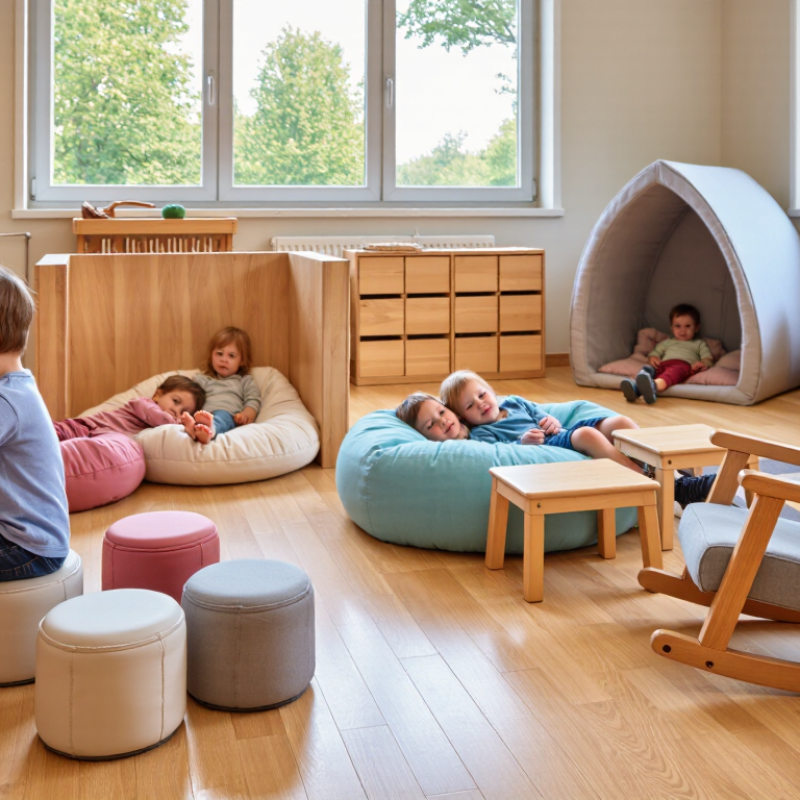
Preschool Sensory Furniture is designed to support young children as they move, touch, rest, and explore during the day. It may include wobble stools, soft floor cushions, textured panels, rocking seats, or a small quiet nook. Each piece offers a different kind of sensory input. A child might press their feet against a textured surface, shift gently on a seat, or settle into a cushioned corner after noisy group play.
These furnishings can make a classroom feel more responsive to children’s needs, but they are not a cure-all. Sensory preferences differ, and the same rocking chair may comfort one child while distracting another. Practical choices matter: check that furniture suits children’s ages and sizes, has stable construction, and can be cleaned regularly. Leave clear paths between pieces, too. A crowded sensory corner can create more friction than calm.
This guide explains what Preschool Sensory Furniture includes, how different pieces may be used, and what educators can consider when choosing them. Small observations often help. Notice where children pause, what textures they avoid, and whether a seat supports participation or simply becomes a toy. There may not be one perfect setup. Classrooms change, and furniture sometimes needs adjusting after teachers see how children actually use it.
Defining Preschool Sensory Furniture and Its Role in Early Learning
Preschool sensory furniture is purpose-designed seating and equipment that offers controlled movement, touch, or a quieter place to pause. Examples include a stable rocking seat, a textured cushion, or a small low-stimulation nook. Its role is practical: children can choose a comfortable position, attend to a story, or take a brief break without leaving the classroom routine. Small details matter. A chair that wobbles too freely may distract rather than help, so educators should observe how children actually use each item.
The scale of early education makes thoughtful classroom design relevant: NIEER’s 2023 State of Preschool Yearbook reported about 1.63 million children enrolled in state-funded preschool during 2022–23. That figure describes reach, not proof that sensory furniture improves learning. The American Academy of Pediatrics’ clinical report on sensory integration therapies also cautions that evidence for these approaches is limited. Furniture should therefore support—not diagnose or treat—a child. Teachers can note whether a quiet seat helps a child rejoin a group, then adjust placement or remove it if it becomes isolating. Not a cure-all. Choose sturdy, easy-to-clean pieces, keep pathways clear, and offer options without making any child use them. Children differ, and the furniture will not work equally for everyone.
What Is Preschool Sensory Furniture? — Defining Preschool Sensory Furniture and Its Role in Early Learning
| Furniture Type | What It Is | Sensory Input | Potential Role in Early Learning | Practical Considerations |
|---|---|---|---|---|
| Soft seating and floor cushions | Padded chairs, cushions, or low seating designed for supervised classroom use. | Gentle tactile and body-position feedback. | Can provide a comfortable place for shared reading, quiet activities, or small-group conversation. | Choose stable, easy-to-clean materials and keep seating clear of walkways and exits. |
| Rocking or glider seating | A chair or seat that moves in a controlled rocking motion. | Rhythmic vestibular input through gentle movement. | May offer a movement option during stories or calm activities when used appropriately. | Use only on a level surface with adequate clearance; supervise children and follow the manufacturer’s age and weight guidance. |
| Wobble stools or flexible seating | Classroom seats that allow limited movement while a child remains seated. | Movement and postural feedback. | Can provide an alternative seating choice for activities that involve sitting and attending. | Not suitable for every child or task. Check stability, fit, and safe use; provide conventional seating as an option. |
| Low tables and child-sized chairs | Furniture scaled for young children’s reach, posture, and everyday activities. | Body-position feedback through supported sitting and reaching. | Supports drawing, construction play, meals, and hands-on exploration at a more accessible height. | Match furniture size to children and activity; use sturdy, tip-resistant designs with smooth edges. |
| Textured panels or tactile seating surfaces | Furniture components with varied, durable surface textures. | Tactile input through touch. | Can invite supervised exploration and help create a more varied classroom environment. | Textures should be securely attached, non-irritating, and easy to clean; avoid small detachable parts. |
| Quiet-corner seating | A defined seating area, often with a chair, cushion, or soft bench, for quieter activities. | Can reduce competing environmental input when placed in a calmer part of the room. | Offers space for looking at books, taking a pause, or choosing an individual activity. | Keep the area supervised and welcoming, not a substitute for adult support or a place used to isolate a child. |
| Balance or movement furniture | Equipment such as low balance elements or movement seats intended for active use. | Movement, balance, and body-position feedback. | Can support active play and movement opportunities as part of a planned learning environment. | Use on an appropriate surface with close supervision, clear space, and equipment suited to children’s abilities. |
Definition: Preschool sensory furniture is furniture selected or designed to offer varied movement, touch, seating, or environmental experiences within an early-learning setting. It can support choice and participation, but it does not guarantee a particular developmental or therapeutic outcome. Select furniture according to children’s needs, classroom activities, accessibility, and applicable safety guidance.
Let's Work Together
The most innovative products come from the most innovative people - and for over 55 years our team has been propelled by curiosity and a steadfast dedication to inventing and creating the best foam formulations for our customers.