
What Are the Top Preprinted Barcode Labels?
Choosing the top preprinted barcode labels is not simply a matter of comparing prices. It requires matching the label, barcode symbology, adhesive, and surface to the working environment. A warehouse label facing dust and forklift traffic needs different protection from a retail UPC label on a clean cardboard carton. Code 128 often suits logistics, while UPC and EAN remain common for retail products. Some operations may also need GS1-compliant identification and verified print quality.
Bob Carpenter, former president and CEO of GS1 US, has described barcodes as “a simple, powerful way to identify products.” That idea still matters. The label must scan quickly, repeatedly, and from a practical distance. A sharp black bar pattern is not enough. Adhesive failure, low contrast, moisture, abrasion, and incorrect dimensions can stop a dependable process.
Experience exposes the awkward part. The cheapest preprinted barcode labels may create the highest operating cost when workers rescan cartons or replace peeling labels. Yet the most expensive material is not automatically the best choice. That assumption can fail. A careful evaluation should review scan testing, printer or applicator compatibility, label stock, coating, roll direction, and expected exposure. Supplier traceability also deserves attention, especially when labels support inventory control or regulated product identification.
This guide examines the leading preprinted barcode labels by application, durability, readability, and overall value. It also questions a common shortcut: selecting labels by barcode type alone. Real performance depends on the complete label system. Small details matter.
Definition and Purpose of Preprinted Barcode Labels
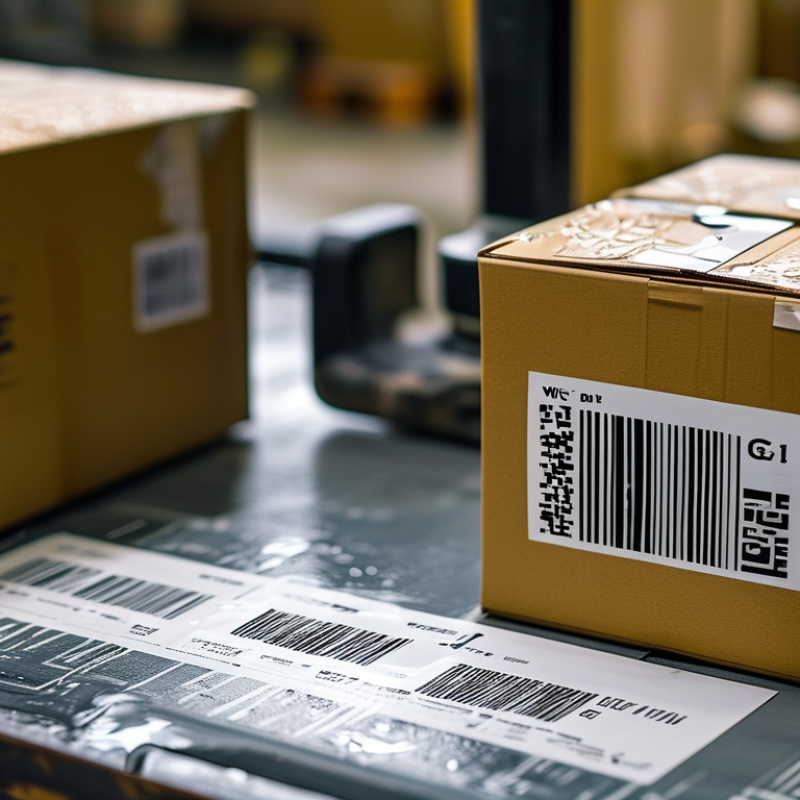
Preprinted barcode labels are adhesive tags printed with a fixed barcode before products, cartons, shelves, or equipment reach the workplace. The barcode stores a defined identifier, while nearby text helps people verify it visually. Unlike labels printed at the point of use, these labels support repeated identification without requiring daily printer setup.
Their main purpose is accurate, faster data capture. A scanner reads the bars, and software links them to inventory records, locations, shipments, or maintenance history. A warehouse worker can scan a carton in seconds instead of typing a long code. The best preprinted labels match the application. Durable materials resist moisture, abrasion, temperature changes, and handling pressure. Clear contrast and consistent sizing also improve scanning reliability.
Small details matter. A label may peel from dusty plastic, or ink may fade near a window. That risk is easy to underestimate. I have found that testing labels on the actual surface gives better evidence than trusting a sample sheet. The barcode type, print quality, adhesive, and quiet zone should be checked together. A readable label is not automatically a durable label. Even a carefully designed system can fail when codes are covered, folded, or placed beside reflective packaging. Reviewing scan results during normal work can reveal problems that a clean office test misses.
Main Types of Preprinted Barcode Labels
Preprinted barcode labels are available in several main types, each suited to a different scanning environment. UPC and EAN labels remain common for retail products and small packages. Code 128 supports dense logistics data, including shipment numbers and batch references. ITF-14 is designed for corrugated cartons and warehouse handling. QR codes and Data Matrix symbols store more information in limited space. GS1’s retail guidance identifies 2027 as the target year for wider 2D barcode adoption, making these symbols increasingly relevant.
Material choice matters as much as barcode type. Direct thermal labels suit short-term shipping use, while thermal-transfer labels perform better on plastic containers, shelving, and outdoor equipment. In practical label audits, poor contrast and quiet zones cause more failures than the symbol itself. ISO/IEC 15415 recommends checking 2D print quality objectively. Do not trust appearance alone. A 2024 logistics technology report also found that barcode scanning remains a core warehouse identification method, despite growing automation. Preprinting reduces variable-data flexibility, which is an important limitation.
Tips: Match the symbol to the workflow, not the product shape. Test labels after abrasion, moisture exposure, and cold storage. Leave clear space around every barcode. Recheck human-readable text before production. A small error can travel through thousands of labels. Use an independent verifier when accuracy affects inventory records. Forecast volumes carefully, because obsolete preprinted stock becomes expensive waste.
How to Choose the Right Barcode Label Material
When selecting preprinted barcode labels, material should match the label’s entire working environment. Paper labels suit clean indoor shelves, cartons, and short-term inventory. They are economical, easy to print, and readable under normal lighting. However, moisture, abrasion, and condensation can quickly damage them. I have seen clear barcodes fail after repeated handling. That was a material mistake, not a scanner problem.
Polypropylene labels resist splashes, tearing, and moderate humidity. They work well for chilled storage, reusable containers, and warehouse bins. Polyester offers stronger durability when labels face chemicals, friction, sunlight, or outdoor exposure. It costs more, though, and may be unnecessary for ordinary boxes. Choose a surface that accepts the planned ink or ribbon. A glossy finish can look sharp, but glare may reduce scanning reliability. Matte stock is often safer for handheld scanners.
Test adhesive performance on the actual container, especially with cardboard dust, curved plastic, or textured surfaces. Temperature matters too; an adhesive that holds indoors may loosen in a cold room. Confirm barcode contrast, quiet zones, dimensions, and print resolution before ordering a large batch. A small trial is wiser than a full replacement. I would also test labels after rubbing, condensation, and a week of handling. Perfect results in a sample room can mislead. The toughest material is not always the practical choice.
Comparing Barcode Standards and Printing Formats
What Are the Top Preprinted Barcode Labels?
Choosing a preprinted barcode label starts with the scanning environment, not the artwork. Code 128 suits many inventory and shipping applications because it stores varied data in a compact space. Code 39 remains useful where simple alphanumeric identification matters. ITF-14 is designed for outer cases and distribution units, while GS1-128 can carry structured supply-chain information. Each standard has different data limits, symbol sizes, and verification needs.
Printing format also affects daily performance. Roll labels work well with automated applicators and high-volume packing lines. Sheet labels fit office printers and smaller batches, but alignment can shift after repeated handling. Fanfold labels are practical for certain continuous-feed systems. Preprinted designs should reserve clear quiet zones around the symbol. Strong contrast, consistent ink coverage, and the correct X-dimension help scanners read labels from practical distances.
Small details matter.
In warehouse testing, I check labels under bright light, uneven angles, and mild surface wear. A barcode that scans perfectly on a desk may fail on a curved carton. Thermal transfer printing often supports durable labels, while direct thermal materials may fade with heat or sunlight. That distinction is easy to overlook. I also verify the final symbol with a calibrated barcode verifier, rather than trusting visual inspection alone. No format is perfect. A smaller label may save space but reduce readability, and a larger symbol may improve scanning while limiting packaging design. Requirements should be confirmed with the receiving system before production.
Best Applications for Preprinted Barcode Labels
What Are the Top Preprinted Barcode Labels?
Preprinted barcode labels work best where information stays stable. Warehouse teams commonly use them for rack locations, storage bins, pallets, returnable totes, and fixed asset identification. A bright label on a steel beam can guide a picker faster than a handheld search. GS1 reports that more than six billion barcodes are scanned worldwide each day, showing the scale of dependable identification systems.
They also suit retail shelf markers, carton labels, library materials, and production work-in-process containers. Thermal-transfer labels are practical for dusty areas, cold rooms, and frequent handling. In contrast, direct-thermal labels may fade under heat or sunlight. That difference matters. A label can look crisp during printing and still fail months later. ISO/IEC 15415 quality testing helps verify printed symbols, including contrast, edge definition, and decoding performance.
Preprinted labels are less suitable for information that changes often. Serial numbers, expiration dates, and shipment details usually need variable printing. Mixing fixed and variable data can reduce waste, but it demands careful verification. The 2024 GS1 General Specifications also stress correct data structures and symbol quality. Small errors can create large receiving delays. In practice, teams should test labels on the actual surface, scanner, lighting, and handling route. This step is sometimes skipped. That is a mistake worth reconsidering.
What Are the Top Preprinted Barcode Labels?
Best applications depend on the identification standard, scanning environment, and amount of data required. The chart compares common preprinted barcode formats by the core GTIN identifier length used in their primary applications.
UPC-A is commonly used for retail products in North America, EAN-13 for international retail products, ITF-14 for shipping cases, GS1-128 for logistics labels, and GS1 DataMatrix for compact healthcare and traceability labels. The values show the GTIN core length, not the total payload capacity of each barcode.
Article Source:
Let's Work Together
The most innovative products come from the most innovative people - and for over 55 years our team has been propelled by curiosity and a steadfast dedication to inventing and creating the best foam formulations for our customers.