Top 10 Wall Backsplash Manufacturers in China
A Wall Back Splash does more than protect a kitchen wall. It catches steam, splashes, and the changing light above a busy countertop. Its material and finish can also shape the room’s character. Architect Frank Lloyd Wright wrote, “The space within becomes the reality of the building.” Though he was speaking about architecture broadly, the idea applies here: small surface choices affect how a room feels and works.
This guide introduces ten wall backsplash manufacturers in China. It considers practical factors such as material options, surface finishes, customization, production capabilities, and communication with overseas buyers. A glossy tile may brighten a shaded kitchen, while a textured panel can add depth—but may need more careful cleaning. Details matter.
Company rankings are not universal. A supplier that suits a large commercial project may not fit a homeowner’s renovation, and product samples can reveal differences that catalog photos hide. That is worth remembering. Use this overview as a starting point, then verify specifications, sample quality, lead times, and relevant certifications directly with each manufacturer. The list aims to make comparison easier, not to promise that one supplier is right for every project.
Scope and Definition of Wall Backsplash Manufacturers in China
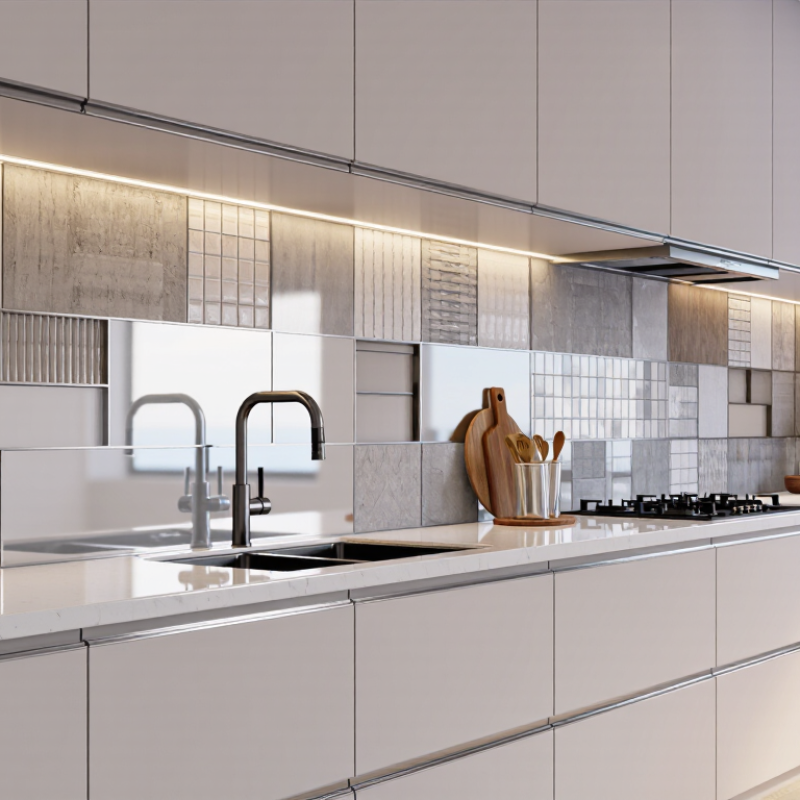
In this guide, a wall backsplash manufacturer means a company that makes wall-facing products intended to protect and finish areas behind sinks, counters, or cooking surfaces. Products may include ceramic or porcelain tile, glass panels, natural stone, and mosaics. Some factories also cut sheets, finish edges, or prepare mesh-mounted pieces. A seller that only sources finished goods is better described as a supplier, not a manufacturer. The boundary is not always tidy.
China’s scale helps explain the range of producers. Ceramic World Review’s 2024 industry review reported that China made about 6.7 billion square metres of ceramic tile in 2023. That figure covers ceramic tile overall, not backsplash products specifically, so it should not be read as a backsplash output estimate. Buyers should check factory capability directly: ask for production-site details, batch consistency records, and samples showing grout lines, edge finish, and cutouts around sockets. Small details matter.
Technical comparisons need comparable evidence. For ceramic products, request test documentation that identifies methods in the ISO 10545 series, including relevant water-absorption and dimensional checks. Also confirm whether listed dimensions are nominal or actual. A polished sample can hide uneven shade between cartons. Not every manufacturer publishes equally clear data, and that gap deserves scrutiny.
Criteria for Selecting the Top 10 Manufacturers
Selecting the top wall backsplash manufacturers in China requires more than comparing catalogue photos. A useful review starts with material control, kiln consistency, and finish quality. Ask how each factory checks tile dimensions, glaze variation, and edge chipping across a production run. Small differences matter. A sample may look even under showroom lights, then show shade shifts beside a kitchen window.
Check whether the manufacturer can provide current test reports, clear product specifications, and traceable batch records. Confirm water absorption and surface-cleaning guidance for the intended tile type. For areas near cooking equipment, clarify the installation temperature requirements rather than assuming every wall tile suits every location. Request samples from more than one production batch. Inspect the back surface, corners, and grout spacing in person. Packaging deserves attention too; crushed corners can turn a good order into costly waste. Ask about protective dividers and replacement procedures.
Reliable suppliers communicate realistic lead times and explain what happens when a batch varies. Compare their answers, not just their prices. A simple scorecard can help, but no scorecard is perfect. Factory visits or independent inspections may reveal details that paperwork misses, such as storage conditions or line capacity. Give extra weight to consistent quality, responsive technical support, and evidence that matches the exact product being quoted.
Top 10 Wall Backsplash Manufacturers in China: Selection Criteria
Suggested evaluation weights for comparing manufacturers. These weights are a selection framework, not ratings of specific companies or an industry-standard ranking.
How to use: Compare suppliers using documented product specifications, test reports, production information, customization capabilities, export references, and written service terms. Confirm that certifications apply to the relevant products and facilities.
Products, Materials, and Manufacturing Capabilities
China’s wall backsplash manufacturers may offer ceramic, porcelain, glass, natural stone, and metal surfaces. Each material behaves differently during cutting, installation, and cleaning. Porcelain handles frequent wiping well, while stone can show natural variation from tile to tile. Glass reflects light, but edges and drilled openings need careful finishing.
Details matter. Ask how factories control tile thickness, color consistency, and edge quality across production batches. Useful capabilities include digital glazing, precision cutting, mesh backing for mosaics, and custom sizing. Request samples from more than one batch; a polished sample can mislead. Confirm that the sample’s finish, dimensions, and backing match the quoted product.
Manufacturing quality is only part of the decision. Check whether packaging protects corners during shipping, and ask for written specifications on water absorption and surface care. For a backsplash near a cooktop, verify heat suitability with the supplier rather than assuming every tile is appropriate. Compare tolerances and inspection records, not just catalog photos. Some details may still be unclear, so document open questions before approving a production run.
How to Compare Suppliers and Verify Their Credentials
When comparing China-based wall backsplash suppliers, verify the factory behind the quotation, not only its trading office. Request current business registration, production address, export records, and a recent factory audit. Ask who handles cutting, glazing, packing, and final inspection. Details matter. Match the legal entity on certificates to the invoice and payment beneficiary; discrepancies need clarification.
Request lot-specific test reports from a laboratory accredited to ISO/IEC 17025. ISO 13006:2018 classifies dry-pressed porcelain tiles as BIa when water absorption is 0.5% or less. Compare reported results with this benchmark. Check dimensions, thickness, shade variation, glaze performance, and test methods—not just a “pass” stamp. Ask for dated batch photos and keep a sample beside the delivered cartons. Paperwork can look tidy. It may describe another product. A third-party inspection of a recent shipment can reveal gaps, though one inspection cannot prove consistent production. Record defects and lead-time accuracy for future comparison.