Top Debris Bag Suppliers for Global Buyers?
Construction and renovation projects generate enormous waste volumes, making reliable Debris Bag suppliers increasingly important to global buyers. The United States Environmental Protection Agency estimated that construction and demolition activities generated 600 million tons of debris in 2018. That figure was more than twice the country’s municipal solid waste total. The scale is difficult to ignore.
UNEP’s Global Waste Management Outlook 2024 projects global municipal waste will grow from 2.3 billion tonnes in 2023 to 3.8 billion tonnes by 2050. Construction waste is not identical to municipal waste, but the pressure on collection, sorting, and transport systems is closely connected. Buyers therefore need more than attractive pricing. They should examine bag capacity, woven polypropylene strength, stitching quality, lifting-loop design, moisture resistance, and load testing. A bag that tears beside a dusty staircase creates extra labor, delay, and unnecessary cleanup.
This guide reviews leading Debris Bag suppliers serving international markets. It considers manufacturing experience, export capability, product consistency, customization, packaging, and documented quality controls. Supplier claims should be checked against samples and test records. No ranking is perfect. Local regulations, disposal methods, and jobsite conditions can change the best choice. For example, a lightweight bag may suit interior plaster waste, while reinforced bulk bags are safer for bricks and concrete fragments. Buyers should also verify labeling, material specifications, and shipping documentation before placing large orders. Industry data shows the demand clearly, but practical testing still matters more than polished catalog images.
Debris Bag Market Scope: Construction Waste Exceeds 3 Billion Tons Annually
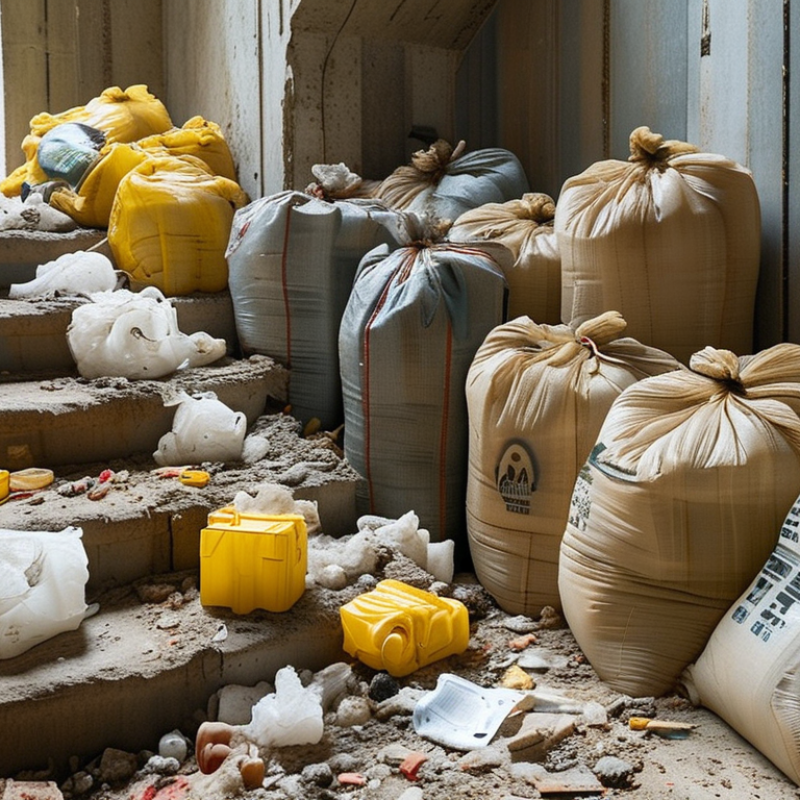
Construction waste is a vast, uneven market. Industry estimates place global construction and demolition waste above 3 billion tons annually. The figure varies because countries measure soil, concrete, and mixed waste differently. That uncertainty matters when buyers compare debris bag suppliers.
The U.S. Environmental Protection Agency reported about 600 million tons of construction and demolition debris in 2018. Concrete formed roughly 70% of that volume. Eurostat recorded more than 374 million tons of construction waste in the European Union during 2022. These numbers show why bag capacity, tear resistance, and safe lifting loops require careful evaluation. A two-person crew may fill a one-cubic-yard bag with broken masonry within minutes. Lightweight polypropylene bags suit plaster and insulation. Heavy-duty woven bags perform better with rubble, timber, and sharp fragments.
Global buyers should request test data, not attractive product photos. Check fabric weight, seam strength, UV resistance, load ratings, and packaging consistency. Supplier experience also appears in sampling discipline and response quality. Ask whether specifications remain stable between production batches. Small details become expensive on crowded construction sites. I have seen “heavy-duty” descriptions used too loosely, which deserves more skepticism. Reports from UNEP, the EPA, and Eurostat provide useful benchmarks, but their categories are not perfectly aligned. Buyers should compare like with like before placing large orders.
Bag Types and Capacities: PE, Woven PP, and FIBC Options up to 2,000 kg
Global buyers often compare debris bags by material before checking the actual job conditions. That approach can create costly mismatches. PE bags suit lighter debris, wet dust, and short-term collection. Their smooth surfaces resist moisture and release contents easily. Woven PP bags provide stronger handling for rubble, soil, and sharp-edged construction waste. Their woven structure improves tear resistance, but poor stitching can still fail under uneven loads. Check the fabric weight, seam quality, closure design, and UV resistance before ordering.
FIBC bags support much larger volumes, with common capacities from 500 to 2,000 kg. They work well for bulk mineral debris, aggregate, and industrial cleanup materials. A rated lifting system matters as much as the fabric. Four corner loops should align evenly during forklift or crane handling. Inner liners can help contain fine particles or damp materials. However, liners may increase heat retention and complicate discharge. Ask suppliers for load testing records, safe working load details, bag dimensions, and batch traceability. Small samples reveal more than polished product photos. In practice, buyers sometimes choose maximum capacity when smaller bags would improve worker control and reduce overloading risks. Supplier reliability also depends on consistent measurements, documented inspections, and clear packaging instructions. Loose specifications invite disappointing results.
Safety Benchmarks: Compare Load Ratings with OSHA 1926.252 Requirements
Global buyers should treat debris-bag load ratings as a safety control, not merely a purchasing figure. OSHA 1926.252 requires waste to be removed as work progresses and debris to be contained, piled, or stored to prevent falling, rolling, or spreading. However, it does not prescribe one universal bag capacity. Suppliers should therefore provide traceable test data, stated safe working loads, construction details, and handling instructions.
The CPWR Data Center reported 395 fatal construction falls among 1,069 construction deaths in 2022. A weak lifting loop or overloaded bag can worsen a simple cleanup task. Compare the rated working load with the actual debris type, moisture level, filling method, and lifting equipment. A bag rated for 2,000 pounds may perform differently with wet concrete fragments than with dry wood. The rating alone is not enough. I have seen buyers overlook sharp edges and uneven loading. That mistake deserves more attention.
Tips: Ask for batch-level inspection records and sewn-loop testing. Confirm whether the rating applies to lifting, storage, or both. Keep fill levels below the marked limit. Inspect seams, handles, and abrasion points before every lift. The National Safety Council continues to identify falls and struck-by events as major construction hazards. Local rules may also exceed OSHA’s baseline. A supplier that cannot explain its test method should not receive a global order. Even experienced teams sometimes trust a printed number too quickly.
Sustainability Checks: Verify ASTM D6400 and EN 13432 Certifications
Top Debris Bag Suppliers for Global Buyers?
Sustainability Checks: Verify ASTM D6400 and EN 13432 Certifications
Global buyers should treat compostability claims as technical evidence, not marketing language. ASTM D6400 covers plastic items designed for aerobic industrial composting. EN 13432 evaluates biodegradation, disintegration, material safety, and compost quality. These standards are related, but they are not identical. A supplier showing one test report should not imply automatic compliance with both.
Check the certificate number, issuing laboratory, product name, film thickness, and production site. The document should match the actual debris bag, including inks, handles, and additives. Ask whether testing covered the finished bag or only a resin sample. That difference matters. A certificate can look convincing. It may still describe an older formulation.
Market data also shows why careful verification is necessary. European Bioplastics and nova-Institute estimated global bioplastics production at about 2.18 million tonnes in 2023. Their forecast reaches roughly 7.43 million tonnes by 2028. Rapid growth can encourage inconsistent claims. The 2023 UNEP report, Turning off the Tap, also stresses better product design and credible systems, rather than labels alone.
Request recent laboratory reports and a chain-of-custody statement before placing a large order. Confirm the intended disposal route with the buyer’s composting facility. Industrial composting access remains uneven. That practical gap is easy to overlook. I would also test several bags under load, because certification does not guarantee suitable tear resistance.
Top Debris Bag Suppliers for Global Buyers: Sustainability Check
Edition-year comparison of the two widely referenced compostability standards used when reviewing debris bag sustainability claims.
How to use this chart: ASTM D6400 and EN 13432 are different standards with separate testing and certification systems. Buyers should verify the exact standard edition, certificate scope, product specification, and issuing certification body before accepting a compostability claim.
Sources: ASTM International, ASTM D6400-23; European Committee for Standardization, EN 13432:2000.
Supplier Selection Metrics: MOQ, Lead Time, Incoterms, and Export Coverage
Top Debris Bag Suppliers for Global Buyers?
Selecting a debris bag supplier requires more than comparing unit prices. A practical review starts with minimum order quantity, or MOQ. Ask whether the MOQ applies per size, color, or full shipment. A low MOQ can reduce inventory pressure, but it may raise production costs. Request a sample batch before committing to large volumes. Small details matter. Check stitching, handle strength, fabric weight, and carton protection during inspection.
Lead time should include production, packing, and port handling. Suppliers should provide a written timeline with approval points and realistic buffer days. Incoterms also affect the true landed cost. Under FOB, the buyer usually manages ocean freight after loading. CIF may simplify freight planning, but destination charges still require confirmation. DDP can appear convenient, yet tax and import responsibilities need careful review in each market.
Confirm export coverage by checking previous destinations, available documents, packaging standards, and communication support across time zones. Ask for shipment records or references where appropriate. Claims alone are not evidence. I have seen schedules fail because buyers ignored holiday closures and port congestion. That mistake is easy to repeat. A reliable supplier explains risks early, documents changes, and accepts reasonable quality checks before dispatch.