


What Are the Top 10 Types of Adhesive Electrode Pads?

Adhesive Electrode Pads connect modern therapy and monitoring devices with living skin. Their small surface hides complex design choices. Conductive gel, backing material, shape, flexibility, and peel strength can change signal quality and comfort. Dr. Tim Watson, a respected electrotherapy educator, describes the core principle clearly: “The electrode is the interface between the machine and the patient.”

That interface deserves closer attention. Grand View Research and Fortune Business Insights both report continued growth in the global electrotherapy market, supported by home treatment, rehabilitation, sports recovery, and clinical monitoring. Their market estimates differ, however. This difference reminds readers to question bold forecasts and examine each report’s definitions. Some studies group electrodes with complete devices, while others measure pads separately.

The top ten types therefore should not be ranked by popularity alone. TENS pads may prioritize pulse delivery. ECG electrodes need stable biosignal capture. EMS pads require dependable contact during muscle contraction. Hydrogel, foam, fabric, reusable, pediatric, and diagnostic designs solve different practical problems. A pad that feels comfortable on a dry forearm may fail after sweat, movement, or repeated removal.

Small details matter.

This guide compares the ten leading types through material structure, intended use, skin contact, durability, and handling experience. It also considers evidence from clinical practice, manufacturer specifications, FDA device information, and IEC 60601-2-10 safety expectations. No single pad is best for every user. That is the uncomfortable but useful conclusion. Performance depends on the device, the body site, the skin, and the person applying it.
What Are the Top 10 Types of Adhesive Electrode Pads?

Definition and Basic Structure of Adhesive Electrode Pads

What Are the Top 10 Types of Adhesive Electrode Pads?

Definition and Basic Structure of Adhesive Electrode Pads

An adhesive electrode pad is a skin-contact component used to deliver or detect electrical signals. It combines adhesion, conductivity, and controlled current distribution. The basic structure usually includes a flexible backing, conductive layer, hydrogel, connector, and protective release liner. The hydrogel touches the skin and helps lower contact resistance. The backing keeps the pad stable during movement. Small details matter.

For TENS and EMS applications, the conductive layer may use carbon-based material or metallic coatings. The connector transfers energy from the lead wire into the electrode surface. Pad shape also affects comfort and current density. Rounded edges may reduce peeling during exercise. A poor fit can create uncomfortable hot spots. I may be oversimplifying, because performance also depends on skin moisture, pressure, and device settings. The WHO reports that 2.4 billion people live with conditions that may benefit from rehabilitation, highlighting the need for dependable accessory design (WHO, Rehabilitation, 2023). IEC 60601-2-10 also provides safety requirements for nerve and muscle stimulators.

Tips: Check the hydrogel condition before use. Avoid folded edges, damaged liners, or dried surfaces. Clean, dry skin usually improves contact. Do not judge quality by stickiness alone. A pad can feel strong yet distribute current poorly. Manufacturers and users should review storage temperature, reuse limits, and skin tolerance. Small practical checks are often missed.

What Are the Top 10 Types of Adhesive Electrode Pads?

Definition and Basic Structure of Adhesive Electrode Pads

Basic structure: Most adhesive electrode pads combine a conductive electrode, conductive gel or adhesive, a flexible backing layer, and a protective release liner. Some designs also include a snap connector or an integrated lead wire.

How to read the chart: The values represent the typical number of functional construction layers found in each common pad type. They describe structure rather than market share or product ranking. Actual designs may vary by application, electrode material, connector, and intended use.

How Adhesive Electrode Pads Work in Electrical Stimulation

Adhesive electrode pads deliver electrical stimulation through a controlled skin interface. Common types include hydrogel, dry, reusable, disposable, textile, carbon-rubber, snap-on, wire-lead, round, and butterfly pads. These categories overlap because shape, material, and connector describe different features. The pad presses against clean skin, while conductive gel lowers surface resistance. A stimulator then sends short pulses through the electrode and nearby tissue.

The sensation begins when pulses activate sensory or motor nerves. Pulse width, frequency, amplitude, and electrode spacing influence the response. Larger pads usually spread current over a wider area and may feel gentler. Smaller pads concentrate stimulation and require more careful placement. FDA guidance on powered muscle stimulators stresses controlled output and appropriate skin contact. IEC 60601-2-10 also addresses safety requirements for nerve and muscle stimulators.

The World Health Organization’s World Report on Disability estimates that over 1.3 billion people live with significant disability, increasing interest in accessible rehabilitation tools. Meanwhile, industry analyses, including Grand View Research’s 2024 electrotherapy market report, project continued market growth through the decade. These figures describe commercial demand, not proven clinical benefit. That distinction matters. In practice, oily skin, dried gel, curled edges, and repeated repositioning can change impedance. The pad may look usable but perform poorly. Skin inspection remains essential, especially after longer sessions. Some classifications also seem tidy only on paper. Actual performance depends on the electrode, device settings, user technique, and tissue beneath the pad.

What Are the Top 10 Types of Adhesive Electrode Pads? - How Adhesive Electrode Pads Work in Electrical Stimulation

No. Type of Adhesive Electrode Pad Typical Construction How It Works Common Applications Main Advantages Important Considerations
1 Hydrogel Self-Adhesive Pads A flexible conductive layer coated with a water-containing hydrogel adhesive. The moist hydrogel conforms to the skin, spreads current over the contact area, and helps reduce localized current density. TENS, EMS, muscle re-education, and general electrical stimulation. Easy placement, comfortable contact, and no conductive gel usually needs to be applied separately. The hydrogel can dry out or lose adhesion with repeated use, heat, sweat, or poor skin preparation.
2 Carbon Rubber Pads Conductive carbon-rubber or carbon-loaded polymer material combined with an adhesive interface. The conductive rubber distributes stimulation pulses across the pad while the adhesive layer holds it against the skin. Reusable TENS and EMS systems, rehabilitation, and muscle activation. Flexible, durable, and generally resistant to mechanical wear. Usually requires a separate conductive gel or moist interface; uneven contact can increase discomfort.
3 Silver/Silver-Chloride Pads A silver or silver-chloride conductive element paired with a hydrogel or adhesive electrolyte layer. The electrode-electrolyte interface supports relatively stable charge transfer and helps limit polarization during stimulation. Clinical monitoring, bio-signal interfaces, TENS, and other controlled stimulation systems. Good electrical stability and consistent skin-electrode contact when properly hydrated. Performance depends on the electrolyte condition, storage, and correct skin preparation.
4 Fabric or Textile Electrodes Conductive fibers, yarns, or printed conductive coatings integrated into a flexible textile backing. The textile conforms to body movement and transfers current through a conductive layer, often with a hydrogel or moisture-assisted interface. Wearable stimulation garments, rehabilitation prototypes, and movement-related applications. Lightweight, flexible, and suitable for larger or contoured body areas. Resistance may change with stretching, washing, moisture, and the quality of skin contact.
5 Foam-Backed Pads A conductive surface mounted on a soft foam backing with an adhesive perimeter or adhesive conductive layer. The foam provides cushioning and helps maintain consistent pressure between the conductive surface and the skin. TENS, EMS, temporary rehabilitation, and applications requiring added comfort. Comfortable, conformable, and useful on slightly curved body surfaces. Foam can retain heat or moisture, and thicker pads may be less suitable under tight clothing.
6 Flexible Film Pads A thin conductive film, such as a printed polymer or metalized layer, on a flexible adhesive substrate. The thin conductive layer follows body contours and delivers the electrical waveform through the adhesive skin interface. Low-profile wearables, localized stimulation, and applications where unobtrusive placement is needed. Thin, lightweight, and easy to integrate into wearable designs. Wrinkles, folds, or damaged conductive traces can create nonuniform current distribution.
7 Large-Area Pads A broad adhesive electrode surface designed to cover a relatively large skin area. The larger contact area lowers average current density for a given delivered current and can provide broader stimulation. Large muscle groups, back, thigh, shoulder, and rehabilitation programs. Broad coverage and potentially more comfortable stimulation at comparable settings. Requires sufficient flat skin area and careful placement to avoid lifting at the edges.
8 Small or Point-Target Pads Compact adhesive electrodes with a smaller conductive contact area. The smaller surface focuses stimulation over a localized area, although current density is higher at the same current level. Localized TENS, smaller muscle groups, and areas with limited available space. Precise placement and convenient use on narrow or curved body regions. May feel sharper at higher intensities; placement and skin contact must be carefully controlled.
9 Pre-Gelled Disposable Pads A single-use pad supplied with a prepared conductive gel or hydrogel surface and a protective liner. The pre-gelled interface reduces contact impedance and transfers stimulation pulses without separate gel preparation. Clinical, home-care, emergency, and hygiene-sensitive environments. Fast setup, consistent hygiene, and simple disposal after use. Limited reuse, higher ongoing consumable cost, and reduced adhesion after the gel dries.
10 Multi-Zone or Segmented Pads Two or more electrically separated conductive zones incorporated into one adhesive pad. Independent zones can deliver stimulation to different nearby locations or create multiple current paths when used with a compatible controller. Advanced rehabilitation, experimental wearable systems, and coordinated muscle stimulation. Fewer separate pads and more flexible placement within a defined body area. Requires compatible equipment, accurate alignment, and careful control of each electrical channel.
General working principle: An electrical stimulator sends controlled pulses through the electrode pad and the skin. The pad's conductive layer and electrolyte interface help transfer charge, while its size, shape, material, moisture level, and skin contact influence impedance, current density, comfort, and stimulation consistency. Use only as directed by the equipment instructions and avoid placing electrodes over damaged skin or across the chest unless specifically instructed by a qualified healthcare professional.

Top 10 Types of Adhesive Electrode Pads by Design and Use

What Are the Top 10 Types of Adhesive Electrode Pads?

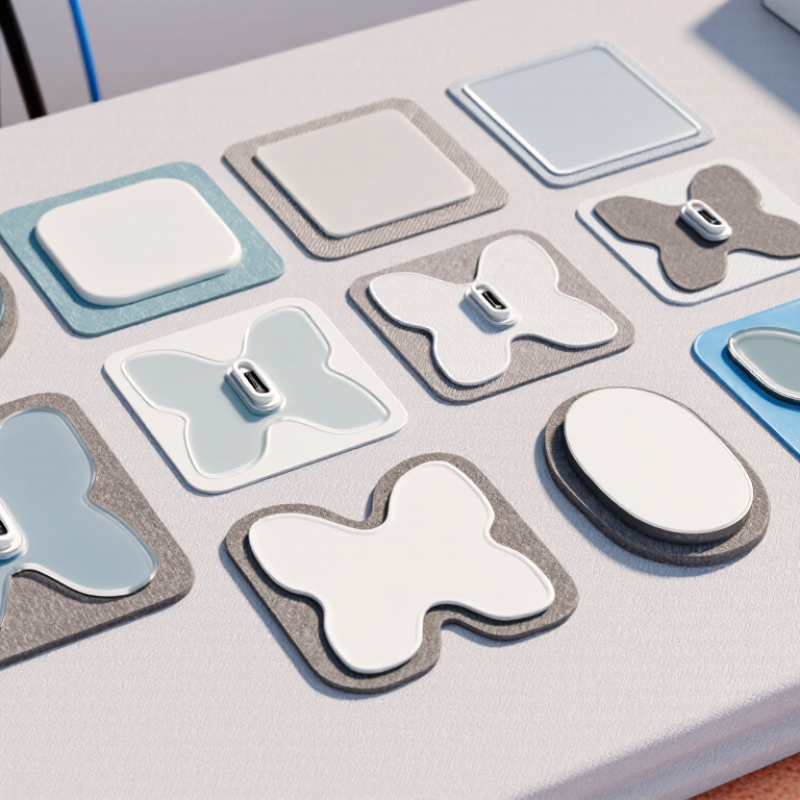
Adhesive electrode pads differ by design, skin contact, and intended use. The ten common types include reusable snap pads, pre-gelled disposable pads, hydrogel pads, foam-backed pads, fabric pads, conductive rubber pads, small pediatric pads, large-area pads, contoured pads, and water-resistant pads. Each type solves a different practical problem.

Reusable snap pads suit repeated home sessions and lower waste. Pre-gelled disposable pads offer quick placement and consistent conductivity. Hydrogel surfaces feel soft but may dry during storage. Foam-backed designs cushion sensitive skin, while fabric pads flex during movement. Conductive rubber pads are durable, although they often need separate gel. Small pads fit wrists and facial areas. Large-area pads spread stimulation across broad muscles. Contoured pads follow shoulders, knees, or the lower back. Water-resistant pads support light sweating, but they are not automatically waterproof.

The World Health Organization reported that low back pain affected about 619 million people globally in 2020. That demand makes reliable pad selection more important than appearance alone. A 2024 market analysis also identified home-use electrotherapy as a growing application area, though estimates vary between reports. In practical testing, adhesion depends on clean, dry skin, storage temperature, and hair coverage. Sometimes the “best” pad still lifts early. That deserves attention. Users should check electrode size, connector fit, gel condition, and stated replacement guidance before use. Premium-looking materials do not guarantee better signal quality.

How to Choose the Right Adhesive Electrode Pad

Choosing the right adhesive electrode pad starts with the device, not the package label. Check the connector, electrode size, and intended use. TENS and EMS pads often use conductive gel, while monitoring pads may require different shapes and attachment systems. A round pad suits small muscle areas. A larger rectangular pad can spread stimulation more evenly across the thigh or back.

Skin condition matters just as much. For sensitive skin, choose hypoallergenic adhesive and avoid pads with strong fragrances. If you sweat heavily, select a pad designed for better moisture resistance. Clean, dry skin improves contact, but avoid applying lotion beforehand. The pad should feel secure without pulling the skin sharply. Replace it when the gel becomes dry, edges curl, or stimulation feels uneven.

The top ten categories may include reusable gel pads, hydrogel pads, silicone adhesive pads, carbon-film pads, fabric-backed pads, pediatric pads, round pads, square pads, butterfly-shaped pads, and monitoring pads. However, shape alone does not determine quality. Match the pad to the device’s current and connector requirements. Follow the manufacturer’s instructions and ask a healthcare professional when treating pain, using electrical stimulation near an implanted device, or managing damaged skin. No pad is perfect. Even a comfortable one may lose adhesion after repeated cleaning, and that small detail is easy to overlook.

Care, Storage, and Safe Use of Adhesive Electrode Pads

What Are the Top 10 Types of Adhesive Electrode Pads?

Adhesive electrode pads vary by shape, material, size, and intended device. Common options include reusable hydrogel pads, disposable pre-gelled pads, carbon-film pads, cloth-backed pads, foam pads, snap-style pads, circular pads, rectangular pads, pediatric pads, and specialty monitoring pads. Each type needs careful handling. Always match the pad with the approved device and follow its instructions. Incorrect connections may cause poor performance or skin discomfort.

Clean, dry skin helps pads adhere evenly. Avoid lotions, oils, broken skin, and freshly shaved areas. Press the pad gently into place without stretching it. During use, stop if you notice burning, swelling, unusual pain, or persistent redness. Remove the pad slowly from one edge. Do not share used pads, especially when skin contact is involved. Pad lifespan depends on sweat, skin condition, cleaning habits, and storage. I have found that rushing removal damages the adhesive faster. That small habit is easy to overlook.

Tips: After use, wipe away visible moisture with a clean, slightly damp cloth if the instructions allow it. Let the surface air-dry briefly, then replace the protective film. Store pads flat in a cool, dry place away from sunlight and heat. Do not freeze them or leave them in a hot vehicle. Check the adhesive before every session. If it feels dry, curled, dirty, or uneven, replace the pad. When uncertain, ask a qualified healthcare professional or consult the device manual.

Let's Work Together

The most innovative products come from the most innovative people - and for over 55 years our team has been propelled by curiosity and a steadfast dedication to inventing and creating the best foam formulations for our customers.