

Best Slat Bed Frame Manufacturers in China?

Choosing a reliable Slat Bed Frame manufacturer in China takes more than comparing catalog photos or unit prices. Buyers should look closely at materials, construction, production controls, and communication. A frame may appear sturdy online, yet details such as slat spacing, rail thickness, and connector design affect its real-world performance. Ask how the manufacturer checks these features and whether it can provide clear specifications or sample parts. Details matter.

This guide explores manufacturers and the practical questions worth asking before placing an order. Consider whether a supplier offers suitable wood or metal options, consistent finishing, custom dimensions, and packaging designed to protect corners and hardware during shipping. Request information about sample approval, quality inspections, minimum order quantities, and estimated production timelines. These details help set realistic expectations, though they cannot replace an independent assessment of the finished product. That takes work.

There is no single best factory for every buyer. A small retailer may value flexible order sizes, while a larger brand may need repeatable specifications and dependable capacity. Compare responses, review available product evidence, and clarify who handles changes when a sample differs from a production run. I would not assume a polished website proves strong manufacturing; that judgment needs evidence. The sections ahead offer a grounded way to assess options, balance cost against quality, and identify a supplier that fits your product goals.
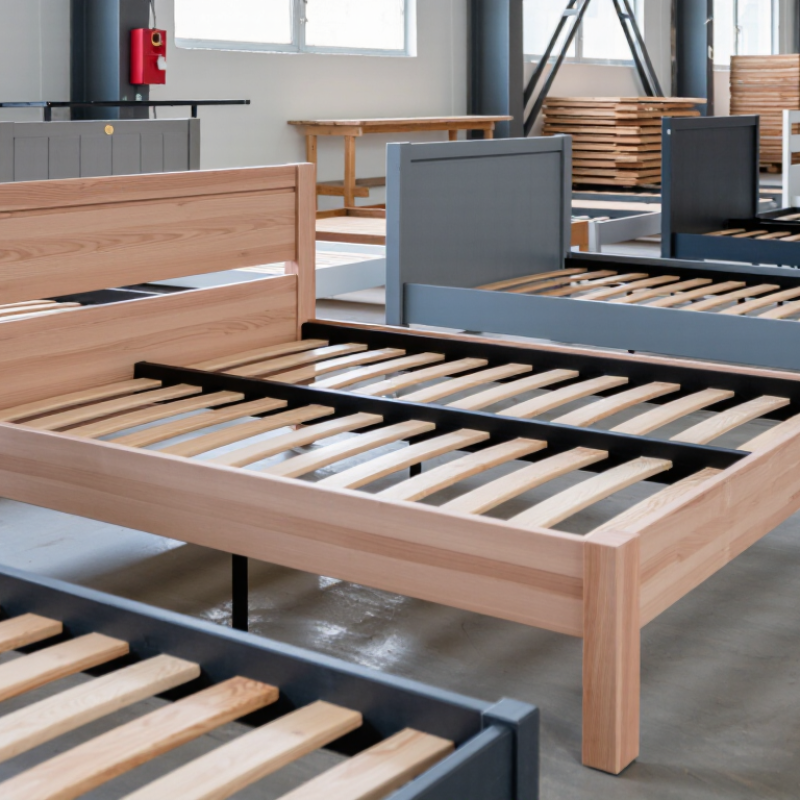
Best Slat Bed Frame Manufacturers in China?

What Defines a Quality Slat Bed Frame Manufacturer?

A quality slat bed frame manufacturer controls more than appearance. It specifies wood species, slat thickness, spacing, and moisture levels, then checks them across production batches. The USDA Forest Products Laboratory’s Wood Handbook reports that wood reaches about 9.2% equilibrium moisture content at 70°F and 50% relative humidity. That figure is a useful reference, not a universal factory target: species and local conditions matter. Poor moisture control can contribute to warping, uneven gaps, or squeaks.

Small details matter. Ask how the maker measures moisture and rejects out-of-spec parts.

Reliable testing matters too. ISO 19833:2018 sets out test methods for beds, including assessments of stability and durability. A capable factory should explain its test setup, load conditions, and inspection records, rather than simply claiming a frame is “strong.” Look for reinforced joints, smooth slat edges, consistent spacing, and secure center supports. These details are easy to miss in a product photo.

A perfect-looking sample is not proof of consistent production. Request batch-level quality records and ask whether the tested frame matches the materials and construction offered for shipment. No single test captures every home, and manufacturers should be candid about that limitation.

How Chinese Slat Bed Frame Production Is Organized

Chinese slat bed frame production is organized around specialized suppliers, component workshops, and final assembly plants. A frame maker may source timber or engineered panels, metal fittings, finishes, and packaging from separate vendors. In major furniture-producing regions, short transport links can help factories coordinate orders and replenish parts. Details vary by factory.

Production commonly begins with material grading and cutting. CNC equipment drills rail and leg connections, while workers check slat length, spacing, and edge finish. Slats are then matched to side rails and center supports before assembly checks. Not every line is fully automated. Manual adjustments still matter.

The China National Furniture Association’s 2023 industry review, using National Bureau of Statistics data, reported RMB 655.7 billion in operating revenue for above-designated-size furniture manufacturers, down 4.4% year on year. This is a broad furniture-sector figure, not a slat-bed-frame total. Buyers comparing manufacturers should request material specifications, load-test procedures, moisture-control records, and packaging samples. Ask how replacement slats are handled, too. That detail is easy to overlook.

Key Criteria for Evaluating Chinese Manufacturers

Evaluating a Chinese slat-bed-frame manufacturer means checking repeatable production, not just a polished sample. Request drawings with slat spacing, thickness, material, and load limits. Then compare them with a production sample. Ask for test records covering static load, repeated loading, joint stability, and noise. Useful details include wood moisture readings, finish consistency, and how rejected parts are handled. A certificate alone is not proof of a strong frame.

Check traceability and delivery controls, too. Can the factory link a batch to its material records and inspection results? The World Bank’s 2023 Logistics Performance Index scored China 3.7 out of 5 and ranked it 19th among 139 economies. That is useful shipping context, not a factory score. Request recent on-time shipment data, packaging photos, and the actual inland route to the port. Small gaps matter.

Visit the line if possible, or ask for a live video walkthrough. Watch workers check slat spacing and tighten fittings; these steps can reveal more than a brochure. Compare quoted tolerances with measurements from multiple units, not one hand-picked sample. Ask how the supplier handles changes in wood moisture or replacement parts. I would not treat a low price as a defect by itself, but unexplained differences between sample and batch deserve a second look.

Best Slat Bed Frame Manufacturers in China? Key Criteria for Evaluating Chinese Manufacturers

Suggested evaluation weights for comparing manufacturers — a practical buyer’s rubric, not market-survey results.

How to use this chart: Prioritize documented product testing and consistent quality control, then assess production capacity, materials, customization, export readiness, and after-sales support. Ask suppliers for evidence such as load-test reports, inspection records, material specifications, and sample approval processes.

How to Compare Slat Bed Frame Manufacturers and Products

When comparing slat bed frame manufacturers in China, look beyond the product photos. Ask for slat material, thickness, spacing, frame dimensions, and stated load capacity. These details affect support and fit, especially with heavier mattresses. Request a sample or clear close-up images of the joints, center rail, and leg connections. A smooth finish matters, but so does consistent spacing. One attractive sample cannot prove every production batch will match.

Tips: Compare written specifications side by side. Ask how the manufacturer checks frame stability and what happens if parts arrive damaged. Short answers can be useful, but vague answers deserve follow-up.

Check whether quoted prices include packaging, assembly hardware, and any requested testing. Confirm lead times against your own schedule, and ask how changes to materials or dimensions are recorded. If possible, review inspection records or arrange an independent check before shipment. A frame may look sturdy in a showroom yet loosen after repeated use; product claims alone cannot settle that question. I would avoid choosing on price alone, though comparing every small detail can also slow a decision. Focus on the features that affect safety, durability, and assembly.

Best Slat Bed Frame Manufacturers in China? — How to Compare Slat Bed Frame Manufacturers and Products

Use this comparison framework to assess suppliers and products consistently. The criteria below are verification points, not company-specific ratings or claims about any individual manufacturer.

Comparison Dimension What to Compare Evidence to Request What a Strong Offer Looks Like Questions to Ask
Frame and slat materials Frame material, slat material, component thickness, and whether wood is solid wood, plywood, or another engineered panel. Bill of materials, material specifications, and representative product samples. Materials and dimensions are stated clearly and match the sample and production specification. Are the slats and frame made from the same material across all sizes? Can substitutions be made only with written approval?
Slat spacing and support Slat width, thickness, spacing, central beam design, and number and placement of support legs. Dimensioned drawings, assembly instructions, and product-specific construction details. Support layout is documented for each bed size and is compatible with the intended mattress requirements. What is the clear gap between slats? Does the design change for larger frame sizes or different mattress types?
Load capacity and durability Rated load, the way the load is distributed, intended use, and the test method used to assess strength and durability. Test report identifying the tested model, configuration, applied loads, procedure, and results. Capacity claims are linked to a defined test or documented engineering basis—not just a general marketing statement. Does the stated capacity include the mattress and occupants? Was the tested sample built to the quoted production specification?
Safety and applicable standards Destination-market requirements, stability, sharp edges, entrapment considerations, and relevant bed testing. Current test reports from a competent laboratory, with scope and model details available for review. Reports identify the applicable standard and product tested. EN 1725:2019 is one example of a European standard for bed safety, strength, and durability; confirm which requirements apply to the intended market. Which standard and edition were used? Does the report cover this exact frame size and configuration?
Coatings and emissions Finish type, coating or adhesive information, and applicable chemical-emission requirements for the destination market. Finish specifications, material declarations, and relevant laboratory reports where required. Documentation identifies the tested material or finished product and the test method, rather than relying on an unsupported “eco-friendly” claim. Which parts were tested? Are the reports current and applicable to the materials used in this order?
Quality control Incoming-material checks, in-process inspections, final inspection, defect handling, and traceability. Inspection checklist, sample inspection record, corrective-action process, and agreed acceptance criteria. Inspection steps and defect limits are agreed before production, with records available for the relevant order. How are warped slats, loose joints, finish defects, and missing hardware recorded and resolved?
Customization and order terms Available sizes, design changes, hardware options, sample process, minimum order quantity, and quoted lead time. Written quotation, approved drawings, sample sign-off, and a production schedule. Specifications, tolerances, tooling or sample charges, order quantity, and delivery assumptions are stated in writing. When does the lead-time clock start? What changes require a new sample or revised quotation?
Packaging and shipment readiness Knock-down design, carton dimensions, protective materials, hardware packing, and shipping configuration. Packaging specification, carton layout, assembly guide, and sample-packaging review. Packaging is designed for the agreed shipping method, and fittings and instructions are protected and easy to identify. Can the supplier provide carton dimensions and packed-product weight before freight is booked?
Supplier documentation Business and production details, quality-management processes, and the scope of any certificates offered. Relevant business documents, audit information, and certificates that can be checked with the issuing body. Documents are valid, independently verifiable where applicable, and relevant to the product or facility being assessed. ISO 9001 relates to a quality-management system; it is not, by itself, product certification. Which facility and product scope does each certificate cover? Can its status be verified with the issuer?

Comparison tip: Ask every shortlisted supplier to quote against the same drawings, material specifications, test requirements, order quantity, and packaging assumptions. This makes quotations and evidence easier to compare.

Sourcing, Customization, and Quality Checks for Buyers

When sourcing a slat bed frame in China, ask manufacturers for drawings, material specifications, and a clear quotation before comparing prices. Confirm the wood or engineered-board grade, slat dimensions, spacing, and supported mattress size. A gap that looks minor on paper can affect mattress support. Ask how parts are labeled and packed, too; clear labels make assembly easier and reduce mix-ups.

Customization works best when requirements are specific. Share target dimensions, finish samples, hardware preferences, and packaging needs. Request a pre-production sample if the order is substantial, then check its joints, surface, and fit. Small details matter. A polished sample, however, does not guarantee consistent bulk production, so agree on inspection points and acceptable tolerances in writing. Changes late in production can also create delays, even when they seem simple.

For quality checks, inspect several frames from different cartons rather than relying on one display unit. Measure slat spacing, look for rough edges or cracks, and test whether fasteners seat cleanly. Ask the factory to document load testing and moisture control, and clarify what those tests actually cover. Check the carton corners and protective layers after a trial shipment. One easy detail to miss is the center support: it should sit firmly on the floor, not wobble under pressure. No checklist catches everything, but clear records make problems easier to trace.

Let's Work Together

The most innovative products come from the most innovative people - and for over 55 years our team has been propelled by curiosity and a steadfast dedication to inventing and creating the best foam formulations for our customers.