How to Test Foam Durability Before Buying?

Buying foam by appearance alone can lead to early sagging, uneven support, and disappointing comfort. A showroom cushion may feel resilient today, yet lose its shape after months of pressure. Foam durability testing helps reveal how materials behave beyond their first impression.

A practical evaluation begins with the foam’s density, firmness, and intended application. Higher density often supports longer service life, but it does not guarantee performance in every design. Ask suppliers for compression set, fatigue, and tensile strength data from recognized testing methods. Then examine a physical sample. Press the same area repeatedly, compare recovery after several minutes, and inspect the edges for permanent dents. Small details matter.

Test under realistic conditions.

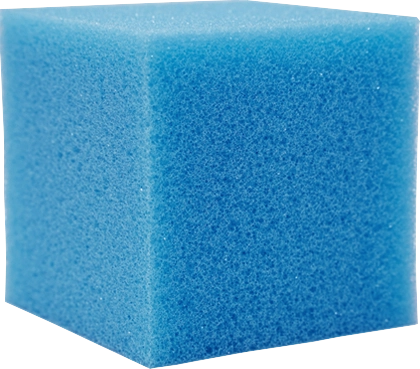
A sofa cushion, mattress layer, and packaging insert face different stresses. Temperature, humidity, fabric tension, and repeated loading can change results. If possible, use a sample that matches the final thickness and construction, not an isolated foam block. Record the load, duration, temperature, and visible changes. This creates evidence rather than relying on memory.

No test predicts every household perfectly. That limitation deserves attention. Supplier claims may also describe ideal laboratory conditions, while daily use includes spills, movement, heat, and uneven weight. A reliable buying decision combines test results, manufacturer experience, warranty terms, and independent technical advice. The goal is not to find foam that never changes. It is to understand how quickly change may occur, and whether that performance fits the product’s expected life.
How to Test Foam Durability Before Buying?

Identify the Foam Type and Its Intended Use

Before testing foam durability, identify its type and intended use. Polyurethane foam suits cushions, mattresses, and light upholstery. Memory foam offers pressure relief but recovers slowly. Latex usually feels springier and resists repeated compression. Closed-cell EVA foam works better for mats, padding, and moisture-prone areas.

Look for density, firmness, and compression-set data on the product sheet. Density often predicts service life better than softness alone. Press the foam firmly for ten seconds, then watch its recovery. A lasting dent may signal poor resilience. Fold or bend a small sample gently, but do not tear it. For seating foam, place a weighted object on one spot overnight. Check whether the surface remains uneven in the morning. This home test helps, but it is not a laboratory result.

Tips: Match the test to the job. A mattress sample needs repeated compression testing. A gym mat needs flexing, impact, and moisture checks. Ask how the foam performs under heat and humidity. These details matter in real rooms. I once judged foam only by its smooth feel, and that was a mistake. Soft foam can feel comfortable today but collapse sooner. Also inspect the edges, where weak foam often shows damage first.

How to Test Foam Durability Before Buying?

Identify the foam type and match its density and construction to the intended use. Density is a useful durability indicator, but firmness, compression cycles, moisture, heat, and support design also affect service life.

How to read this chart: Higher-density foam generally provides better resistance to permanent compression than lower-density foam of the same type. The values shown are representative density midpoints in kilograms per cubic metre and should be used as a comparison guide, not as a guarantee of lifespan.

Check Density, Firmness, and Material Specifications

How to Test Foam Durability Before Buying?

Density is a practical starting point because heavier foam usually contains more material per cubic metre. Check the stated density in kg/m³, not only the product description. I press the foam with my palm and compare it with a sample of known quality. It should recover evenly, without soft edges or permanent dents. Still, hand testing is limited. It can miss internal weakness.

Firmness should be measured through an IFD or ILD value, depending on the supplier’s testing system. This number shows how much force compresses the foam to a specific depth. A firm foam is not automatically durable. Excessive firmness may feel uncomfortable and place stress on seams or support layers. Ask for the test method, thickness, tolerance range, and compression percentage. Small details matter.

Material specifications can reveal more than marketing claims. Look for foam type, density, firmness, tensile strength, tear resistance, and compression-set results. A lower compression set generally indicates better shape recovery after repeated loading. I also request a recent laboratory report, because specifications can vary between production batches. Check the manufacturing date when possible. Fresh foam is not always better, but unexplained storage time deserves questions. I once judged a sample by its quick rebound and ignored its weak edge support. That mistake changed my testing routine. Use repeated compression, inspect the surface, and record changes after each test.

Perform Compression and Recovery Tests

How to Test Foam Durability Before Buying?

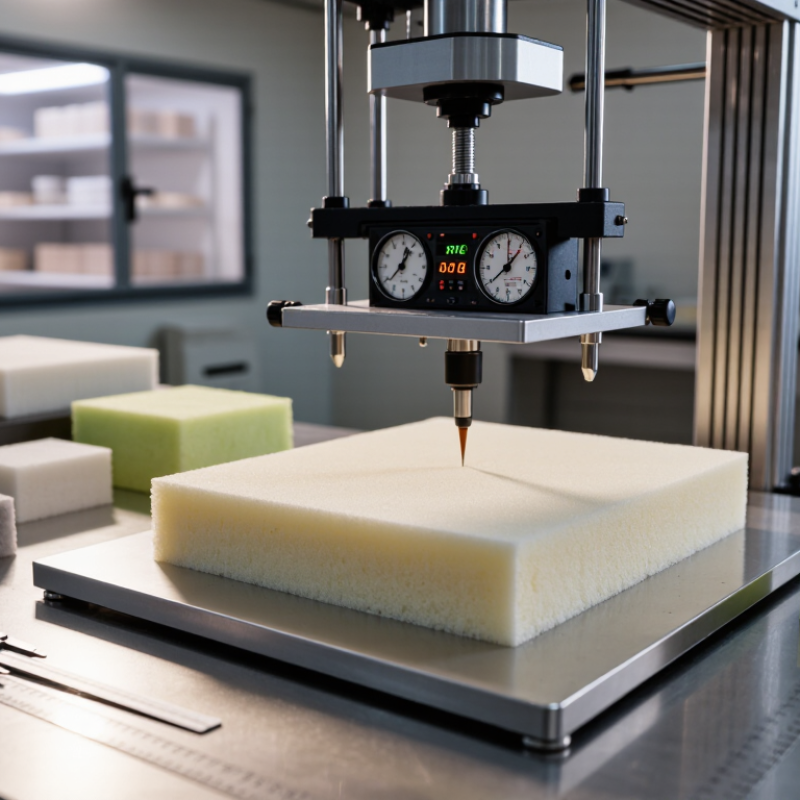
Performing compression and recovery tests can reveal how foam may behave after repeated use. In my workshop checks, I place a foam sample on a flat table. I measure its original thickness at several points. This helps avoid trusting one unusually firm spot. Then, I compress it with a firm, evenly distributed weight. A load covering about one-quarter to one-half of the foam’s thickness works for a practical comparison.

Keep the pressure steady for 30 minutes. Remove the weight and measure the foam after one minute. Check it again after 24 hours. Good recovery means the material returns close to its starting thickness. Look for lasting dents, uneven edges, cracking, or a slow rebound. Press the same area repeatedly, too. A foam sample can recover once but weaken after many cycles. That detail is easy to miss.

Tips: Use the same weight, time, and room temperature for every sample. Photograph the foam before and after testing. Record measurements instead of relying on touch alone. My home setup is not laboratory-perfect, and moisture or temperature can affect results. Still, consistent testing gives more useful evidence than a quick showroom squeeze. Test several areas, especially corners and high-pressure zones. A soft feel may be comfortable, but it does not automatically indicate long-term durability.

Evaluate Resistance to Moisture, Heat, and Chemicals

How to Test Foam Durability Before Buying?

Moisture is often the first hidden threat. Cut a small sample and weigh it dry. Soak it in water for 24 hours, then record its weight, thickness, and recovery. ASTM D3574 includes water absorption and compression-set procedures for flexible foam. A large weight gain or slow rebound suggests open cells, weak structure, or poor drying performance.

Do not test only once. Real rooms experience spills, condensation, and repeated drying.


Heat and chemicals require controlled checks.
ASTM D3574 compression-set testing commonly uses 50% deflection for 22 hours at 70°C, followed by recovery measurement. Compare the original thickness with the recovered thickness. Permanent loss above your application limit can cause sagging.

For chemicals, place separate samples in diluted detergent, mild acid, and household oil. ASTM D543 provides a useful resistance-testing framework, although it is not a complete foam warranty.

Measure swelling, discoloration, tackiness, odor, and mass change after 24 and 72 hours. Keep ventilation and protective equipment in mind.

Small tests miss aging effects. A more realistic trial uses repeated wetting, heating, and chemical exposure, but this takes time.
My imperfect rule is simple: if the foam looks acceptable but feels different, treat that change as evidence.

Compare Test Results with Expected Durability Standards

How to Test Foam Durability Before Buying?

Before buying foam, request test data instead of trusting a “high durability” claim. In practical testing, compare density, compression set, and fatigue loss. Density suggests material consistency, but it does not prove long service life. Compression set measures permanent thickness loss after sustained pressure. Fatigue testing simulates repeated use, such as sitting, kneeling, or closing a case. A thin sample can look impressive and still fail quickly.

Match each test result with the expected durability standard for its application. Bedding foam may need different limits than packaging inserts or vehicle cushions. Check the test method, temperature, humidity, sample thickness, and loading force. Results from ASTM or ISO-based procedures become more useful when the report names the exact method. Compare the reported percentage with the stated limit, then allow a safety margin. An 8% compression set might suit light use, but seem risky under daily heavy loading. Standards guide decisions. They do not guarantee performance.

I also inspect a cut sample after cycling. Look for cracks, powdery edges, uneven recovery, and a lingering dent. Record thickness before testing, after 24 hours, and after repeated compression. Do not compare numbers from different methods as if they were equal. I once treated a strong density figure as proof of durability. That assumption was incomplete. Heat, moisture, adhesives, and the supporting structure can change results. If a report lacks raw measurements or clear pass criteria, request clarification before paying. Small uncertainty can become a costly replacement.

Let's Work Together

The most innovative products come from the most innovative people - and for over 55 years our team has been propelled by curiosity and a steadfast dedication to inventing and creating the best foam formulations for our customers.