

7 Tips for Choosing Pet Wet Wipes for Global Buyers

Choosing Pet Wet Wipes for international markets requires more than comparing prices and attractive packaging. Buyers must examine safety, materials, performance, and supplier reliability together. A wipe may look soft in a sample pack, yet feel rough after repeated use. Its fragrance may seem pleasant in one market but too strong for sensitive pets elsewhere. These details affect customer trust, repeat purchases, and brand reputation.

This guide presents seven practical tips for evaluating Pet Wet Wipes with greater confidence. It considers nonwoven fabric, moisture balance, skin-friendly ingredients, packaging protection, production consistency, and supplier documentation. Buyers should request clear ingredient information, batch records, and suitable product testing before placing large orders. Claims such as “natural” or “hypoallergenic” should not be accepted without supporting evidence. Standards and labeling expectations also vary between markets, so regional review remains important.

Small choices matter. A weak lid can dry the pack within days. Excess liquid can make grooming messy. Poor sealing may create odor during shipping. These problems are easy to miss during a quick sample check. A practical evaluation should include opening, wiping, resealing, and storing the product under realistic conditions. No checklist is flawless. I once underestimated how strongly packaging influenced buyer confidence, even when the wipes performed well. That experience shows why product quality and presentation must be assessed together. Reliable sourcing comes from careful questions, documented answers, and a willingness to reconsider assumptions before committing to global orders.
7 Tips for Choosing Pet Wet Wipes for Global Buyers

Understanding Pet Wet Wipes and Their Main Uses

Understanding Pet Wet Wipes and Their Main Uses

Pet wet wipes are pre-moistened sheets designed for quick cleaning between baths. They can remove mud from paws, food from facial fur, and loose dirt from coats. Some are made for ears, while others are intended only for external skin. These uses should not be confused. A wipe for paws may be unsuitable around the eyes or inside the ears. Veterinary guidance is valuable when a pet has allergies, wounds, or recurring skin problems.

Tip: Check the intended use before buying. Look for clear directions, gentle ingredients, and a stated skin suitability. Fragrance-free options may be better for sensitive animals, although “natural” does not always mean harmless. Alcohol, strong perfumes, and harsh preservatives can cause irritation in some pets. I would test one wipe on a small area first. It feels slower, but it can prevent a larger reaction.

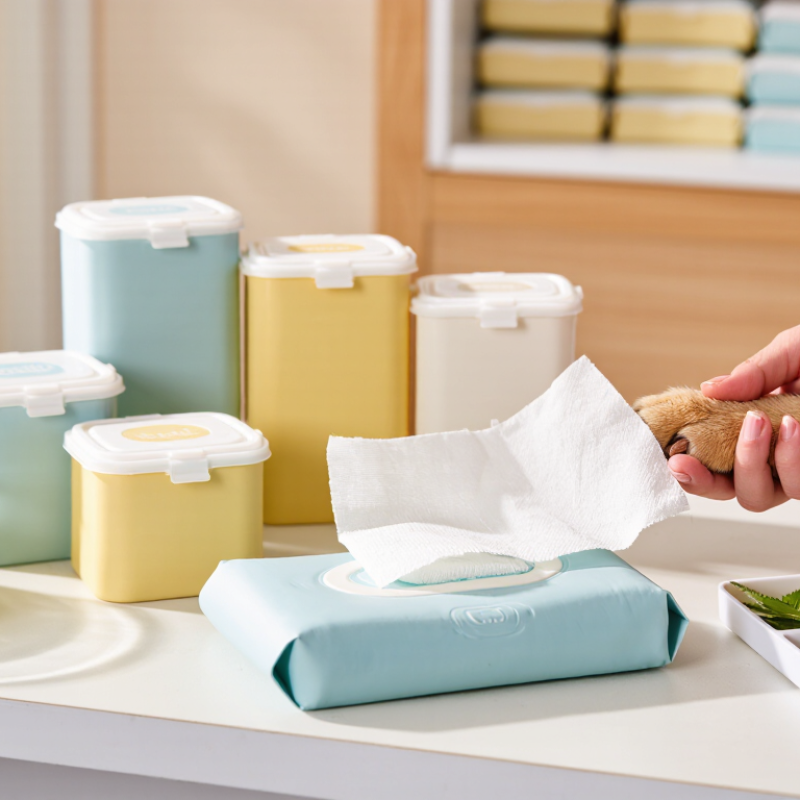
Tip: Examine the sheet, liquid, and packaging together. A thick, soft sheet cleans muddy paws more effectively than a thin sheet that tears quickly. Resealable packaging helps prevent drying during storage and transport. Global buyers should review ingredient labels, batch information, shelf life, and local disposal rules. Do not flush wipes unless the instructions and local systems clearly allow it. Even a convenient wipe creates waste, so buyers should consider recyclable packaging and practical pack sizes.

Checking Safety, Ingredients, and Skin Compatibility

Global buyers need more than attractive packaging when choosing pet wet wipes. FEDIAF’s 2024 Facts and Figures report estimates 139 million European households own a pet, showing the scale of daily-care demand. High volume requires careful safety checks.

Read the full ingredient list. Choose wipes made with purified water, mild cleansing agents, and clearly identified preservatives. Fragrance-free options may reduce irritation risks, especially for pets with allergies or sensitive skin. Avoid products containing strong perfume, harsh alcohols, or undisclosed essential-oil blends. “Natural” does not automatically mean gentle. That assumption needs challenging.

Look for pH-balanced wording, but do not treat it as proof of compatibility. Pet skin differs by species, body area, age, and medical condition. Apply one wipe to a small area first, then watch for redness, licking, dryness, or discomfort for 24 hours. Stop immediately if reactions appear. Never use household disinfectant wipes on animals. Their chemicals may irritate skin or harm pets during grooming. The American Veterinary Medical Association recommends consulting a veterinarian for persistent skin problems, rather than masking symptoms with repeated cleaning. Buyers should also check batch numbers, shelf life, sealed packaging, and independent safety documentation. I would prefer a modest claim supported by testing over a dramatic claim without evidence.

7 Tips for Choosing Pet Wet Wipes for Global Buyers - Checking Safety, Ingredients, and Skin Compatibility
Tip Evaluation Dimension What Global Buyers Should Check Practical Safety Benchmark Warning Signs and Buyer Actions
1 Confirm the intended use Verify whether the wipes are intended for paws, coat, facial areas, ears, sanitary areas, or general external cleaning. Check whether the product is designed for dogs, cats, or both. The label should clearly state the target animal, body area, directions for use, storage conditions, and whether rinsing is required. Avoid products with vague “all-purpose” claims and no species or application guidance. Request a separate use-risk assessment for facial, ocular, mucosal, or damaged-skin contact.
2 Review the complete ingredient list Examine the full INCI or ingredient declaration, including water, cleansing agents, humectants, preservatives, fragrances, botanical extracts, and pH-adjusting ingredients. Every intentionally added ingredient should be identified by a recognized ingredient name, with its function and concentration range available in the technical file. Be cautious when the supplier provides only “natural formula” or “chemical-free” claims. Ask for the complete formula, allergen information, and documentation for every functional ingredient.
3 Assess fragrance and essential oils Check for parfum, fragrance allergens, essential oils, menthol, camphor, and other odor-masking ingredients. Consider that pets may lick residue from their fur or paws. For sensitive-skin or frequent-use products, an unscented formula with a short ingredient list generally reduces avoidable fragrance exposure. Do not rely on “herbal” or “aromatherapy” wording as proof of safety. Require species-specific toxicology review and clear labeling when essential oils or strong fragrances are present.
4 Check skin compatibility Request finished-product testing for irritation and sensitization, and review compatibility with repeated use. The test formula, wipe substrate, and lotion should match the commercial product. Prefer evidence from recognized laboratory methods, such as in vitro irritation or sensitization approaches where applicable, supported by a documented risk assessment. Human patch-test data alone may not predict pet tolerance. Stop use if redness, itching, swelling, or discomfort occurs, and require veterinary or toxicological review for sensitive-animal claims.
5 Verify microbiological protection Review preservative efficacy, microbial limits, production hygiene, water quality, filling controls, and stability after opening. Wet wipes are water-based products and can support microbial growth if poorly preserved. Request preservative efficacy testing, routine microbiological specifications, batch-release results, and stability data covering the claimed shelf life. Reject products with unexplained changes in odor, color, texture, or package swelling. Do not accept “preservative-free” claims without a validated alternative preservation and contamination-control strategy.
6 Evaluate the wipe material and packaging Check fiber composition, wet strength, linting, lotion uniformity, dispensing performance, resealability, and compatibility between the formula and packaging. The substrate should remain intact during use, release minimal lint, and maintain moisture throughout the stated pack life. Packaging should protect the wipes from drying and contamination. Avoid weak substrates that tear or leave fibers around eyes, paws, or wounds. Confirm whether the material contains plastic fibers and follow destination-market disposal and labeling requirements.
7 Confirm regulatory and claim compliance Compare the formula, claims, label, safety data, certificates, and technical dossier with the requirements of each destination market. Distinguish cosmetic or cleansing claims from veterinary medicinal or disinfectant claims. Use conservative claims such as “cleans” or “removes surface dirt” unless the required efficacy and regulatory evidence supports stronger claims such as antimicrobial, antifungal, wound-care, or parasite-control performance. Claims can change the regulatory category and documentation burden. Obtain product specifications, certificate of analysis, safety data, stability results, and compliant labeling before import or private-label production.

Evaluating Materials, Moisture, Size, and Cleaning Performance

Global buyers should assess pet wet wipes by material, moisture, size, and cleaning performance. In sample checks, I examine the nonwoven fabric before judging its appearance. Soft spunlace usually feels gentle, while rough fibers may leave irritation after repeated use. A strong sheet should stay intact when wiping paws, fur, or muddy skin. Recycled content can be useful, but suppliers should provide clear material information and test records.

Moisture balance matters. Too little liquid causes friction and poor cleaning. Too much liquid creates dripping, waste, and difficult handling. I usually test several sheets from different packages, not just one sample. The liquid should spread evenly across the wipe. Its odor should remain mild and consistent. Buyers should also request pH data, preservative details, and storage guidance. No formula is perfect.

Size affects real usage. A larger wipe may clean dirty paws with fewer sheets, while a smaller format can reduce waste during quick touch-ups. Check the folded size, opening design, and resealing performance during transport. Then compare cleaning results using the same amount of soil on different surfaces. Look for hair, grease, mud, and residue after wiping. A pleasant fragrance can hide weak performance. That deserves attention. Suppliers should explain their testing methods and provide batch records, although paperwork alone cannot replace hands-on inspection. A short field trial with groomers or pet owners may reveal problems that laboratory checks miss. Some results may be disappointing, but they are valuable before a global order is placed.

Comparing Packaging, Shelf Life, Certifications, and Compliance

7 Tips for Choosing Pet Wet Wipes for Global Buyers

Packaging affects safety, transport, and customer trust. Grand View Research valued the global wet wipes market at approximately USD 24.7 billion in 2023. That scale increases pressure for reliable packaging. Choose a moisture-locking lid, strong seals, and leak-resistant pouches. Test closure performance after repeated opening. Seal it tightly. Recyclability claims also need evidence under the destination market’s rules. A cheaper package can create drying, leakage, or contamination complaints.

Shelf life should come from real-time and accelerated stability testing. Check moisture retention, odor, color, microbial quality, and wipe strength. Preservative systems may require additional challenge testing. Do not guess. A printed expiry date without supporting records is weak evidence. Keep batch codes, test results, and storage conditions available for importers. Some buyers prefer twelve to twenty-four months, but the correct period depends on formulation and packaging. Longer is not automatically better.

Certifications need careful interpretation. ISO 9001 supports quality management, while ISO 22716 is mainly relevant to cosmetic manufacturing practices. Neither certification alone proves pet-wipe safety. For European sales, review REACH obligations and Regulation (EU) 2023/988 requirements. Antibacterial or disinfecting claims may trigger biocidal-product rules. In the United States, labels should be truthful, supported, and clear about intended use. Ingredients, warnings, net quantity, country of origin, lot number, and importer details should match local requirements. A checklist can still miss something. Independent compliance review is worth the cost.

Selecting Reliable Suppliers for Global Pet Wet Wipe Markets

Choosing reliable suppliers is central to serving global pet wet wipe markets. Product quality starts with clear specifications. Confirm the fabric type, moisture level, sheet size, fragrance policy, and resealable packaging. Ask for samples from different production batches. One sample proves little.

A dependable supplier should share factory details, quality procedures, and material traceability. Request test reports for skin safety, microbial control, and packaging performance. Check whether documents match the actual product. They should also explain their batch coding and complaint process. Visit the facility when possible, or use an independent audit. Clean production areas matter. So does consistent staff training. Small gaps can become large problems.

Evaluate production capacity before negotiating price. A low quotation may hide weak materials, unstable lead times, or limited inspection. Discuss minimum order quantities, storage conditions, shipping preparation, and replacement procedures in writing. Reliable communication is measurable. Replies should be clear, timely, and supported by evidence. Ask how the supplier manages formula or fabric changes. This question is often overlooked. It should not be. Review destination-market requirements with qualified local professionals, because one document may not fit every country. No supplier is perfect. The better choice is transparent, responsive, and willing to improve when testing reveals a weakness.

Article Source:

Let's Work Together

The most innovative products come from the most innovative people - and for over 55 years our team has been propelled by curiosity and a steadfast dedication to inventing and creating the best foam formulations for our customers.