
How to Choose Decorative Boards for Your Project?
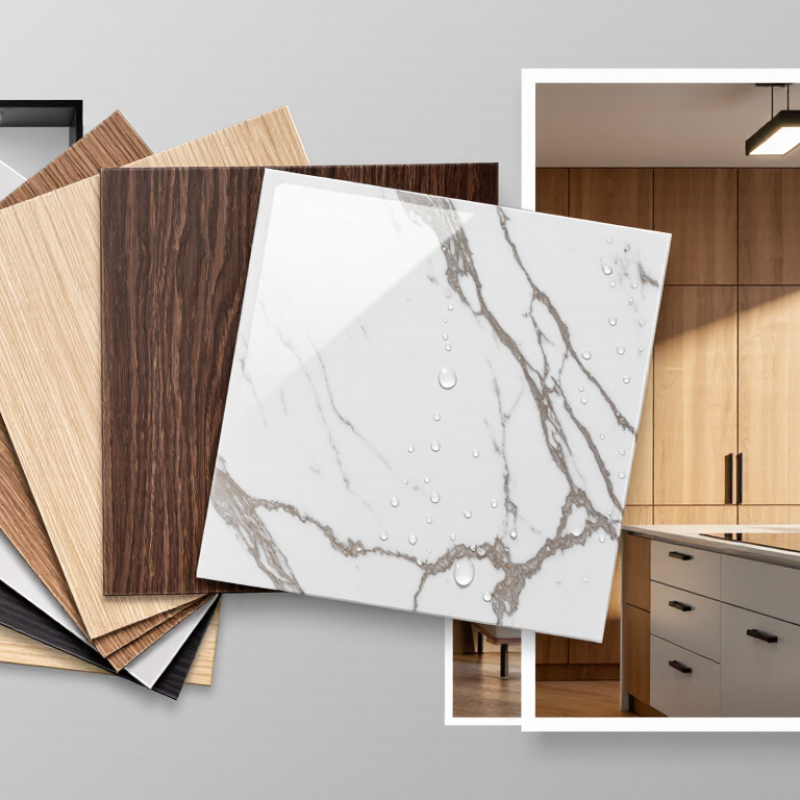
Choosing Decorative Boards is a practical design decision, not just a color choice. The right surface must suit the room, the project’s use, and the way it will be maintained. A kitchen cabinet, retail counter, and bedroom wall face very different demands. Scratches, moisture, sunlight, and frequent cleaning can all change how a finish performs.
Dieter Rams, an influential industrial designer, offered a useful principle: “Good design is as little design as possible.” Applied here, that means choosing a board that supports the project rather than overpowering it. A matte oak finish may soften a bright room; a dark, textured panel can add depth, but may show dust more clearly. Small samples help. View them beside the actual flooring and under the room’s lighting. Samples can still mislead.
This guide looks at the factors that matter before you buy: board type, finish, thickness, edge treatment, durability, and installation needs. Check manufacturer specifications for intended use, cleaning guidance, and performance limits. For damp areas, confirm that the product is suitable and that edges can be protected as recommended. For high-traffic spaces, consider abrasion resistance and repair options. No single board suits every project. Even careful choices involve trade-offs. A striking finish may need more upkeep, while a durable surface may feel less natural. The goal is a considered fit, not a perfect sample.
Identify the Project’s Purpose and Site Conditions
Before choosing a decorative board, decide what the surface needs to do. A hallway wall faces scuffs from bags and shoes; a bedroom feature wall may need little more than visual warmth. Kitchens and laundry areas bring frequent cleaning, splashes, and changing humidity. Match the board’s finish and care requirements to those daily demands, not just to a sample viewed under showroom lights. Small detail, big difference.
Then inspect the actual installation site. Note whether it is indoors or outdoors, how much direct sun reaches it, and whether moisture collects nearby. Check the wall or frame for uneven spots, existing dampness, and secure fixing points. A board cannot correct a soft or poorly prepared substrate. In older rooms, hidden moisture can be easy to overlook, so investigate staining or musty odors before covering the surface.
Measure the area, including corners, openings, and edges where boards may need trimming. If possible, bring a sample to the site and view it in morning and evening light; colors can shift more than expected. Ask how the material responds to temperature changes and what cleaning products are suitable. I have seen careful color choices fall flat when the texture clashed with nearby flooring. That judgment is subjective, though, and a sample can still mislead when viewed alone.
Compare Board Materials, Core Types, and Construction
How to Choose Decorative Boards for Your Project?
Compare Board Materials, Core Types, and Construction
Start with the board’s job, not its finish. Medium-density fiberboard (MDF) gives painted doors and routed panels a smooth, uniform face. Particleboard is often a cost-conscious choice for shelves and cabinet carcasses, while plywood’s cross-laminated layers can provide useful strength and screw-holding. FAO’s 2022 Forest Products Yearbook reports global wood-based panel production of roughly 379 million cubic metres. That scale shows how widely panels are used, but not that every grade suits every room. Check the product’s technical sheet and intended-use rating.
Core construction affects weight, stability, and how edges behave. A dense, uniform core supports clean machining; a layered core can offer strength across the panel. Lightweight cores reduce handling weight, but may need careful fixing around hinges and heavy hardware. The USDA Forest Products Laboratory’s Wood Handbook notes that moisture changes can affect wood’s dimensions and performance. In kitchens or bathrooms, therefore, compare moisture resistance and seal exposed edges—not just the decorative surface. A glossy face cannot protect a raw edge. This detail is easy to miss.
Tips: Match board thickness to the span and load. Ask for emissions and moisture-resistance documentation, then inspect a cut edge for voids or loose particles. Test a sample under your actual lighting; color can shift more than expected. My own first comparison would still be imperfect without checking the installation conditions.
Evaluate Surface Finishes, Colors, and Patterns
A decorative board can look calm under showroom lights and unexpectedly warm beside a north-facing window. Compare finish, color, and pattern in the room where the board will be installed. View samples upright and flat. Light changes both sheen and perceived color. A matte surface softens reflections, while gloss can make a small room feel brighter. It also reveals fingerprints more readily. Check samples with your actual flooring, cabinet pulls, and wall paint—not just a phone image.
Color preferences offer context, not a rule. The 2023 Houzz U.S. Kitchen Trends Study reported that white was chosen for 40% of renovated kitchen cabinets, while wood tones accounted for 21%. These figures describe surveyed U.S. kitchen projects, not every room or market. Still, they show why neutral boards remain common. A pale oak pattern can add warmth without dominating; a strong marble pattern may compete with veined stone nearby. Less can be more.
Look closely at the printed grain and repeat pattern. On a wide panel, repeated knots or identical streaks may become obvious. Check several boards together, because one sample can hide variation. Ask how the finish handles routine cleaning and whether edge surfaces match the face. There is no perfect choice. Even a well-matched sample may feel different after installation, so test it in changing daylight before ordering.
Check Durability, Safety, Dimensions, and Compatibility
How to Choose Decorative Boards for Your Project?
Choose a board for its exposure, not just its appearance. Kitchens and entryways need surfaces that tolerate frequent cleaning and occasional moisture; dry living areas allow more options. The USDA Forest Products Laboratory’s Wood Handbook (2021) explains how moisture changes can make wood-based materials swell or shrink. Check the board’s intended-use rating, edge protection, and care instructions. A glossy sample can look convincing, but it may reveal scratches more readily than a textured finish.
Safety deserves a document check. Ask the supplier for test results covering emissions and the specific board type. The WHO’s 2010 Indoor Air Quality Guidelines set a formaldehyde guideline of 0.1 mg/m³ over 30 minutes; this is an indoor-air guideline, not a product certification limit. Measure the installation area at several points, since walls and floors are rarely perfectly straight. Compare those measurements with the actual board thickness and usable dimensions, not only nominal sizes. Then confirm that the adhesive, substrate, and edge trim are compatible. Small details matter.
Tips: Keep an offcut for a fit and finish test. Check a hidden corner first. I’ve seen careful measurements still miss a proud screw or uneven wall; allow for adjustment, and verify the maker’s installation instructions before cutting.
| Board Type | Typical Dimensions | Durability | Safety Considerations | Compatibility and Common Uses |
|---|---|---|---|---|
| Melamine-faced particleboard | Commonly about 1,220 × 2,440 mm; often 16–18 mm thick | Hard, wipe-clean surface; edges and core can swell if exposed to water for long periods. | Choose boards that meet applicable formaldehyde-emission rules. Cut edges may need sealing; control dust when cutting. | Suitable for wardrobes, shelving, and dry-area cabinetry. Use compatible edge banding and fixings designed for particleboard. |
| Decorative MDF | Commonly about 1,220 × 2,440 mm; available in multiple thicknesses, often 6–25 mm | Smooth, uniform surface for paint or veneer; standard MDF is not intended for prolonged damp conditions. | Use compliant low-emission material and dust extraction or a suitable respirator when machining. Seal exposed faces and edges as needed. | Works well for painted panels, wall details, and furniture components. Use moisture-resistant grades only where their specifications allow. |
| Decorative plywood | Commonly about 1,220 × 2,440 mm; often 9–18 mm thick | Cross-laminated layers provide useful strength and stability; performance depends on grade, veneer, and adhesive. | Check the panel’s emissions and intended-use rating. Wear eye protection and manage dust during cutting. | Suitable for furniture, cabinets, and wall panels. Select an appropriate grade for the expected moisture exposure and finish. |
| High-pressure laminate (HPL) sheet | Sheet sizes vary; a common format is about 1,300 × 3,050 mm; often 0.7–1.2 mm thick | Resistant to everyday abrasion and staining; a thin sheet is not a structural panel by itself. | Follow adhesive and cutting-product instructions. Avoid overheating during fabrication and provide suitable ventilation. | Typically bonded to a stable substrate such as plywood or MDF. Confirm that the adhesive and substrate suit the project conditions. |
| Cement-bonded particleboard | Common formats are around 1,200 × 2,400 mm; thicknesses often range from 8–40 mm | Generally more tolerant of moisture and impact than standard particleboard; heavy and still requires correct detailing. | Cutting creates dust; use appropriate respiratory and eye protection. Check the product documentation for fire and exposure ratings. | Can suit demanding interior or exterior applications when the board is rated for them. Use compatible fasteners, supports, and finishes. |
| Solid wood panel | Panel sizes vary; commonly made from joined strips, with thicknesses around 18–30 mm | Can be repaired and refinished; wood expands and contracts with changes in humidity. | Check coatings and finishes for suitability, and use dust control when sanding or machining. | Suitable for furniture, doors, and visible surfaces. Allow for wood movement in panel sizing, joints, and installation details. |
Dimensions are typical examples, not fixed standards; availability varies by supplier and region. Confirm the panel’s technical data, intended-use rating, and local safety requirements before purchase.
Plan Installation, Care, and Long-Term Maintenance
Before choosing decorative boards, map the room’s moisture, sunlight, and cleaning demands. A kitchen wall near a kettle needs a different surface than a dry bedroom.
The USDA Forest Products Laboratory’s Wood Handbook places wood’s average fiber saturation point near 30% moisture content; below that point, solid wood can shrink or swell as moisture changes. Leave the manufacturer-specified expansion gap, and acclimate boards as directed.
Don’t guess. A tight corner can buckle after a humid season.
Plan care before installation. Check whether the finish tolerates a damp cloth, mild cleaner, or only dry dusting.
The U.S. Environmental Protection Agency recommends keeping indoor relative humidity below 60%, ideally between 30% and 50%, to help limit moisture problems. A small hygrometer can reveal swings that feel invisible.
Keep boards clear of plumbing leaks, wipe spills promptly, and inspect seams and edges every few months.
One overlooked detail: cleaning water can collect along a lower edge. I’d rather allow for that risk than assume a board is fully sealed.
Keep a spare offcut to test cleaners and compare color changes over time.
Article Source:
Let's Work Together
The most innovative products come from the most innovative people - and for over 55 years our team has been propelled by curiosity and a steadfast dedication to inventing and creating the best foam formulations for our customers.