How to Choose Carton Box Material in 2026?

Choosing Carton Box Material in 2026 is not just a question of price. It is a decision about product protection, shipping conditions, print quality, and end-of-life handling. A box that feels sturdy in a showroom may soften after hours in a humid warehouse. A lighter board may cut freight weight, but only if it still protects the product through stacking and delivery. Details matter.

The American Forest & Paper Association’s 2023 recycling report put the U.S. paper recycling rate at 65.7%. That figure offers useful context, but it does not mean every carton is equally recyclable in every local system. Material composition, coatings, and contamination can affect what happens after use. Smithers’ industry research on corrugated packaging also highlights the sector’s continued focus on material efficiency and performance. For buyers, these reports are starting points—not substitutes for testing a box against its actual route and product.

Dennis Colley, president of the Fibre Box Association, has emphasized a practical principle: corrugated packaging performs best when its strength is matched to the shipment. That is a helpful lens for comparing recycled-content board, virgin fiber, and different flute profiles. Still, specifications can look convincing and fail in a real test. Slightly inconvenient, but important. This guide examines how to weigh protection, cost, sustainability, and supplier consistency when selecting Carton Box Material for 2026. It also considers what to test before approving a material, so the final choice works beyond the sample table.
How to Choose Carton Box Material in 2026?

Identify the Product, Shipping Conditions, and Protection Needs

How to Choose Carton Box Material in 2026?

Start with the product, not a preferred box grade. Record its weight, dimensions, shape, and weak points. A glass item needs cushioning around edges; a compact metal part may need a snug fit to stop it shifting. Leave room for inserts, but avoid large empty spaces that let the product gain momentum. Small details matter.

Next, consider the journey. Will cartons travel by truck, air, or several handling stages? Could they sit in humid storage or face rain during loading? Moisture can soften corrugated board, while long stacking periods put pressure on lower boxes. Rain changes everything. For heavier loads or tall stacks, compare board strength and flute construction with a packaging supplier, using the packed weight and stacking plan rather than guesswork.

Match protection to likely damage, not every imaginable risk. Choose cushioning that absorbs shocks, and use dividers when products could strike each other. Then pack a sample and check fit, closure, and damage after handling or transit testing. A test cannot perfectly recreate every route. That limitation is worth noting. Overly strong material adds cost and weight; too little protection can lead to crushed corners or broken contents. Review the choice when product dimensions, shipping routes, or packing methods change.

Compare Common Carton Materials and Their Performance

How to Choose Carton Box Material in 2026?
Compare Common Carton Materials and Their Performance

Carton material affects protection, shipping weight, print quality, and cost. Corrugated board suits heavier goods or parcels that may be stacked. Its fluted center cushions knocks, while single-wall board often works for everyday shipments. Double-wall board adds strength but also bulk. For lightweight items, folding paperboard can create a neat retail carton with crisp printed details. It offers less cushioning, though, so fragile contents may need an insert.

Kraft paperboard has a natural look and can handle many dry products. Recycled-fiber board may reduce reliance on new fiber, but performance depends on its grade and construction. Damp storage can soften paper-based cartons, regardless of their appearance. Details matter. Check the packed carton, not just a flat sample: corners may buckle under load, and a snug fit can reduce movement. The right choice is not always the thickest one.

Tips: Match board strength to the product’s weight, shipping route, and stacking conditions. Ask for the board grade and run a small drop or compression test with your actual packaging. Test before scaling. I would not assume a material performs consistently across suppliers; specifications and samples deserve a second look.

How to Choose Carton Box Material in 2026?

Compare common carton structures by their typical board thickness.

Folding carton board is lightweight and suited to retail packaging. Single-wall corrugated is a versatile choice for shipping; double-wall and triple-wall structures generally provide greater cushioning and stacking support for heavier or more demanding shipments. These are indicative thickness ranges, not strength ratings: actual performance depends on paper grades, flute profile, construction, and box design. Confirm requirements with packaging specifications and testing.

Select Board Strength, Wall Type, and Box Construction

How to Choose Carton Box Material in 2026?
Select Board Strength, Wall Type, and Box Construction

Choose board strength based on the packed product, not just its weight. A compact item may concentrate pressure on one small area, while a larger, lighter product can strain the box during stacking. Ask for edge-crush or burst-test information, then consider pallet height, delivery distance, and storage humidity. Test a filled sample under realistic conditions. A neat-looking carton can still buckle.

Wall type affects cushioning and stacking strength. Single-wall board often suits lighter goods and shorter shipping routes. Double-wall board adds protection for heavier loads, repeated handling, or longer storage. Triple-wall board may be appropriate for demanding applications, but extra material can add cost and bulk. Box construction matters too: a snug fit limits movement, while oversized cartons may need more cushioning. Pay attention to seams, flaps, and closure points. These small details are easy to overlook.

Tips: Check that the product cannot slide when the carton is gently tilted. Compare samples after exposure to damp conditions if shipments may face moisture. Review the test data with your packaging supplier, but do not treat one rating as a guarantee. Packaging choices involve trade-offs, and a first sample may need revision.

Evaluate Recycled Content, Sustainability, and Compliance

Choosing carton box material in 2026 means looking beyond the recycled-content percentage. Ask for documentation showing the fiber’s origin and the method used to calculate recycled content. A number without context can be hard to compare. Check whether the material’s strength suits your product and shipping route. Recycled fibers may vary in shade, stiffness, and surface finish. Test sample boxes under realistic stacking and moisture conditions before placing a large order.

Sustainability also depends on how much material the box uses, whether its layers can be separated, and how local collection systems handle it. A lighter box can reduce material use, but not if it causes more damage in transit. That trade-off deserves a real test. Review supplier declarations, test results, and any chain-of-custody documents available. Do not treat a certificate as proof that every environmental claim is meaningful.

Compliance depends on the box’s intended use and the markets where it will be sold. Confirm current requirements for packaging composition, labeling, and recyclability claims. If the carton may directly contact food or another regulated product, request suitable evidence for that use. Keep records of material specifications and approval changes. Requirements can shift, and paperwork can lag behind production. A simple checklist helps, though it will not replace a careful review.

How to Choose Carton Box Material in 2026? — Evaluate Recycled Content, Sustainability, and Compliance

Material option Illustrative recycled-fiber content Protection and performance Sustainability considerations Compliance and verification checks Common use cases
Recycled-content corrugated board Example specification: 80% recycled fiber by total fiber mass. Confirm the actual percentage with the supplier. Can provide effective shipping protection when flute type, board grade, and box design are matched to product weight and distribution conditions. Uses recovered paper fiber. Performance and recyclability can be affected by coatings, laminates, wet-strength treatments, and attached components. Request a recycled-content declaration and relevant board-performance test results. Check that inks, adhesives, and coatings are compatible with local paper-recycling systems. General e-commerce shipments, dry goods, and standard distribution cartons.
Mixed-fiber corrugated board Example specification: 50% recycled fiber by total fiber mass, with the balance from other paper fibers. Performance varies by liner and fluting grades. Ask for edge-crush or box-compression results for the finished packaging where stacking is important. Can balance recovered-fiber use with specified strength needs. A higher recycled percentage alone does not establish a lower total environmental impact. Verify the fiber-content calculation, test method, and any certification claim. Check applicable packaging labeling and extended-producer-responsibility requirements in the sales market. Retail replenishment and shipments needing a balance of recycled content and stacking strength.
Virgin-fiber kraft corrugated board Example specification: 0% recycled fiber by total fiber mass. Actual grades may contain recycled fiber; verify the specification. Virgin-fiber liners can be selected for demanding strength or appearance requirements, but finished-box performance still depends on board construction and design. Uses new fiber rather than recovered fiber. Consider fiber sourcing, material efficiency, and whether a recycled-content grade can meet the same protective requirements. Request documentation for any responsible-sourcing claim and confirm the exact fiber composition. Do not treat a sourcing certification as proof of recycled content. Heavy or fragile products, demanding distribution conditions, or applications with specific print and appearance needs.
Lightweight, recycled-content corrugated board Example specification: 80% recycled fiber by total fiber mass; the percentage is a purchasing target, not a standard grade. Uses less board per box than a heavier design, but must pass product-specific transit and stacking tests before adoption. Reducing material per package may reduce packaging mass. Avoid under-specification that increases product damage, returns, or replacement shipments. Validate finished-box performance under relevant handling and distribution conditions. Review local recyclability guidance for the complete package. Lightweight products and established shipping routes where testing confirms adequate protection.
Paperboard folding carton Example specification: 30% recycled fiber by total fiber mass; content and available grades vary by intended use. Suitable for many consumer-product cartons. It is generally not a direct substitute for corrugated shipping protection without suitable outer packaging. Paperboard can be recyclable where accepted by local collection systems. Plastic windows, foil layers, and certain coatings may complicate recycling. Check food-contact suitability when relevant, and confirm that coatings, inks, and adhesives meet destination-market requirements. Validate recycling claims against local collection rules. Retail cartons, dry products, and product packaging placed inside a shipping box.
Water-resistant treated corrugated board Example specification: 70% recycled fiber by total fiber mass; treatment and fiber composition are supplier-specific. May improve resistance to moisture, but does not make a carton waterproof. Test under the actual temperature, humidity, and exposure conditions. Water-resistant coatings or treatments can affect repulpability and acceptance in paper-recycling streams. Ask for evidence about the finished package, not just its base paper. Confirm treatment chemistry and destination-market restrictions. Check with local recyclers or packaging guidance before making a recyclability claim. Shipments exposed to humid storage or occasional moisture, when testing supports use.

Selection note: Recycled-content figures above are illustrative example specifications, not market averages or universal grade definitions. Specify fiber content by total fiber mass and obtain supplier documentation. In 2026, confirm applicable rules in each destination market; requirements for packaging design, labeling, food contact, recyclability, and producer responsibility differ by jurisdiction. For sales in the European Union, check the applicable provisions and timelines of Regulation (EU) 2025/40.

Test Samples and Confirm Cost, Supply, and Quality Standards

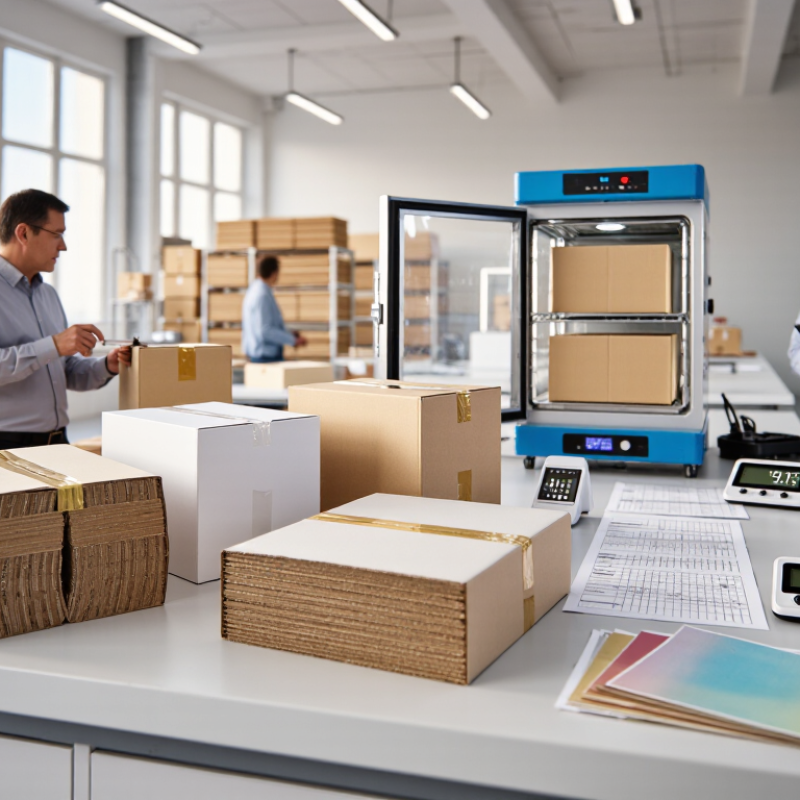
In 2026, choosing carton material means checking more than its quoted price. Request samples in the proposed board grade, flute profile, and recycled-content range. Pack them with your actual product, then inspect the corners, folds, and closure after handling. A box that looks sturdy on a desk may soften in a humid warehouse. Test it under realistic stacking and shipping conditions. One sample is not proof.

Tips: Record the sample’s dimensions, board construction, and test results. Ask suppliers to confirm unit cost, minimum order quantity, lead time, and available backup materials in writing.

Compare total cost, not just the price per carton. Include printing, setup, freight, storage, and likely damage or waste. Confirm that quality criteria are measurable, such as compression strength, board thickness, and acceptable print variation. Agree on the test method and inspection frequency before production. I have seen teams approve a sample too quickly; it can be a costly shortcut. Supply plans deserve the same scrutiny: ask how seasonal demand, material changes, or production delays will be communicated. Keep one approved reference sample, but review it when your product or shipping route changes. A little extra checking can prevent mismatched cartons later.

Let's Work Together

The most innovative products come from the most innovative people - and for over 55 years our team has been propelled by curiosity and a steadfast dedication to inventing and creating the best foam formulations for our customers.