
Why Choose Artistic Decorative Tiles for Your Project?
Artistic Decorative Tiles can turn a plain wall, quiet entryway, or simple backsplash into a feature with character. Their color, pattern, texture, and handcrafted variation bring depth that paint alone rarely provides. Yet beauty is only part of the decision. A tile must also suit the room’s light, scale, cleaning needs, and daily use. A glossy surface may brighten a dim kitchen, while a textured finish can add warmth but collect grime in a busy cooking area. Small details matter.
Arts and Crafts designer William Morris offered a useful standard: “Have nothing in your houses that you do not know to be useful, or believe to be beautiful.” Artistic Decorative Tiles can meet both aims when selected with care. Samples viewed beside cabinets, floors, and natural light reveal more than a screen image. Check shade variation, grout width, edge finish, and maintenance guidance before committing. These steps are practical, not glamorous. Still, one sample may not show how a full wall will feel, and even a well-planned design can look different after installation. That uncertainty deserves a little humility. The strongest project is not always the boldest; it is the one whose decorative detail feels intentional, performs reliably, and continues to please after the room’s first impression fades.
What Defines Artistic Decorative Tiles?
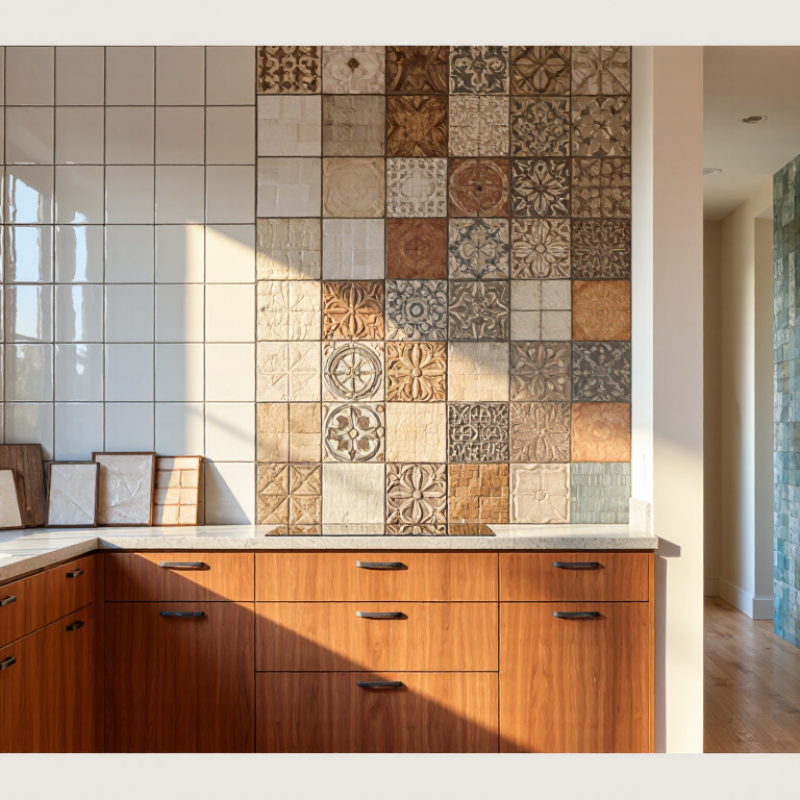
Artistic decorative tiles are not defined by ornament alone. They combine visual intention with practical qualities, such as a durable body, suitable finish, and dimensions that fit the space. Patterns may be painted, printed, carved, molded, or created through glaze. Texture, color variation, and edge detail give a surface depth that plain field tile often lacks. That matters.
A tile feels artistic when its design has a clear point of view. A repeating geometric rhythm can create order. A hand-drawn botanical motif may feel softer. Sometimes a restrained shift in tone is enough. Craftsmanship shows in crisp pattern alignment, even glaze coverage, and edges that sit neatly together. Small variations can add handmade character, but they should not conceal defects. The distinction can be subtle.
The setting also shapes how a tile reads. Glossy surfaces reflect light on a kitchen backsplash, while matte relief adds shadow to a quiet bathroom wall. For floors or wet areas, consider slip resistance, water absorption, and cleaning needs alongside appearance. View samples in the room’s actual light; a color that looks warm under showroom lamps may turn cool at home. A design can still miss the mark, so consider how its pattern and finish will work with nearby materials.
How Are Decorative Tile Designs Created?
Why Choose Artistic Decorative Tiles for Your Project?
How Are Decorative Tile Designs Created?
A decorative tile begins with a clear design idea: a hand-drawn motif, a historic pattern, or the shape of a leaf. Designers adapt it to the tile’s dimensions, checking how the image repeats across a wall. A small misalignment can become obvious across a long backsplash. Scale matters.
Next comes color and surface testing. Designers may use digital drawings to preview patterns, then apply ceramic inks or glazes to sample tiles. The samples are fired, because kiln heat can shift color and texture. Digital previews help, but they are not perfect. Always inspect a physical sample under your project’s lighting.
Production choices affect the final look. Raised details can be formed in the tile body or added through textured glazes; printed patterns usually offer finer detail. The Tile Council of North America’s Handbook and ANSI A137.1 set technical guidance for ceramic tile performance and evaluation, helping designers balance appearance with practical requirements. Market context matters, too: Grand View Research estimated the global ceramic tiles market at about $217.5 billion in 2023. That scale supports varied production methods, but it does not guarantee every custom design will suit every room. Test the repeat, grout width, and cleaning needs. Small details count.
Which Materials, Patterns, and Finishes Are Available?
Decorative tiles come in ceramic, porcelain, glass, and natural stone. Ceramic often suits walls and light-use areas, while dense porcelain handles busy floors well. Glass catches light and adds color, but can show water spots. Stone brings natural variation; seal it as recommended and check care needs before choosing. Small differences are part of its character.
Patterns range from simple grids and geometric shapes to mosaics and hand-painted motifs. A repeating pattern can make a small backsplash feel lively, while a restrained border can frame a larger floor.
Finishes matter, too. Glossy surfaces brighten dim rooms and wipe clean easily, but may feel slippery underfoot. Matte or textured tiles can offer more grip, though textured surfaces may need extra scrubbing. Samples can look different beside your actual lighting and grout.
Tips: Place a few samples in the room and view them morning and evening. Check floor slip guidance for the intended use, and confirm tile thickness before ordering. Slight shade variation can occur between batches, so buying all needed tiles together is sensible. Even then, the result may not match a tiny sample perfectly.
What Benefits Do Artistic Tiles Bring to a Project?
Artistic decorative tiles bring color, texture, and a focal point to a project, while their hard surfaces suit busy rooms. A hand-painted motif can make a kitchen backsplash feel personal; repeating the same pattern across a large wall may feel overwhelming. Scale matters. The U.S. Environmental Protection Agency’s The Inside Story: A Guide to Indoor Air Quality reports that indoor concentrations of some pollutants are often two to five times higher than outdoor levels. Tile itself is not a cure-all, but smooth, nonporous surfaces are generally easy to wipe clean and do not require topical finishes that may emit chemicals. Grout needs attention, though. Intricate layouts create more joints to maintain.
The technical details matter as much as appearance. ANSI A137.1 defines porcelain tile by water absorption of 0.5% or less, a useful performance benchmark for moisture-prone areas. That figure does not guarantee a safe floor: surface texture, slope, and wet conditions also affect slip risk. A glossy decorative tile can look striking beside a sink, yet feel slick underfoot. Test a sample in the actual light. Check it wet, too. Color and texture may differ from a showroom impression, and the grout line can change the whole pattern.
Why Choose Artistic Decorative Tiles? A Moisture-Resistance Benefit
Artistic tiles can add visual character while meeting practical project needs. Water absorption is one factor to consider when selecting ceramic tiles for moisture-prone areas. The bars show the upper absorption limits for selected ceramic tile groups classified by ISO 13006; lower limits indicate lower water absorption. Confirm the tile’s specifications and suitability for its intended installation.
How Do You Choose and Care for Decorative Tiles?
Choosing decorative tiles starts with the room’s light, moisture, and daily traffic. A glossy pattern can brighten a dim backsplash, but it may show water spots near a sink. For floors, check slip resistance and wear ratings, not only color. Ask for a sample. View it beside your cabinets in morning and evening light. Small samples can mislead; grout lines often change the whole pattern. Measure carefully, then allow extra tiles for cuts and future repairs.
Before installation, confirm that the surface is level, dry, and suitable for the tile material. Natural stone may need sealing, while glazed ceramic usually needs less protection. Follow the care instructions for your specific tile, since finishes vary. Use a soft cloth and a pH-neutral cleaner; abrasive pads can dull delicate surfaces. Wipe spills promptly, especially oil or colored liquids on porous tile. Clean grout with a soft brush, and avoid harsh chemicals unless the instructions permit them. I once underestimated how much pale grout would show in a busy kitchen. It looked lovely, but needed more frequent attention than expected.
Why Choose Artistic Decorative Tiles for Your Project? - How Do You Choose and Care for Decorative Tiles?
| Tile type | Why choose it | Where it may work well | What to check before choosing | Care and maintenance |
|---|---|---|---|---|
| Decorative ceramic | Offers a wide range of colors, patterns, shapes, and glazed finishes for feature areas. | Often used for backsplashes, wall accents, and other interior wall surfaces. | Confirm whether the tile is suitable for the intended surface and exposure. Check sample tiles for color and finish variation. | Clean glazed surfaces with a soft cloth or sponge and a pH-neutral cleaner. Avoid abrasive pads that may scratch the glaze. |
| Porcelain | Dense porcelain generally absorbs little water and is available in a variety of colors, patterns, and surface finishes. | Can suit floors or walls when the product’s rating and installation instructions match the project conditions. | For floors, check slip-resistance information and suitability for the expected traffic and wet conditions. Verify the correct setting materials. | Sweep or vacuum grit before damp mopping. Use a suitable neutral cleaner and follow the grout manufacturer’s care guidance. |
| Glass mosaic | Reflects light and can add color, depth, or a small-scale decorative detail. | Commonly selected for indoor wall accents and some wet-area applications when specifically rated for them. | Check that the tile, backing, adhesive, and grout are compatible with the location. Review samples under the project’s lighting. | Wipe with a soft cloth and a non-abrasive cleaner. Keep grout lines clean; avoid harsh tools that can scratch or chip the surface. |
| Natural stone | Provides natural color and veining, so each piece can have distinctive markings. | May be used on walls or floors depending on the stone, finish, location, and product guidance. | Expect variation between pieces. Ask whether the specific stone needs sealing and whether it is suitable for contact with acids or moisture. | Use a cleaner formulated for the stone. Avoid acidic cleaners on acid-sensitive stones such as marble, and reseal only as recommended for the product. |
| Cement encaustic-style tile | Its patterned surface can create a bold, often handmade-looking focal point. | Used for decorative floors and walls where the particular product is approved for the intended use. | Check the maker’s installation and sealing instructions; cement tiles can be porous and may show natural variation. | Use a pH-neutral cleaner and avoid acidic products. Maintain the sealer according to the tile and sealer instructions, and wipe spills promptly. |
| Patterned or relief tile | Adds visual texture and can help define a focal zone without relying on color alone. | Often used on feature walls, fireplace surrounds, or selected backsplash areas, subject to product ratings and local requirements. | Check how the relief affects cleaning, grout coverage, edge alignment, and the appearance under direct lighting. | Dust textured surfaces regularly and clean grooves with a soft brush. Follow the surface material’s specific cleaner guidance. |
Practical tip: Order samples where possible, view them in the project’s lighting, and confirm tile, grout, sealant, and installation suitability with the product instructions and a qualified installer.
Article Source:
Let's Work Together
The most innovative products come from the most innovative people - and for over 55 years our team has been propelled by curiosity and a steadfast dedication to inventing and creating the best foam formulations for our customers.