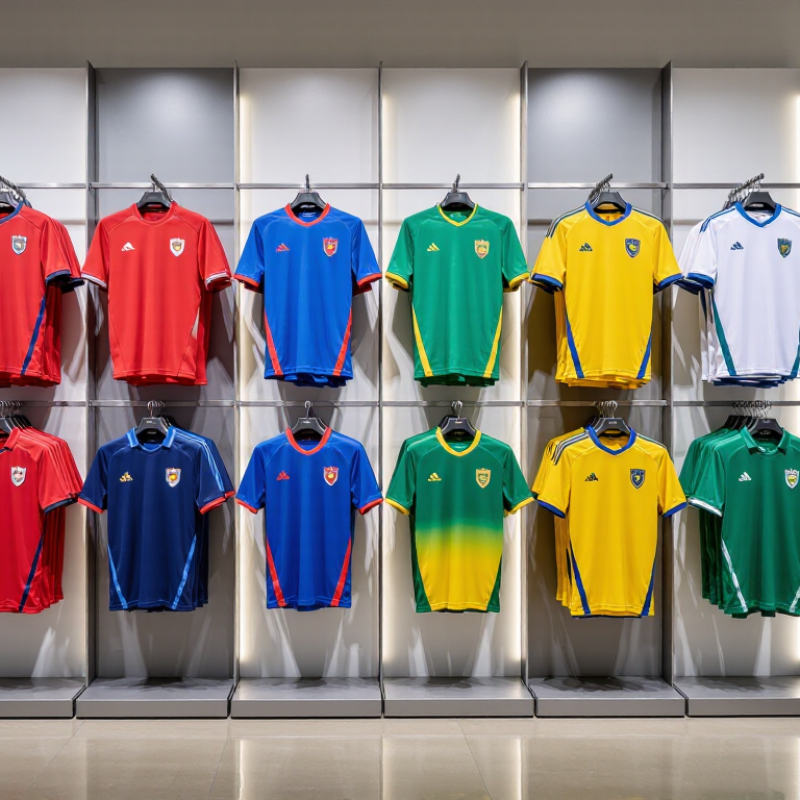
China Top Soccer Jerseys Manufacturers for Global Buyers

For global buyers, choosing China’s top Soccer Jerseys manufacturers requires more than comparing prices. It demands careful checks on materials, production control, communication, and delivery performance. China has a mature sportswear supply chain, with factories producing team jerseys, training shirts, fan apparel, and customized kits. However, factory size alone does not prove reliability.

The strongest manufacturers usually provide fabric samples, size charts, stitching details, printing tests, and clear production schedules. This guide examines how experienced buyers can assess these capabilities before placing an order. It considers polyester performance, moisture management, colorfastness, embroidery, heat-transfer logos, and packaging quality. It also highlights practical questions about minimum order quantities, sample fees, lead times, and after-sales support.

Experience often reveals hidden differences. A clean sample may not represent every production batch. That detail matters. Buyers should request pre-production approval and inspect finished Soccer Jerseys before shipment whenever possible. Reliable suppliers also explain their quality procedures instead of making vague promises. No supplier is perfect. Even strong manufacturers may face fabric delays or printing inconsistencies. Transparent communication helps reduce those risks.

This overview is designed for distributors, clubs, retailers, and online brands seeking dependable Chinese partners. It does not treat the cheapest quote as the best option. Instead, it focuses on verifiable capability, consistent workmanship, ethical business practices, and legally compliant trade. With a structured evaluation process, global buyers can build longer-term relationships and avoid costly surprises.

China Top Soccer Jerseys Manufacturers for Global Buyers

Understanding China’s Soccer Jersey Manufacturing Industry

China’s soccer jersey manufacturing industry combines large-scale textile capacity with flexible contract production. According to the WTO World Trade Statistical Review 2023, China remained the world’s largest textile exporter in 2022, holding about 31% of global textile exports. This supply depth supports fabric sourcing, dyeing, cutting, printing, and packing within short distances.

Grand View Research estimated the global sports apparel market at approximately USD 203 billion in 2023. Its projected growth is encouraging, but demand does not guarantee consistent quality. Buyers should examine fabric weight, moisture management, colorfastness, stitching density, and size tolerance. A factory may show an excellent sample, yet bulk production can vary. That uncomfortable gap deserves attention. Ask for a pre-production sample and an independent inspection before shipment. Request production photos, test records, and a clear measurement chart.

Tips: Compare factories by process control, not only price. Confirm whether sublimation, embroidery, heat transfer, and recycled-fiber options are handled internally. Check the fabric composition through laboratory testing when performance matters. The International Organization for Standardization’s ISO 2859-1 sampling method can support structured quality inspections. Keep approved samples sealed and dated. Small details matter, including collar recovery, sleeve symmetry, and print alignment. A low unit price can become expensive after rework, delayed delivery, or inconsistent sizing. Clear technical files reduce misunderstandings, although they cannot replace regular communication.

How to Evaluate Chinese Soccer Jersey Suppliers

China Top Soccer Jerseys Manufacturers for Global Buyers

How to Evaluate Chinese Soccer Jersey Suppliers

China remains a major production hub for sportswear. The World Trade Organization reported that China supplied about 41% of global textile exports in 2022. That scale creates choice, but also inconsistency. A polished website proves very little. Request a factory address, business license, recent audit, and production photos with dates. Verify whether the supplier controls knitting, printing, sewing, or only coordinates subcontractors.

Start with a paid sample. Measure fabric weight, collar recovery, stitching density, colorfastness, and shrinkage after washing. For team jerseys, ask for laboratory reports covering restricted substances and fiber composition. The Global Sports Apparel Market report by Grand View Research estimated the market at over 200 billion US dollars in 2023, with continued growth expected through 2030. Demand is rising, yet rushed suppliers may sacrifice inspection quality. Watch the details. A loose thread matters.

Compare quotations using the same specifications. Include fabric type, printing method, packaging, minimum order quantity, delivery schedule, payment terms, and shipping basis. Ask for production tolerances in writing. A supplier promising every feature at the lowest price deserves careful questioning. I would also request a pre-shipment inspection before final payment. This step adds time and cost, but it can expose uneven logos or incorrect sizes. No checklist is perfect. My own evaluation can still overvalue communication and undervalue factory capacity, so performance should be reviewed after each order.

China Top Soccer Jerseys Manufacturers for Global Buyers - How to Evaluate Chinese Soccer Jersey Suppliers
Evaluation Dimension What to Verify Reliable Evidence Practical Benchmark or Standard Recommended Buyer Action
Product Specialization Experience with football shirts, shorts, socks, training wear, and supporter apparel. Product catalog, technical drawings, fabric specifications, and recent non-confidential samples. The supplier should clearly distinguish match jerseys, replica shirts, training garments, and fanwear. Request samples made with the same fabric, printing method, trims, and construction proposed for mass production.
Fabric Composition Fiber content, fabric weight, moisture management, stretch, colorfastness, and breathability. Fabric swatches, composition reports, GSM information, and laboratory test results. Polyester is widely used for football jerseys because it is lightweight, durable, and suitable for sports printing; the required fabric weight depends on the design and market. Specify composition, weight tolerance, stretch direction, mesh panels, and performance requirements in the purchase specification.
Printing and Decoration Whether the supplier can produce sublimation, heat transfer, screen printing, embroidery, woven labels, and namesets. Wash-test samples, close-up photos, artwork approval files, and decoration process descriptions. Sublimation is commonly used for all-over polyester designs; heat transfer is often used for names, numbers, and small logos. Approve a physical pre-production sample and define acceptable limits for peeling, cracking, color shift, and registration errors.
Size and Measurement Control Accuracy of chest, body length, sleeve length, shoulder width, and tolerance across the size range. Graded size chart, measurement sheet, fit sample, and inspection records. Use one approved measurement chart for every production batch; tolerances must be agreed in writing rather than assumed. Provide a detailed tech pack and check measurements on approved samples before bulk cutting begins.
Quality Management Incoming material inspection, in-line inspection, final inspection, defect classification, and corrective action. Quality manual, inspection checklist, sample inspection report, and corrective-action records. AQL sampling may be used as a structured acceptance method under ISO 2859-1; the agreed AQL plan should be stated in the contract. Define critical, major, and minor defects, inspection level, sample size, and shipment-release requirements before production.
Color and Wash Durability Color consistency between fabric lots, resistance to washing, rubbing, perspiration, and print damage. Color swatches, lab reports, wash-test photos, and approval standards for bulk production. Colorfastness performance should be evaluated against the destination market's requirements and the buyer's care instructions. Keep an approved color standard and perform washing and rubbing tests on the final decorated garment.
Chemical and Product Safety Control of restricted substances, dyes, inks, accessories, and packaging materials. Third-party test reports, material declarations, and applicable compliance documentation. OEKO-TEX Standard 100 is a voluntary textile safety certification that tests products for harmful substances; it is not a substitute for destination-country legal requirements. Identify the destination countries and request testing against applicable laws, such as REACH requirements for European Union sales.
Production Capacity Cutting, sewing, printing, embroidery, finishing, packing, and peak-season capacity. Production workflow, equipment list, capacity statement, and anonymized production planning records. Capacity should be evaluated against the buyer's order quantity, size breakdown, customization level, and required delivery window. Ask for a capacity plan showing material arrival, sampling, bulk production, inspection, and shipping milestones.
Minimum Order Quantity Minimum quantity for stock fabrics, custom colors, sublimation designs, trims, labels, and individualized names or numbers. Written quotation with MOQ stated separately for standard products and fully customized products. MOQ is not universal; it usually changes with fabric sourcing, color development, decoration method, and the number of size or player variations. Request an itemized MOQ schedule and confirm whether mixed sizes, mixed designs, and repeat orders are allowed.
Sampling Process Sample cost, development time, revision policy, artwork approval, and whether the sample fee is refundable. Sample invoice, development workflow, approval form, and revision terms. A bulk order should not proceed until the buyer approves a final pre-production sample or sealed reference sample. Record fabric, color, measurements, decoration, accessories, and packaging details in the sample approval document.
Lead-Time Management Material sourcing time, sample schedule, production duration, inspection timing, and shipping preparation. Written production schedule, milestone updates, and agreed delay-notification procedure. Lead time varies by order size, customization, season, fabric availability, and shipping method; it should never be accepted as an undefined promise. Use milestone dates and require written approval for changes to materials, specifications, or delivery dates.
Export and Documentation Commercial invoice, packing list, export documents, carton markings, HS code information, and shipping terms. Sample export document set and clearly stated Incoterms® 2020 rule. Incoterms® rules allocate specific costs, risks, and responsibilities; the chosen rule and named place must be written precisely. Compare quotations on the same Incoterms basis and confirm who handles export clearance, freight, insurance, and import formalities.
Cost Transparency Garment price, customization fees, sample charges, packaging, tooling, inspection, freight, and taxes. Itemized quotation with currency, validity period, payment milestones, and surcharge conditions. The lowest unit price is not automatically the lowest total cost; quality, rework, freight, and compliance expenses should be included in the comparison. Use a landed-cost worksheet and compare at least three quotations with identical specifications and delivery terms.
Communication and Technical Support Response speed, English technical communication, artwork handling, issue escalation, and order updates. Pre-order communication records, sample feedback process, and named project contact. A dependable supplier should confirm specifications in writing and identify uncertainties before production starts. Send a controlled tech pack and assess whether the supplier identifies missing information rather than making undocumented assumptions.
Intellectual Property and Artwork Control Handling of buyer-owned artwork, confidentiality, unauthorized use, and production of non-infringing designs. Confidentiality terms, artwork approval records, and written responsibility for supplied designs. A supplier should not reproduce protected club, federation, sponsor, or player assets without authorization. Provide only authorized artwork, use written approval procedures, and request original design alternatives when licensing is unavailable.
Pre-Shipment Inspection Quantity, workmanship, measurements, colors, decoration, labeling, packaging, and carton condition. Inspection checklist, inspection report, defect photos, and shipment release record. Inspection criteria should be agreed before production and applied to a representative finished-goods sample. Use an independent inspection service or an internal quality team before approving the remaining payment and shipment.
After-Sales Resolution Handling of shortages, defects, late delivery, replacement orders, refunds, and warranty-related claims. Written claim procedure, response deadline, responsibility matrix, and replacement or credit terms. The contract should define evidence requirements, claim windows, corrective-action deadlines, and responsibility for verified defects. Keep inspection records, packing evidence, shipment photos, and communication logs for every order.
Buyer note: Supplier capability, production lead time, MOQ, pricing, and compliance status can vary by order specification and destination market. Confirm all commercial and technical details in a written quotation, approved sample, and purchase contract.

Key Manufacturing Standards for Global Buyers

Global buyers need more than attractive graphics when sourcing soccer jerseys. Manufacturing standards should control fabric performance, sizing, safety, and traceability. Textile Exchange’s 2024 Materials Market Report states that global fiber production reached 124 million tonnes in 2023. Polyester represented about 57% of total output. This makes recycled-content claims worth checking, not merely accepting.

A reliable supplier should provide fiber composition records, dyeing details, and batch-level inspection reports. ISO 9001 systems can support consistent production, but certification alone proves little without current audit evidence. Buyers should request tests based on ISO 105 for colorfastness, ISO 6330 for washing performance, and ISO 13934-1 for fabric strength. Check collar recovery, seam durability, print adhesion, and shrinkage after washing. A jersey may look perfect under showroom lighting. It can still fail after three washes. Sampling should follow ISO 2859-1 principles, with agreed acceptance limits before production begins. No audit is perfect.

Tips: Ask for pre-production samples in every size. Compare measurements with the approved specification sheet. Require independent laboratory reports when performance claims affect purchasing decisions. Review corrective-action records, not just certificates. Track fabric lots and shipment inspections. Also question unusually low prices; they may signal weaker testing, unstable materials, or hidden quality compromises.

Custom Design, Materials, and Production Options

For global buyers, dependable soccer jersey production begins with clear communication. Experienced manufacturers review artwork, measurements, and delivery targets before cutting fabric. Custom design can include collar shape, sleeve length, panel placement, player names, numbers, and supporter editions. A detailed tech pack reduces confusion. It should show colors, dimensions, stitching points, and approved artwork files.

Material choice affects comfort and performance. Lightweight recycled polyester suits warm training environments, while denser fabric can improve durability. Mesh panels under the arms may increase airflow. Moisture management finishes should be tested, not simply promised. Buyers should request fabric weight, colorfastness results, shrinkage data, and wash-care instructions. Small details matter.

Production options may include prototype samples, low-volume orders, bulk manufacturing, and private packaging. A physical sample reveals issues that digital images hide. The collar may feel tight. The print may appear slightly dull. That is useful feedback. Manufacturers should correct these problems before mass production. Quality checks can cover measurements, seam strength, loose threads, print alignment, and carton counts. A practical supplier also explains minimum order quantities, lead times, inspection procedures, and export documents clearly. Delays sometimes happen because approvals arrive late, so a shared production schedule helps both sides respond early.

China Soccer Jersey Manufacturing: Typical Custom-Order Timeline

Indicative production-planning benchmarks for global buyers ordering custom soccer jerseys. Actual timing depends on order quantity, artwork approval, fabric availability, customization method, and shipping arrangements.

Timeline values are shown in calendar days and represent common planning ranges rather than data from any specific company or brand.

Ordering, Quality Control, and International Shipping Considerations

China Top Soccer Jerseys Manufacturers for Global Buyers

Ordering soccer jerseys from China requires more than comparing unit prices. Experienced buyers send a clear tech pack with fabric weight, size measurements, collar details, stitching, colors, and packaging requirements. Request a pre-production sample before approving bulk production. Small sizing differences can create major customer complaints. A perfect first order is uncommon. Leave room for correction.

Quality control should happen during production, not only after completion. Ask for fabric, color, logo placement, seam strength, and measurement checks. A third-party inspection can verify random cartons against approved samples. Keep dated photos and written records. These details support accountability when problems appear. However, inspections have limits. They cannot replace a carefully written purchase agreement.

International shipping needs equal attention. Confirm the delivery term, export documents, carton dimensions, product weight, and destination requirements. Compare sea freight, rail, and air freight according to urgency and budget. Check whether the shipment includes customs handling or local charges. Delays often begin with incomplete invoices or incorrect packing lists.

Tips: Order extra samples. Test washing and colorfastness. Confirm every measurement in writing. Use protective cartons for long-distance transport. Recheck the final balance only after inspection evidence is available. Small safeguards matter.

Let's Work Together

The most innovative products come from the most innovative people - and for over 55 years our team has been propelled by curiosity and a steadfast dedication to inventing and creating the best foam formulations for our customers.