


What Is the Best Type of Sliding Closet Doors?
Choosing the best Sliding Closet Doors is less about appearance and more about how your room actually works. A narrow bedroom may benefit from bypass doors, which slide past each other without occupying floor space. A wider opening might suit double sliding panels, giving easier access to clothing. In my experience, the wrong track system causes more frustration than the door material itself. A beautiful door still feels poor when it rattles, sticks, or blocks half the wardrobe.
Material changes the experience. Mirrored panels can reflect light and make a small room feel larger, but they show fingerprints quickly. Frosted glass offers a softer look and more privacy, while wood brings warmth and stronger visual weight. Aluminum frames are light and practical. Solid wood feels substantial, although it may require better support and careful alignment. Measure the opening, wall clearance, floor level, and ceiling height before choosing anything. Tiny errors matter.
Do not ignore the hardware. Quiet rollers, reinforced tracks, and accessible adjustment screws improve daily use. I once assumed heavier panels always meant better quality. That was not entirely true. Weight can strain weak tracks and make installation difficult. The best choice balances style, access, durability, maintenance, and budget. This guide compares common designs, explains their practical strengths, and highlights overlooked limitations, so you can choose Sliding Closet Doors with greater confidence rather than relying on showroom appearance alone.
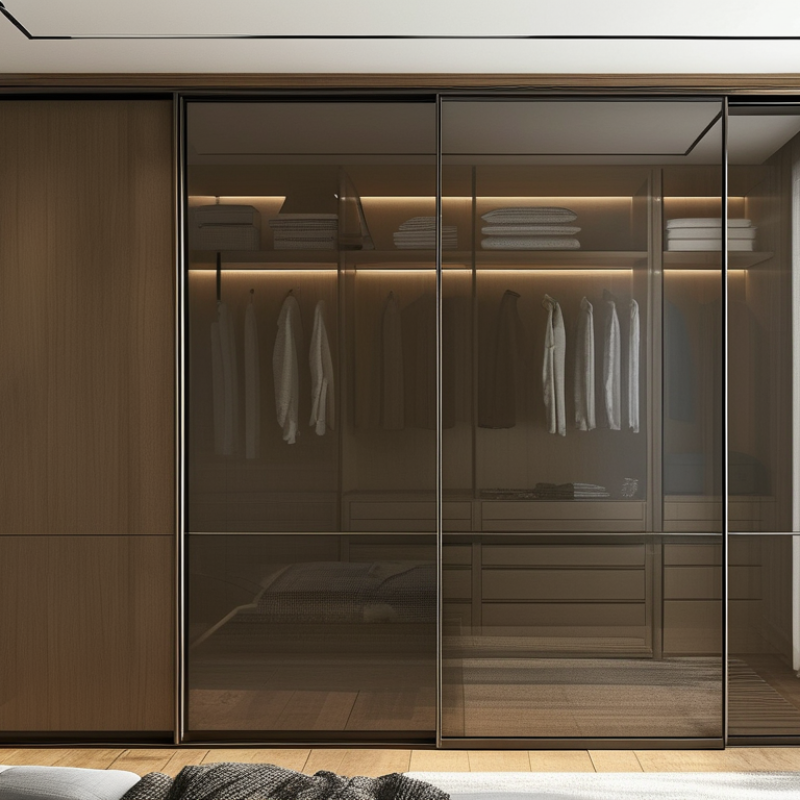
Types of Sliding Closet Doors and Their Key Features
What Is the Best Type of Sliding Closet Doors?
Types of Sliding Closet Doors and Their Key Features
Bypass sliding doors are a practical choice for narrow bedrooms. Their panels overlap and move along parallel tracks. This design saves floor space beside the closet. However, one panel always covers part of the opening. That can make the back corner harder to reach.
Mirrored sliding doors can make a small room feel brighter and larger. They also provide a convenient full-length reflection before leaving home. Choose safety-backed glass with a strong frame and smooth rollers. Frosted or textured glass offers light without showing every stored item. It can still reveal shadows, though. That detail is easy to overlook.
Barn-style sliding doors create a clear decorative statement. They usually move across an exposed track outside the closet opening. This style needs enough wall space and may reduce storage access. For a cleaner appearance, flush panel doors hide visual clutter well. Soft-close hardware helps prevent rattling and protects fingers.
In my experience, track quality matters more than door decoration. A beautiful panel becomes frustrating when dust collects inside the rail. Measure the opening carefully, check the wall strength, and consider how often both sides need access. The best choice is not always the most attractive one.
How to Compare Sliding Door Materials and Construction
The best sliding closet door depends on material, weight, and construction quality. Solid wood feels substantial, but it adds weight and may demand stronger rollers. Medium-density fiberboard offers a smoother painted surface and more stable dimensions. Steel resists impact, while glass increases light but reveals dust and fingerprints quickly. I prefer matching the door to the room’s humidity and traffic.
Construction matters more than appearance. Look for a straight track, adjustable rollers, and a bottom guide that prevents swinging. According to the National Association of Home Builders’ 2024 Cost of Constructing a Home survey, interior finishes account for 24.1% of construction costs. That figure supports spending carefully on hardware, not only decorative panels. A cheap track can make an attractive door rattle, drag, or jump out of alignment.
Material safety deserves attention, too. The U.S. Environmental Protection Agency reports that indoor pollutant levels can be two to five times higher than outdoor levels. Choose low-emission coatings and allow new components to ventilate before installation. Check panel edges closely; unfinished fiberboard can absorb moisture. I have also found that larger mirrors demand more precise installation than expected. They look elegant, but small alignment errors become obvious.
There is no perfect material.
Space, Style, and Installation Requirements to Consider
Sliding closet doors work best when space, style, and installation conditions are considered together. A bypass system needs less floor clearance than hinged doors. That matters in bedrooms with narrow walkways. Measure the opening, wall depth, ceiling height, and nearby furniture before choosing a panel layout. A two-panel system usually needs a clear opening behind the moving panel. You may lose easy access to part of the closet.
Storage demand is also influencing home design. The National Association of Home Builders’ 2024 What Home Buyers Really Want report found that 86% of buyers rated a laundry room essential or desirable. An 85% share said the same about a walk-in pantry. These figures do not measure closets directly, but they show a clear preference for organized storage. Sliding doors can support that goal, especially with mirrored, frosted, or warm wood-style surfaces. Still, appearance can hide poor usability. Heavy panels may require stronger tracks and careful alignment.
Tips: Leave at least 24 inches of comfortable standing space where possible. Confirm the wall can carry the track. Use a professional installer for uneven floors or oversized panels. The 2023 National Association of Home Builders construction cost survey also shows labor remains a major part of remodeling budgets, so installation shortcuts can become expensive repairs. I once treated measurements as “close enough.” That was a mistake. A few millimeters can create rubbing, vibration, or a door that refuses to close. Test the rollers after installation, not only the visual finish.
What Is the Best Type of Sliding Closet Door?
Comparison of common sliding closet door types using practical ratings for space efficiency, style flexibility, and installation simplicity. Ratings range from 1 (low) to 5 (high).
Pocket doors provide excellent clearance savings but require a suitable wall cavity. Bypass doors are space-efficient and relatively simple to install, while barn doors offer strong visual appeal but need clear wall space beside the opening.
Durability, Maintenance, and Accessibility Factors
The best sliding closet door depends on daily use, not appearance alone. For durability, solid-core panels usually resist dents better than lightweight hollow panels. A robust top track matters too. It should roll smoothly, stay aligned, and support the panel without visible flexing. The 2024 U.S. Houzz & Home Study reports that homeowners continue investing in functional storage during renovations. That suggests closet hardware deserves more attention than its small size implies.
Maintenance is often overlooked. Dust gathers inside the track, creating a gritty sound and uneven movement. Choose removable guides and accessible rollers, then inspect them every few months. Steel components can be durable, but poorly protected finishes may corrode in humid rooms. Wood panels need stable indoor humidity and careful cleaning. I would not trust “maintenance-free” claims without a published test standard or load rating. Those claims are often too vague.
Accessibility changes the decision. The CDC reports that one in four U.S. adults has a disability, while the World Health Organization’s 2022 Global Report on Assistive Technology estimates that 2.5 billion people need assistive products worldwide. A door requiring strong pulling force can exclude users with limited grip or shoulder movement. Wider openings, low-resistance rollers, contrasting handles, and a clear floor area improve usability. ADA standards are not generally mandatory inside private homes, but their reach-range and maneuvering principles provide useful benchmarks. Test the door with one hand. If it sticks, the design needs reconsideration.
What Is the Best Type of Sliding Closet Doors? — Durability, Maintenance, and Accessibility Factors
| Door Type | Typical Durability | Maintenance Requirements | Accessibility Considerations | Space Efficiency | Best Overall Use |
|---|---|---|---|---|---|
| Bypass sliding doors | Good when fitted with rigid panels, well-aligned guides, and metal rollers. The overlapping panels can limit stability if the track or frame is poorly installed. | Vacuum the lower track regularly, remove debris from rollers, and check alignment when doors become noisy or difficult to move. | Usually requires a sideways pull and moderate reach. Only part of the closet opening is available at one time, which can restrict wheelchair access and reach-in use. | Very efficient because panels slide in front of one another and do not swing into the room. | A practical choice for standard bedrooms where low floor-area use and straightforward installation are priorities. |
| Top-hung sliding doors | Often very durable because the main load is carried by the upper track, reducing wear from dirt and impact on the floor guide. Structural support above the opening is essential. | Keep the upper track and guide hardware clean. Periodically inspect fasteners, anti-jump devices, and the floor guide for looseness or wear. | A clear floor is beneficial for walkers and wheelchairs, but the door should have large, easy-grip handles and low opening force. Installation height must suit the user. | Excellent floor clearance and no full door swing. The wall beside the closet must remain clear for the panel to travel. | A strong option when accessibility, a clean floor surface, and smooth long-term operation matter most. |
| Bottom-rolling sliding doors | Generally robust and easier to retrofit because the floor carries the panel weight. Performance depends heavily on the quality and alignment of the lower rollers. | Clean the floor track frequently because dust, hair, and grit can increase rolling resistance. Replace worn rollers if doors wobble or drag. | Can provide smooth movement with suitable hardware, but a raised or recessed floor track may create a minor trip or wheelchair obstacle. | Excellent for rooms with limited swing space, although the floor track occupies part of the threshold area. | A sensible retrofit choice when overhead structural reinforcement is not available. |
| Pocket sliding doors | Can last well with correctly installed hardware, but the concealed pocket makes repairs more difficult. The wall cavity must remain straight, dry, and free of obstructions. | Clean exposed guides and inspect rollers. Repairs may require removing trim or using service access because the running mechanism is partly concealed. | Can create a wide, unobstructed opening, but the door pull may require reach and the opening force must be low enough for the intended user. | Excellent because the panel disappears into the wall and does not occupy the adjacent wall or floor area. | Best for new construction or major remodeling when maximum opening width and floor clearance are desired. |
| Mirrored sliding doors | The frame and rollers can be durable, but glass panels are heavier and require careful handling. Safety-backed or tempered glass is preferable to ordinary glass. | Clean glass with a non-abrasive product, keep tracks free of grit, and inspect edge seals, guides, and roller alignment. | Reflective surfaces may create glare or visual confusion for some users. Use clearly visible pulls and avoid placing mirrors where they cause difficult-to-see reflections. | Very good because the doors slide rather than swing, while the mirror can make a small room appear more open. | Suitable when full-length viewing and space saving are important, provided safety glass and stable hardware are used. |
| Solid-wood or wood-composite sliding doors | Solid wood can be long-lasting but is heavy and may expand or contract with humidity. Wood-composite panels are more dimensionally consistent but can be damaged by prolonged moisture. | Dust regularly, repair damaged finishes, and keep moisture away from edges and tracks. Heavy panels require periodic hardware inspection. | Choose lightweight panels, large handles, soft-close assistance, and a low-resistance track when users have limited strength or dexterity. | Very good because the panels require no swing clearance, although their thickness may reduce the effective opening slightly. | A good choice for a warm, traditional appearance when the supporting track is designed for the panel weight. |
| Aluminum-frame or lightweight composite doors | Good resistance to warping and everyday wear when protected from severe impact. Lightweight construction generally reduces stress on rollers and tracks. | Wipe frames and panels clean, remove track debris, and check fasteners and guides periodically. Avoid abrasive cleaners on coated surfaces. | Usually easier to move than heavy wood or glass panels. Select rounded, easy-grip handles and a stable guide that prevents lateral wobble. | Excellent for compact rooms because the doors slide parallel to the wall and can be made with relatively slim frames. | A balanced option for frequent daily use, especially where low operating effort and moderate maintenance are desired. |
Choosing the Best Sliding Closet Door for Your Home
What Is the Best Type of Sliding Closet Doors?
Choosing the best sliding closet door starts with your room, not a catalog photo. Bypass doors suit narrow bedrooms because their panels overlap and need little floor clearance. They can hide only half the wardrobe, however. That small limitation matters during rushed mornings.
Mirrored panels make a compact room feel brighter and provide a full-length view. They also show fingerprints, dust, and uneven walls easily. Frosted glass offers softer light and more privacy, while solid wood or composite panels reduce visual clutter and outside noise. For children’s rooms, choose securely fitted panels with controlled closing hardware. A poorly aligned track can become frustrating within weeks.
The 2024 Remodeling Impact Report from the National Association of REALTORS® lists closet renovation at an estimated 83% cost recovery.
That figure supports practical upgrades, but it does not make every expensive door worthwhile. Measure the opening at three heights, then check the ceiling and floor for level. A two-panel bypass system usually works well for openings near 60 inches wide. Wider closets may need four panels or a center-opening design.
I once favored mirrored doors in a dark room, but the reflections felt busy beside patterned furniture. Personal comfort deserves more weight than a neat product specification.
Article Source:
Let's Work Together
The most innovative products come from the most innovative people - and for over 55 years our team has been propelled by curiosity and a steadfast dedication to inventing and creating the best foam formulations for our customers.