What Are the Best Promotional Items for 2026?
Choosing the right promotional items for 2026 requires more than printing a logo on a popular product. People notice usefulness, quality, and thoughtful design. A branded item should earn a place on a desk, in a travel bag, or beside a daily coffee cup.
This guide examines practical promotional items that match changing customer expectations. Reusable drinkware, charging accessories, wellness products, and work-from-anywhere tools remain strong options. However, trends can shift quickly. A product that feels modern today may look outdated within months. Real feedback matters more than assumptions. Check customer preferences, event goals, budget limits, and product reviews before ordering.
Quality also protects your brand reputation. A leaking bottle or weak cable can create a lasting negative impression. Reliable suppliers should provide clear specifications, safety information, material details, and realistic delivery times. Businesses should also confirm that products meet applicable standards in their target markets. Sustainable materials may improve brand perception, but vague environmental claims can reduce trust. Ask for evidence.
Personalization deserves careful attention. Names, useful colors, and simple packaging often feel more relevant than oversized logos. Accessibility matters too. Easy-to-read text and practical designs can support wider audiences. Still, no item suits everyone. Some recipients may prefer digital rewards or no gift at all. That limitation deserves honest consideration.
The best promotional items are not always the most expensive. They are useful, durable, appropriate, and responsibly sourced. This article explores the strongest choices for 2026, while recognizing that good marketing sometimes involves testing, learning, and changing direction.
2026 Promotional Items: Market Trends and Selection Criteria
What Are the Best Promotional Items for 2026?
2026 Promotional Items: Market Trends and Selection Criteria
Promotional items in 2026 will need to earn space in people’s homes, bags, and workspaces. Useful beats flashy. Buyers increasingly examine durability, material sourcing, packaging, and disposal options before approving an order. Reusable drinkware, compact charging accessories, notebooks with recycled paper, and practical travel items remain strong candidates. However, sustainability claims need evidence. A vague “eco-friendly” label is not enough.
Selection should begin with the audience and usage setting. A lightweight bottle may suit outdoor events, while a desk organizer could support a professional conference. Check product lifespan, surface quality, safety information, minimum order quantities, and delivery reliability. Small details matter. Does the lid leak? Will the printed design fade after repeated washing? Can the item fit into standard mail packaging? These questions often reveal more than a product photograph.
Market trends also favor personalization, restrained design, and technology that solves a clear problem. QR-enabled materials may help users access event information, but privacy expectations must guide the experience. Avoid collecting unnecessary data. In campaign reviews, practical products usually receive longer use than novelty items, though this is not universal. A premium object can still fail if it feels irrelevant. I have seen attractive giveaways remain untouched because the size, color, or timing was wrong. That remains an imperfect lesson: selection data helps, but real user feedback should influence every future order.
How to Match Promotional Products With Audience and Campaign Goals
The best promotional items for 2026 will depend less on novelty and more on audience fit. A commuter may value a compact charging cable, while a conference attendee may prefer a durable notebook. According to the 2023 ASI Ad Impressions Study, 85% of consumers recalled the advertiser on a promotional product. The same study reported that most recipients kept useful items. Utility creates repeated exposure.
Match the product to the campaign goal. For lead generation, choose a practical item that starts a conversation, such as a measuring card or desk tool. For employee recognition, select something personal, comfortable, and used beyond the office. For sustainability campaigns, consider recycled materials, but verify production claims carefully. Vague environmental language can weaken trust. It may also create unnecessary scrutiny.
Audience research should guide quantity, design, and distribution. A technology audience may appreciate a privacy cover, while outdoor participants may use a weather-resistant bottle. Keep the message visible, but not oversized. PPAI research has consistently shown that usefulness and perceived quality influence recipient attitudes. That matters more than a low unit price. I would test two products with a small audience before ordering thousands. Some items look impressive online and feel disappointing in hand. Track redemption, retention, conversations, and follow-up actions. A memorable item without measurable engagement is only half a success.
The Best Promotional Item Categories for 2026
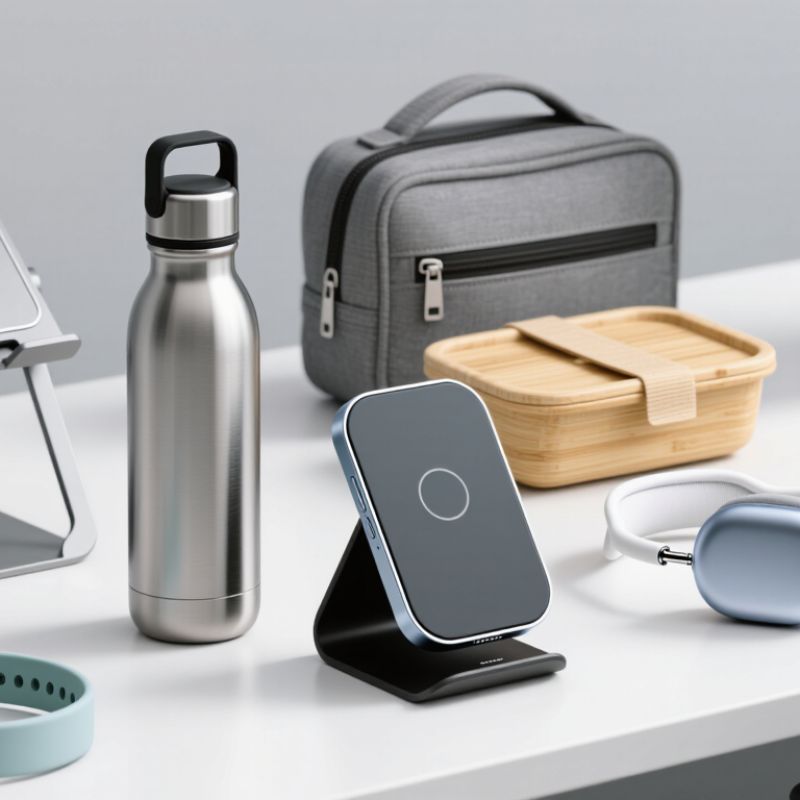
For 2026, the strongest promotional item categories will focus on daily usefulness, responsible sourcing, and lasting visibility. Sustainable everyday-carry products deserve attention, including recycled notebooks, refillable pens, insulated bottles, and compact tote bags. These items remain visible during commutes, meetings, and errands. In my experience, practical products earn more repeat use than novelty items. Yet sustainability claims require evidence, not attractive wording. Check material details, durability, packaging, and supplier documentation before placing a large order.
Technology accessories will also remain relevant. Cable organizers, multi-device stands, privacy covers, and wireless charging pads can support modern work routines. Choose products with clear compatibility information and reliable safety testing. A cheap accessory that fails quickly can damage trust. Keep it useful. Wellness categories offer another strong option, such as stretching bands, sleep masks, desk-friendly hydration tools, and small fitness towels. These products work best when they support a real activity rather than forcing a promotional message into someone’s routine.
Apparel and workplace items still have value, especially when designs feel subtle and comfortable. Lightweight outer layers, soft caps, desk mats, and laptop sleeves can provide repeated exposure without looking excessive. Personalization should remain simple, with readable placement and restrained colors. Event kits may combine a notebook, drinkware, badge holder, and local activity guide for a more complete experience. However, not every category suits every audience. Some choices will miss. Testing a small batch, gathering honest feedback, and reviewing actual usage can reveal problems that polished planning overlooks.
What Are the Best Promotional Items for 2026?
The Best Promotional Item Categories for 2026
Apparel, drinkware, writing instruments, and bags are established promotional categories. The percentages show historical U.S. consumer recall rates by item type, not a forecast or ranking of 2026 sales. Use them as one consideration alongside audience fit, usefulness, budget, and sustainability.
Source: ASI Global Ad Impressions Study. Recall rates shown: apparel 85%, drinkware 83%, writing instruments 81%, bags 80%.
Sustainable, Practical, and Technology-Enabled Product Features
What Are the Best Promotional Items for 2026?
The strongest promotional items will feel useful, responsible, and quietly intelligent. Recycled notebooks, refillable pens, and durable tote bags remain practical choices. Their value grows when materials have traceable sources and clear environmental information. Avoid vague claims like “100% green” without supporting evidence. Buyers now examine durability, repair options, and end-of-life disposal. A product used for years creates more value than a novelty item discarded quickly. I still overestimate how much technology excites people. Convenience matters more than technical complexity.
Tips: Choose items that solve daily problems. Add a small QR code for product care instructions. Use NFC features only when they improve access or engagement. Explain what data is collected. Obtain permission before sending messages. Test the product with real users before ordering in volume.
Technology-enabled products can include power banks with safety controls, desk lights with adjustable settings, or smart cards linking to useful resources. Select products with replaceable parts whenever possible. Check charging standards, battery information, and accessibility before purchase.
A digital feature should support the physical item, not distract from it. For example, a reusable bottle may connect to a hydration guide, but the bottle must still feel comfortable and leak-resistant.
Measure results through repeat use, engagement, and waste reduction. Numbers help, but they do not tell everything. A beautifully designed item can still fail if employees leave it in a drawer.
Budgeting, Customization, and Distribution Strategies
The best promotional item for 2026 is not automatically the cheapest one. It should fit the audience, campaign purpose, and available budget.
Start with a realistic cost ceiling. Include product prices, artwork, packaging, shipping, storage, and staff time. A reusable bottle may cost more than a pen, but it can earn repeated visibility. However, higher cost does not guarantee better results. I have seen attractive items remain unused because they were heavy, fragile, or difficult to carry. Test a small quantity before placing a large order. This reduces waste and exposes practical problems early. Leave a modest reserve for price changes or delivery delays.
Customization works best when it supports recognition without overcrowding the item. Use one clear message, a readable mark, and colors that remain visible under indoor lighting. Add a useful detail, such as a measurement scale on a notebook or a protective case for small electronics. Avoid printing campaign dates when the item should remain useful for years. Personalization can improve relevance, but it also increases production complexity and approval time.
Distribution needs the same planning as design. Give premium items to visitors who have meaningful conversations, not simply to everyone passing by. Place lightweight products near registration areas and keep fragile items away from crowded exits. For mailed packages, confirm addresses and test the packaging with a short drop check. Track quantities by location and audience type. The data may be incomplete, but it can reveal which items move quickly and which ones quietly stay in storage.