Top Pet Bed Foam Types for Global Buyers
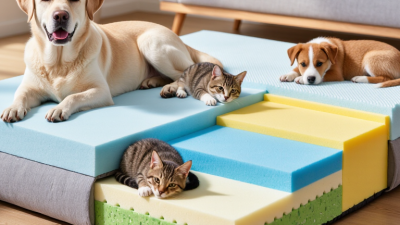
Choosing the right Pet bed foam is not a simple matter of softness. It affects posture, pressure relief, temperature, durability, and daily hygiene. Global buyers also face different shipping conditions, climate demands, safety expectations, and customer preferences. A plush bed may feel inviting in a showroom, yet collapse quickly under a large dog. A firm orthopedic foam may support joints better, but some older pets dislike its harder surface.
Veterinary rehabilitation specialist Dr. Darryl Millis expresses the core principle clearly: “A bed should support the body while allowing comfortable movement.” That idea guides this comparison of memory foam, polyurethane foam, latex, orthopedic foam, and cooling gel combinations. Memory foam usually contours around hips and shoulders. High-density polyurethane can offer dependable structure at a lower cost. Latex may feel springier and resist permanent flattening. Cooling layers can help in warm climates, though they cannot replace ventilation or a shaded sleeping area.
No foam wins every test. That is worth admitting. A product that performs well in Germany may feel too warm in Singapore. A lightweight design may reduce freight costs, but sacrifice long-term resilience. Buyers should examine foam density, recovery time, odor, cover washability, compression packaging, and documented material safety. Small details matter, including zipper strength and a non-slip base. The best choice balances animal comfort, supplier reliability, realistic budgets, and the conditions of the final market.

Pet Bed Foam: Definition, Purpose, and Key Performance Factors
Pet bed foam is the cushioning layer inside a pet mattress, mat, or travel bed. It supports the animal’s body while reducing pressure on joints and elbows. Common options include polyurethane foam, memory foam, latex foam, and layered constructions. Each type feels different under weight.
The right choice depends on pet size, age, sleeping habits, and local climate. A heavier dog may need high-density foam that resists permanent sagging. Older pets often benefit from pressure-relieving memory foam with a supportive base. Latex can provide responsive support and better airflow, but its firmness may not suit every animal. Small pets may prefer softer cushioning, though excessive softness can reduce stability.
Key performance factors include density, firmness, resilience, airflow, moisture resistance, and odor control. Buyers should check foam recovery after compression, especially when inspecting samples. A useful test is simple: press the surface firmly, then watch how quickly it regains shape. Slow recovery may indicate comfort, but not always lasting support. Foam can also feel warmer in humid regions, so ventilation matters. Removable covers help with cleaning, yet they cannot correct weak foam underneath.
Measurements should match the pet’s sleeping posture, not just its standing size. A bed that looks generous may feel cramped after the foam compresses. No foam is perfect. Performance can change with temperature, humidity, washing habits, and daily use. Reliable evaluation needs practical testing, clear specifications, and honest attention to these compromises.
Memory Foam: Pressure Relief, Support, and Comfort for Pets
Memory foam works by responding to a pet’s body heat and weight. It softens under pressure, then slowly returns to shape. This helps distribute load across hips, shoulders, and elbows. Older dogs often rest more easily on this surface. Cats may also enjoy the warm, contouring feel.
A useful bed usually combines a dense memory foam core with a washable outer cover. Dense foam supports heavier pets without collapsing quickly. Yet density alone does not guarantee comfort. I check whether the foam rebounds evenly after pressing it by hand.
A shallow, permanent dip is a warning sign. The bed should fit the pet’s full length, including stretched legs. Too small is common. It reduces the support benefit.
Memory foam can retain heat, especially in warm rooms or for thick-coated animals. Ventilated layers or a breathable cover may reduce this problem. I place the bed away from damp floors and inspect it weekly for odor, moisture, or flattening. Some pets dislike the slow-sinking sensation and need several days to adjust. That point is easy to overlook.
Foam may also feel too firm in cold conditions, so comfort should be judged in the pet’s actual sleeping space.
A veterinarian can advise on joint pain, but a bed cannot replace medical care.
Polyurethane Foam: Lightweight Structure and Everyday Use
Polyurethane foam is a practical choice for pet beds because its structure is light, resilient, and easy to handle. In my experience, a medium-density foam cushion supports everyday lounging without making the bed difficult to move. This matters for global buyers managing different room sizes, shipping limits, and customer preferences. The foam can be cut into simple rectangular shapes or layered for added comfort. It also works well with removable fabric covers.
Light structure helps during cleaning. A pet owner can lift the cushion, shake off loose hair, and place it near an open window. Foam does not usually absorb moisture as quickly as many loose-fill materials, but it is not waterproof. A protective inner cover remains important, especially for puppies, older pets, or animals with frequent accidents. Buyers should check density, compression performance, odor levels, and recovery after repeated use. Softness alone is not enough.
Daily comfort depends on the pet’s weight, sleeping position, and local climate. A very soft pad may feel pleasant at first, yet lose shape sooner under a heavier animal. I have also found that ventilation deserves more attention than many product descriptions suggest. Warm rooms can make dense foam feel less comfortable. That point is easy to overlook. Clear testing records and accurate material details help buyers compare products honestly, although no foam performs perfectly in every home.
Latex and Other Natural Foams: Resilience, Safety, and Sustainability
Latex foam gives pet beds a springy, supportive feel that resists permanent flattening. It suits older dogs, heavier breeds, and pets that change sleeping positions often. Natural latex also allows airflow through its open-cell structure. This can reduce heat buildup during warm nights. No foam is perfect. Poorly designed covers can still trap moisture and hair.
Safety depends on more than the word “natural.” Global buyers should request composition details, production records, and independent tests for harmful substances. A low-odor foam is preferable, but smell alone cannot prove safety. Look for washable covers, secure stitching, and foam protected from chewing. Check the edges. A firm core may support joints, yet excessive firmness can feel uncomfortable for small or thin-bodied pets.
Other natural foams, including plant-based blends, may reduce reliance on petroleum materials. However, their environmental value depends on farming, processing, transport, and product lifespan. Ask whether the foam contains synthetic additives and how its durability was measured. In practical sampling, I would press the same area repeatedly, inspect recovery, and compare moisture retention. A supplier’s sustainability statement should include evidence, not broad promises. Buyers should also review local labeling, chemical, and waste requirements before importing. A slightly higher purchase cost may be reasonable when the bed lasts longer, but durability claims still need verification.
| Foam Type | Typical Feedstock | Typical Density | Resilience & Support | Typical Service Life | Safety Considerations | Sustainability Profile | Best Pet-Bed Applications | Procurement Notes for Global Buyers |
|---|---|---|---|---|---|---|---|---|
| Natural Latex Foam | Rubber-tree latex, vulcanizing agents, stabilizers, and other processing additives | Approximately 60–95 kg/m³, depending on formulation and manufacturing method |
★★★★★ High elasticity, quick recovery, and strong resistance to permanent indentation |
Approximately 8–15 years with suitable use and maintenance | Usually low in volatile emissions when properly processed. May contain latex proteins that can cause sensitivity in susceptible animals or handlers. An outer cover is recommended. | Uses a renewable agricultural feedstock and generally has long product life. Finished latex foam is not automatically biodegradable because of vulcanization and added chemicals. | Premium orthopedic beds, pressure-relief mattresses, senior pets, and beds requiring long-term shape retention | Confirm latex content, foam density, firmness, odor, compression-set results, moisture protection, and independent emissions testing. Protect from prolonged heat and direct sunlight during storage. |
| Shredded Natural Latex | Cut or shredded pieces of natural latex foam, sometimes blended with latex fiber or other cushioning materials | Usually not directly comparable to molded foam; finished-fill bulk density commonly varies from approximately 40–80 kg/m³ |
★★★★☆ Resilient and adjustable; provides a more buoyant, less uniform feel than a solid slab |
Approximately 5–10 years, depending on fill containment and compression | Low-emission performance depends on the original foam and processing. Small particles should remain securely enclosed to prevent ingestion or inhalation. | Can make use of production off-cuts and reduce material waste. Recycling benefits depend on clean sorting and the absence of mixed-material contamination. | Removable-fill cushions, bolster beds, adjustable comfort layers, and replacement inserts | Specify fill particle size, dust level, liner construction, zipper security, fill migration resistance, and replacement-fill availability. |
| Plant-Oil Polyol Flexible PU Foam | Polyurethane foam containing a partial share of plant-derived polyols, commonly from vegetable oils | Approximately 25–45 kg/m³ |
★★★☆☆ Moderate resilience and cushioning; performance varies substantially with the formula |
Approximately 3–7 years in typical pet-bed use | Plant-derived content does not by itself confirm low emissions or chemical safety. Request finished-foam testing and ensure the cover prevents chewing and access to the foam. | Can reduce reliance on a portion of fossil-based polyols, but it remains a polyurethane material and is not automatically biodegradable or compostable. | Mid-range cushions, lightweight travel beds, crate pads, and products seeking partial bio-based content | Request the percentage of bio-based polyol, density, firmness, compression set, emissions data, and documentation on restricted substances. |
| Conventional Flexible PU Foam | Petrochemical-derived polyurethane polymers, additives, catalysts, and blowing agents | Approximately 20–35 kg/m³ for common pet-bed cushioning |
★★★☆☆ Available in a broad range of firmness levels; lower-density grades may lose height faster |
Approximately 2–5 years, depending on density, loading, and cover design | Finished-foam emissions and odor vary by formulation and curing. Use independent testing and keep the foam inaccessible to pets that chew bedding. | Consumes predominantly fossil-based raw materials and is difficult to recycle when bonded to fabric, zippers, adhesives, or mixed foam components. | Cost-sensitive beds, short-term products, travel mats, and replaceable support layers | Compare density rather than thickness alone. Request compression-set data, flammability information where applicable, emissions testing, and packaging requirements. |
| Viscoelastic PU Memory Foam | Specialized polyurethane formulation with viscoelastic additives and temperature-sensitive response | Approximately 40–85 kg/m³ |
★★★★☆ Excellent pressure distribution and contouring, but lower bounce and slower recovery than latex |
Approximately 5–10 years, depending on density and thermal conditions | Higher density can retain heat and may have noticeable initial odor. Allow adequate airing time and use a washable, breathable cover. | Usually fossil-based and not readily biodegradable. Longer service life can reduce replacement frequency, but end-of-life recycling is limited for mixed constructions. | Orthopedic beds, older pets, pets with joint discomfort, and pressure-sensitive sleeping surfaces | Specify density, indentation-force-deflection, recovery time, heat-management features, odor limits, and performance after repeated compression. |
| Latex–Coir Composite Cushion | Natural latex combined with coconut coir fiber or coir felt as a support layer | Highly variable; commonly approximately 70–140 kg/m³ for the combined structure |
★★★★☆ Firm, supportive, and breathable; less contouring than soft latex or memory foam |
Approximately 5–10 years when protected from moisture | Coir can retain moisture if poorly ventilated. A moisture-resistant, washable cover and adequate airflow are important in humid climates. | Combines renewable latex and agricultural fiber. Actual environmental performance depends on adhesives, backing fabrics, transport, and end-of-life separation. | Firm support beds, elevated platforms, heavy pets, and warm or humid environments with good ventilation | Verify coir moisture content, mold resistance, adhesive type, delamination resistance, odor, and dimensional stability during international shipping. |
How Global Buyers Compare Foam Types for Different Pet Needs
Global buyers should compare foam by the pet’s body weight, sleeping style, climate, and age. The American Pet Products Association reported that 66% of U.S. households owned a pet in 2023–2024. Demand is broad, but comfort remains individual. Light polyurethane foam suits smaller pets and moderate use. High-density polyurethane foam offers firmer support for larger dogs. Memory foam reduces pressure around hips and shoulders. It can, however, retain heat in warm rooms.
Latex foam feels springier and usually recovers quickly after compression. This helps active pets that change positions often. It may cost more and needs careful moisture protection. Buyers should request density, firmness, compression-set, and resilience data. ASTM D3574 test methods can support more consistent foam comparisons. A soft surface may look inviting, yet it can flatten quickly under a heavy dog. That is an easy mistake.
Climate changes the decision. FEDIAF’s 2024 report estimated 299 million pets across Europe, with pets living in very different household conditions. In humid areas, open-cell foam and removable, washable covers may improve drying. In colder homes, thicker memory foam can feel more comfortable. Still, product claims need verification. Ask for test dates, material safety documentation, and sample measurements. A 10-centimeter cushion may compress far below its advertised height. That detail deserves attention.
Top Pet Bed Foam Types for Global Buyers
Foam density is a practical comparison point: higher-density foams generally provide greater support and durability, while lower-density foams are typically lighter and more economical. The ranges below are indicative commercial values and vary by formulation, firmness, and manufacturing process.
How to read the chart: Conventional polyurethane foam is lightweight and cost-effective for everyday beds. Memory foam is commonly selected for pressure-relieving support. Latex offers resilient support and recovery, while EVA is often used where moisture resistance and easy cleaning are priorities. Density should be evaluated together with firmness, ventilation, cover materials, and the pet’s size and health needs.
Related Posts
-
2026 Top Pet Bed Foam Types for Global Buyers?
-
Best Acoustic Foam Solutions for Soundproofing Your Space?
-
How to Source Cooling Gel Foam Globally in 2026?
-
How to Choose the Best Home Decor Padding for Your Space?
-
How to Choose Sustainable Foam Materials for Your Business?
-
China Best Sleep Products for Sleep Quality Optimization?
Let's Work Together
The most innovative products come from the most innovative people - and for over 55 years our team has been propelled by curiosity and a steadfast dedication to inventing and creating the best foam formulations for our customers.