| Nominal Size | 72 inches, or approximately 183 cm, measured along the curved canopy edge | The stated 72-inch measurement normally refers to canopy arc, not the straight-line distance from one tip to the opposite tip. |
| Straight Span | Commonly about 60–63 inches, or approximately 152–160 cm | This is the practical width buyers should compare when estimating storage space, cart clearance, or side-by-side coverage. |
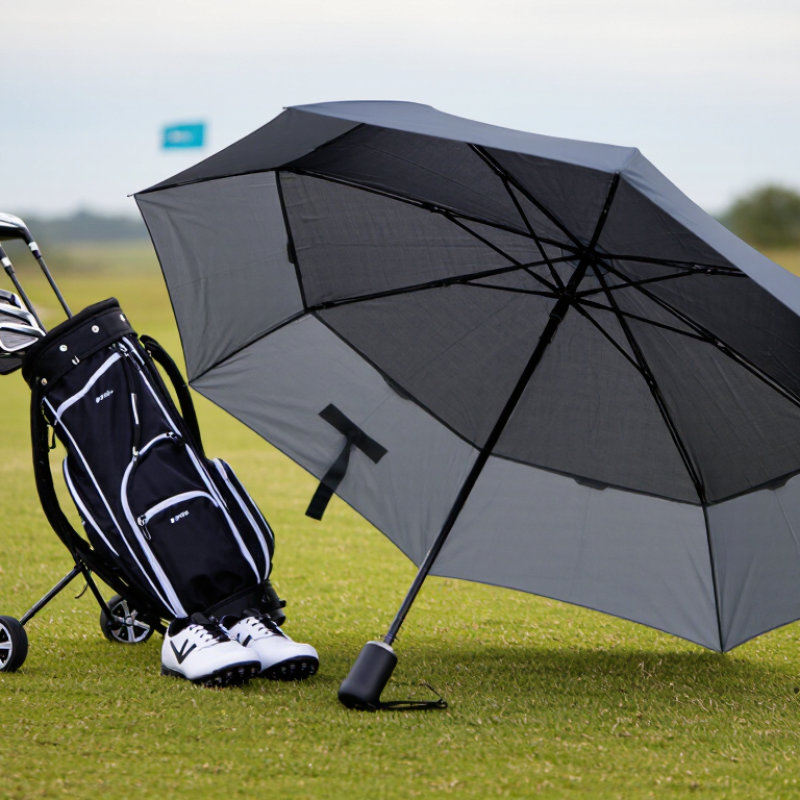
| Coverage Area | Approximately 28–31 square feet, or about 2.6–2.9 square meters, depending on canopy geometry | A canopy of this size can generally shelter two adults or a golfer with equipment more effectively than a standard personal umbrella. |
| Typical Canopy Shape | Round, vented, double-canopy, or multi-panel golf-style construction | Shape and venting influence wind stability, usable coverage, and the likelihood of the canopy inverting. |
| Canopy Fabric | Usually polyester or nylon with a water-resistant finish; polyester is widely used for durability and color retention | Fabric quality affects drying time, resistance to ultraviolet exposure, color stability, and long-term appearance. |
| Frame Materials | Fiberglass ribs are common for flexibility; steel or aluminum shafts may be used according to the design | Fiberglass can flex under gusts and resist corrosion, while metal components may provide rigidity but can add weight or corrode if poorly protected. |
| Wind Performance | No universal wind rating; performance depends on frame design, venting, assembly, and test method | Buyers should request a documented test method rather than relying only on terms such as “windproof” or “stormproof.” |
| Opening Mechanism | Manual opening is simple and durable; automatic opening improves convenience but adds mechanical parts | The preferred mechanism depends on user expectations, replacement-part availability, and the target price level. |
| Closed Length | Often approximately 39–42 inches, or 99–107 cm, for a full-length 72-inch model | Closed length affects carton size, warehouse storage, parcel shipping, and compatibility with golf-bag holders. |
| Typical Weight | Approximately 1.5–2.5 lb, or 0.7–1.1 kg, depending on frame and shaft materials | Lower weight improves portability, while heavier construction may offer a more substantial feel but increases carrying and shipping costs. |
| Handle Design | Common options include EVA foam, rubberized polymer, molded plastic, or contoured ergonomic handles | A comfortable, non-slip handle is important when the umbrella is used for extended periods or in wet conditions. |
| UV Protection | UV performance varies by fabric, coating, color, and testing standard; a verified UPF or UV-blocking claim is preferable | Sun protection should be supported by test documentation because water resistance alone does not prove ultraviolet protection. |
| Water Resistance | Most golf umbrellas use tightly woven fabric and a durable water-repellent finish; no umbrella is permanently waterproof | Buyers should compare water-shedding performance, seam construction, and care instructions rather than fabric labels alone. |
| Portability and Storage | Full-length construction provides a large canopy but is less compact than folding umbrellas | Confirm golf-bag sleeve dimensions, vehicle storage space, and shipping-carton requirements before purchasing in volume. |
| Best Use Case | Golf courses, outdoor spectators, walking events, sporting facilities, and shared rain or sun coverage | The 72-inch format is designed for broad coverage and stability, not for compact everyday carry. |