


7 Tips for Buying Permeable Bulk Bags?
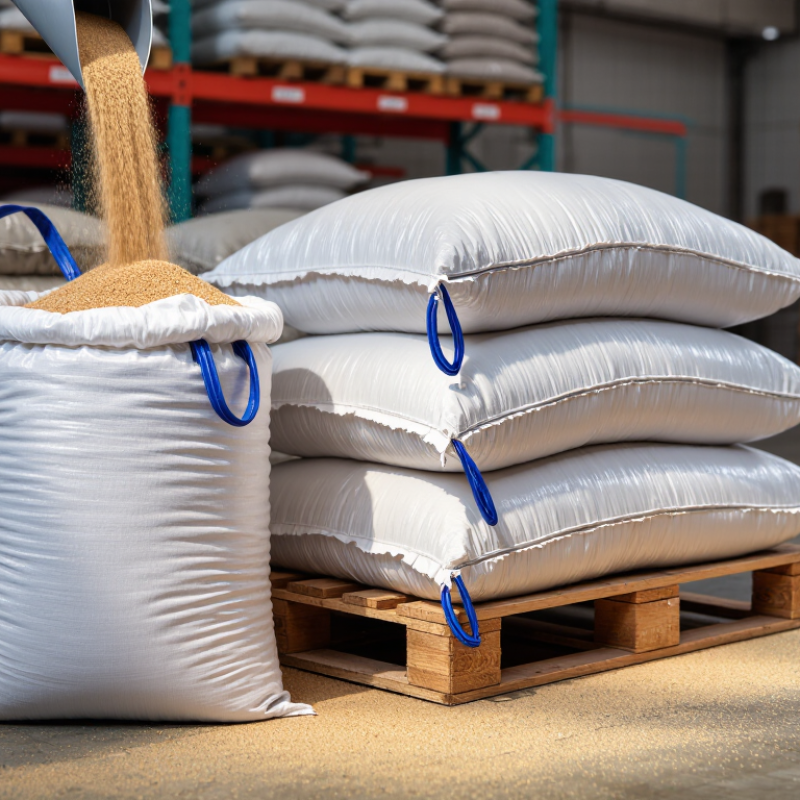
Permeable Bulk Bags are becoming a practical choice for agricultural, mineral, and construction materials that require controlled airflow. Industry reports show why. Grand View Research estimated the global flexible intermediate bulk container market at more than USD 7 billion in 2023. Smithers also identifies demand for lighter, recyclable, and performance-focused flexible packaging through 2028. These figures are useful, but they do not choose the right bag for your material.
“The purpose of packaging is to ensure safe delivery of a product to its destination,” explains packaging educator Walter Soroka. That principle matters when selecting fabric porosity, liner design, lifting loops, and discharge features. A bag holding dry grain may need very different ventilation from one carrying dusty minerals. Moisture, particle size, filling speed, storage height, and transport vibration all affect performance. Small details matter.
This guide shares seven practical tips for buying Permeable Bulk Bags with greater confidence. It covers airflow, fabric construction, safe working load, seam quality, contamination control, certification, and supplier evaluation. Some decisions remain imperfect. Laboratory data cannot fully reproduce a humid warehouse or a rough loading dock. Ask for test reports, inspect samples, and challenge vague specifications. A lower price can look attractive until leakage, caking, or damaged loops interrupts operations. Reliable purchasing depends on evidence, not attractive photographs.
Define Permeability Needs: Airflow Ratings in m³/m²/min
Moisture control begins with a measurable permeability target. For bulk bags, airflow is commonly expressed in m³/m²/min, based on fabric area and pressure difference. ISO 9237 and ASTM D737 describe air-permeability testing methods, but their pressure settings are not identical. Compare results only when test conditions match.
A bag tested at 150 m³/m²/min may behave very differently from one rated at 40 m³/m²/min. Fine powders often need lower airflow to limit product loss, while damp agricultural materials may need more ventilation. A 2023 FAO post-harvest review reports that poor ventilation increases condensation and mold risk in stored crops, especially when moisture migration is uncontrolled. The exact airflow requirement still depends on particle size, filling temperature, and storage duration.
In field trials, hold a filled bag on a pallet and inspect its inner walls after 24 to 72 hours. Look for fogging, clumping, dust escape, and uneven settling. Then compare two airflow ratings under the same conditions. This practical check can expose a weak specification. I have seen “high permeability” treated as automatically better; it is not. Too much airflow may carry fines through the weave or accelerate moisture exchange. Record the result, even if the first target needs revision.
Match Safe Working Load: Typical FIBCs Handle 500–2,000 kg
Permeable bulk bags need careful SWL selection. The most important buying check is the safe working load. Typical FIBCs handle 500–2,000 kg, but that range is not a promise. Read the rating on the specification sheet and bag label. Then compare it with the filled product, not the empty container. Dense minerals can overload a bag faster than lightweight agricultural materials. Do not guess.
Check seven practical details: product weight, bulk density, bag dimensions, lifting-loop design, discharge method, seam quality, and handling equipment. A bag rated for 1,000 kg may not suit repeated forklift movement. Ask for test records and clear instructions for filling, lifting, and storage. The rating should match real warehouse conditions, including sudden movement and uneven loading.
Permeability adds another decision. Ventilated fabric can release air and reduce pressure during filling, but it may allow moisture or fine dust to enter. Confirm the fabric construction and liner arrangement. During trial loading, inspect stretched seams, distorted corners, and strained loops. These details often reveal problems earlier than paperwork. A higher SWL is not automatically safer; choosing the right rating is safer. I would leave a practical margin, even when the calculations appear acceptable.
7 Tips for Buying Permeable Bulk Bags? - Match Safe Working Load: Typical FIBCs Handle 500–2,000 kg
| Tip | Buying Dimension | Typical, Useful Data | Why It Matters | What to Confirm Before Ordering |
|---|---|---|---|---|
| 1 | Match the Safe Working Load | Common FIBC safe working loads range from 500 to 2,000 kg. Select a rated capacity above the actual product weight, while keeping the bag within its stated fill volume. | Overloading can damage the fabric, seams, lifting loops, or discharge components and may create a serious handling hazard. | Specify the product weight, bulk density, filling volume, and the required SWL. Never treat the maximum volume as the maximum weight. |
| 2 | Check the Safety Factor | Many reusable or transport FIBCs are designed with a 5:1 safety factor; some applications require 6:1 or a dedicated one-trip design. | The safety factor relates the tested breaking load to the declared SWL and helps account for handling stresses when the bag is used correctly. | Request the design safety factor, test certificate, and clear instructions covering lifting, stacking, storage, and reuse. |
| 3 | Select the Right Permeability | Uncoated woven polypropylene allows air exchange. For dusty powders, choose a controlled-permeability fabric or add a suitable liner rather than relying on an open weave alone. | Breathability can help release trapped air during filling and reduce condensation, but excessive air passage may increase dust emissions or moisture exposure. | Ask for the fabric construction, coating status, air-permeability specification or test method, and the intended material type. |
| 4 | Verify Fabric and Seam Construction | A typical FIBC uses woven polypropylene fabric with reinforced stitching at stress points. Fabric basis weight often falls approximately within 140–220 g/m², depending on design and load. | Fabric strength, seam quality, and reinforcement determine resistance to tearing, abrasion, and load transfer during filling and lifting. | Confirm fabric grade, seam type, corner reinforcement, lifting-loop attachment, and inspection requirements for visible defects. |
| 5 | Choose Practical Dimensions | Common external sizes are approximately 850–950 mm wide, 850–950 mm long, and 900–1,800 mm high. Actual dimensions should follow the product’s bulk density and handling equipment. | Correct dimensions improve filling efficiency, pallet stability, warehouse utilization, and compatibility with forks or lifting frames. | Provide the filling and discharge height limits, pallet footprint, warehouse clearance, and forklift or crane requirements. |
| 6 | Match the Top and Bottom Design | Common options include open top, duffle top, filling spout, flat bottom, and discharge spout. Discharge outlets are often designed with ties or closures for controlled emptying. | The correct inlet and outlet reduce dust, prevent product loss, and make the bag compatible with the filling and discharge process. | Specify the filling machine, required filling speed, discharge method, spout diameter, spout length, closure style, and liner compatibility. |
| 7 | Consider Product, Environment, and Certification | For food, pharmaceutical, hazardous, static-sensitive, or moisture-sensitive materials, requirements may include clean manufacture, antistatic construction, dust control, or a certified liner. FIBCs should be stored dry and protected from prolonged UV exposure. | Product contact, static electricity, moisture, contamination, and ultraviolet exposure can affect safety, product quality, and service life. | State the product classification, contact requirements, humidity and temperature conditions, UV exposure, grounding method, and any applicable UN or industry certification needs. |
Verify Safety Factors: Choose 5:1 or 6:1 Construction Under ISO 21898
When buying permeable bulk bags, verify the safety factor before comparing fabric color, loops, or price. ISO 21898 defines the testing framework for flexible intermediate bulk containers carrying non-dangerous goods. A 5:1 bag has a minimum breaking force five times its safe working load. A 6:1 design provides a wider margin for repeated handling, lifting variation, and storage stress.
That margin matters in real warehouses. The European Chemicals Agency’s guidance on bulk material handling emphasizes risk assessment, secure lifting, and packaging integrity. Industry technical guidance from the Flexible Intermediate Bulk Container Association also links safe performance to rated load, construction type, and documented testing. Ask for the bag’s safe working load, test certificate, seam details, and inspection records. Do not accept “heavy-duty” as evidence.
Permeability adds another decision. An uncoated fabric can release trapped air during filling, but fine powders may sift through seams. A liner can improve containment, though it may slow ventilation and raise static-control concerns. Choose 5:1 for controlled, single-trip applications when the supplier’s test data supports it. Choose 6:1 where bags face frequent movement, uneven lifting, or uncertain site conditions. I would still inspect every bag. Standards reduce risk, but damaged loops, wet fabric, or poor stacking can defeat a strong design. Verify the actual test basis, not only the printed ratio.
For a bulk bag with a safe working load (SWL) of 1,000 kg, a 5:1 construction requires a minimum breaking load of 5,000 kg, while a 6:1 construction requires 6,000 kg. These values are calculated safety-factor multiples for comparison; final selection should be confirmed through design review and testing in accordance with ISO 21898.
Select Fabric, Liner, and Dimensions for Product Protection
7 Tips for Buying Permeable Bulk Bags
Select Fabric, Liner, and Dimensions for Product Protection
Tip 1: Match the fabric to the product. A tighter weave helps contain fine particles, while an open weave improves airflow. Tip 2: Check fabric strength, coating, and seam quality. Woven polypropylene can perform well, but weak stitching may still cause failure. Tip 3: Consider moisture exposure. If the product must breathe, avoid an overly sealed structure. If humidity is a concern, use a suitable liner or coated fabric.
Tip 4: Choose the liner according to product sensitivity. A loose liner can protect against dust, while a bonded liner may reduce movement during filling. Tip 5: Confirm liner thickness and seal quality. Small pinholes are easy to miss. Request sample testing when cleanliness matters. Tip 6: Review static-control needs for dry powders and sensitive environments with a qualified supplier. Do not rely on assumptions. Tip 7: Measure dimensions from the actual filling process. Check the pallet footprint, filling height, discharge space, and lifting-loop position.
A bag that fits the warehouse may not fit the filling frame. Leave practical freeboard above the product. I once saw a correctly specified bag perform poorly because its liner folded across the outlet. Samples also have limits. Test the filled bag, not only the empty one. Ask for load-test records, fabric specifications, and inspection details. A clear specification reduces surprises, although it cannot replace a realistic trial.
Check Testing, Certification, Moisture Control, and Discharge Design
Tip 1: Check testing and certification before comparing prices. Ask for recent test reports covering fabric strength, seam performance, lifting loops, and safe working load. The report should identify the tested construction, not just a general product family. Confirm the laboratory, test date, and sample details. A certificate without traceability is weak evidence. I have seen paperwork look impressive while describing a different bag design. Do not guess.
Tip 2: Treat moisture control as a design requirement, not an optional feature. Review the fabric coating, liner structure, closure method, and storage conditions. Fine powders can absorb humidity through small openings, especially during loading or transport. Request moisture transmission data when the material is sensitive. Inspect bags for pinholes, loose stitching, and damaged liners before use. Moisture changes everything. In practice, buyers sometimes focus on waterproof fabric and overlook condensation inside the package. That mistake deserves more attention.
Tip 3: Match the discharge design to the material and handling equipment. A bottom spout may support controlled emptying, while a full-open base can release contents rapidly. Confirm the spout diameter, closure type, outlet length, and operator access. Test the bag with the actual powder or granule when possible. Flow behavior can change with humidity, particle size, and compression. I once underestimated bridging in a fine material; the bag passed basic inspection but discharged poorly. A small trial can reveal more than a polished specification sheet. Choose a design that workers can operate safely and consistently.
Article Source:
Let's Work Together
The most innovative products come from the most innovative people - and for over 55 years our team has been propelled by curiosity and a steadfast dedication to inventing and creating the best foam formulations for our customers.