




2026 Best Food Sealing Machine for Global Buyers?

Choosing the right Food Sealing Machine in 2026 requires more than comparing prices or glossy product photos. Global buyers need dependable sealing, stable output, and clear technical evidence. A machine that performs well in a factory showroom may struggle in a humid warehouse or during an eight-hour production shift.

This guide examines practical factors that influence long-term value. These include sealing temperature, pressure control, conveyor speed, bag material, power compatibility, and cleaning access. It also considers stainless-steel construction, spare-parts availability, operator safety, and supplier support. For example, a small snack producer may need a compact continuous band sealer, while a frozen-food facility may require stronger sealing performance at lower temperatures. The correct choice depends on the product, package size, production volume, and working environment.

Reliable purchasing decisions should be supported by test samples, operating videos, technical drawings, and written warranty terms. Buyers should ask suppliers to seal their actual packaging, not only standard bags. That small test can reveal wrinkles, leaks, weak edges, or excessive heat. No machine is perfect. Some product comparisons remain incomplete when supplier data is limited or independently verified testing is unavailable. Careful buyers should acknowledge this gap and request clearer evidence before placing an order. The best Food Sealing Machine is not always the fastest or cheapest model. It is the one that delivers consistent seals, manageable maintenance, and practical support across its expected service life.
2026 Best Food Sealing Machine for Global Buyers?

What Is a Food Sealing Machine and How Does It Work?

A food sealing machine closes a bag, pouch, or tray to protect food from air, moisture, and handling. It usually uses controlled heat to soften a plastic sealing layer. Pressure then joins the layers into one continuous seam. Some machines also remove air before sealing. This process can slow oxidation, reduce leakage, and support cleaner storage.

The working cycle is simple but precise. The operator places the open package between heated jaws. The jaws press the material for a set time. Heat, pressure, and cooling create the final seal. Impulse sealers heat only during contact, while constant-heat models suit thicker films. Vacuum sealers add air extraction before closing the package. Timing matters. Excessive heat can wrinkle or burn the film.

From practical testing, the seal should be checked by touch, sight, and a gentle pull. A smooth, even seam is a useful sign, but appearance alone can mislead. A tiny channel may allow air or liquid to pass. Product crumbs near the sealing area cause frequent failures. Operators should keep the jaws clean and test different temperatures with the actual packaging film. One setting rarely works for every pouch. That limitation deserves attention. A reliable machine also needs stable temperature control, adjustable pressure, and accessible replacement parts. Food-contact surfaces should be easy to inspect and clean.

Which Types of Food Sealing Machines Suit Different Products?

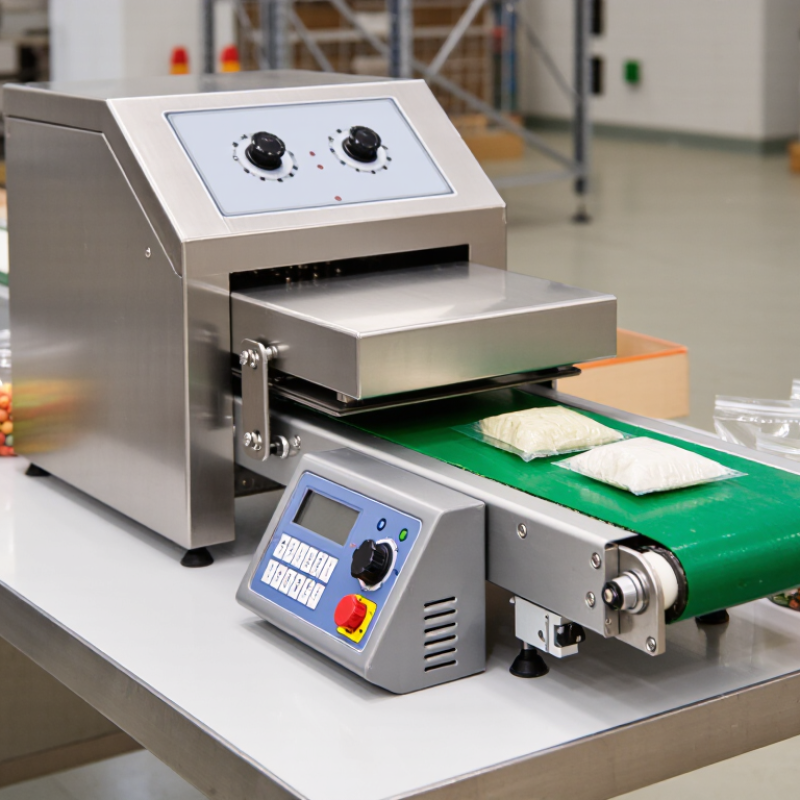
Food sealing machines should match the product’s shape, moisture, and packaging material. For dry goods such as rice, nuts, or powdered ingredients, continuous band sealers can close preformed bags quickly. They suit steady production, but dusty film edges may weaken the seal. Keep the sealing area clean.

Fresh meat, cheese, and prepared meals often need tray sealers. These machines press film over a filled tray, with options for vacuum or modified-atmosphere packaging. Vacuum chamber machines work well for products packed in flexible pouches, including marinated foods. Liquids can spill during handling, though, so pouch position and vacuum settings matter.

For snacks and frozen foods, vertical or horizontal form-fill-seal machines create bags from roll film and seal them around measured portions. Vertical systems often handle loose products, while horizontal systems suit bars, biscuits, and other items that hold their shape. Test real samples before choosing. A film that seals neatly on an empty machine may wrinkle around sharp edges or oily crumbs. Heat, pressure, and dwell time all affect seal strength, and small adjustments can make a visible difference. Also check whether operators can clean product-contact areas without awkward disassembly. That detail is easy to overlook.

Food Sealing Machine Suitability by Product Type

Indicative suitability ratings (1 = limited fit, 5 = strong fit) based on common packaging formats and product characteristics. Actual performance depends on the packaging material, package design, and production requirements.

What Features Matter When Comparing Machines in 2026?

When comparing food sealing machines in 2026, start with the package, not the advertised speed. A machine must seal the actual film or pouch reliably, even when product residue reaches the seal area. Check seal width, temperature control, pressure adjustment, and cooling time. Ask suppliers to test your own packaging materials and filled products. Watch the seal form. Then inspect it after cooling.

Small details matter. A clear control panel, quick changeovers, and accessible cleaning points can save time during daily production. Match the machine’s rated output to your real operating pace, including loading and inspection. Faster is not always better. The FAO’s 2023 report, The State of Food and Agriculture, estimated that 13.2% of food was lost between harvest and retail in 2021. Sealing equipment cannot prevent every source of loss, but consistent package closure can help protect products during handling and storage. Ask for documented seal testing, spare-parts availability, and operator training. I would also leave room for doubt: a successful sample test does not guarantee identical results across every shift or film batch. Test under realistic conditions before committing.

2026 Best Food Sealing Machine for Global Buyers? — What Features Matter When Comparing Machines in 2026?
Machine Type Best Suited For Typical Packaging Format Key Strengths Important Limitations Features to Compare Buyer Fit
Impulse Heat Sealer Small batches, sampling, farm shops, and light-duty packing Open-ended, heat-sealable plastic bags Compact, relatively simple to operate, and typically heats only during the sealing cycle Manual operation limits throughput; seal quality depends on correct settings and operator technique Seal length, seal width, adjustable heat time, replacement elements, and compatibility with the intended film Low-volume operations prioritizing a small footprint and low initial complexity
Continuous Band Sealer Repeated sealing of pre-made bags at steady production rates Plastic or laminated bags compatible with the machine’s sealing system Conveyor-fed sealing can provide more consistent throughput than hand-operated impulse sealing Does not form or fill bags; some films require specific temperature, pressure, and speed settings Horizontal or vertical configuration, conveyor speed, temperature control, date coding options, and service access Small and medium producers packing multiple bags per production run
Chamber Vacuum Sealer Meat, cheese, prepared foods, and other products packed in vacuum-compatible pouches Flexible vacuum pouches placed inside a chamber Evacuates air from the chamber and pouch; often suitable for liquids or moist products when correctly operated Requires chamber-compatible pouches; chamber size limits product dimensions and batch size Chamber dimensions, pump capacity, sealing-bar length, cycle settings, oil or maintenance requirements, and available power supply Food businesses needing repeatable vacuum pouch packaging in batches
Nozzle-Type Vacuum Sealer Vacuum packing larger or varied pouch sizes in production settings Flexible bags evacuated through a nozzle Can handle pouch sizes that may not fit a small chamber; machine layout can suit continuous workflows Product residue near the nozzle can affect operation; performance depends on pouch, product, and machine setup Nozzle design, evacuation method, sealing-bar length, cleaning access, cycle control, and intended product range Operations requiring flexibility across pouch sizes and frequent production runs
Tray Sealer Ready meals, fresh produce, meat, seafood, and portioned foods Rigid or semi-rigid trays sealed with a lidding film Creates a neat, consistent package; some systems support modified-atmosphere packaging when configured for it Requires compatible trays and film; tooling or change parts may be needed for different tray formats Tray dimensions, number of trays per cycle, changeover time, film compatibility, gas-flush capability, and tool availability Producers presenting portioned food in trays or using controlled-atmosphere packaging
Thermoforming Packaging Machine High-volume packaging of foods in formed flexible or semi-rigid packs Packages formed from a roll of bottom web and sealed with a top web Integrates forming, loading, sealing, and cutting into a production line Higher equipment and installation complexity; requires suitable facilities, tooling, and trained operators Line speed, forming depth, web width, tool-change time, loading method, gas-flush options, and line integration Large-scale operations with sustained output and standardized package formats
Rotary Vacuum Packer Higher-throughput vacuum packing of compatible pouch products Flexible pouches processed through rotating stations Multiple stations can support higher output than a single manual chamber cycle Requires more floor space, setup, and maintenance than basic tabletop equipment Station count, pouch dimensions, output under the intended product conditions, cleaning access, and maintenance support Established food processors seeking a more automated vacuum-packing workflow
Selection Check Before comparing quotations, confirm the product type, package material, required output, seal width, package dimensions, cleaning conditions, available electrical supply, local safety requirements, spare-parts access, and operator training. Treat stated production rates as model- and application-specific; request a test using the intended product and packaging material.
Important Note The descriptions above are general comparisons, not guaranteed specifications. Actual capability, output, utility requirements, and compatibility vary by machine configuration, packaging material, product characteristics, and operating conditions. Verify technical data and food-contact compliance for the destination market before purchase.

How Should Global Buyers Assess Safety, Standards, and Shipping?

For a food sealing machine, safety starts with the product path and the operator’s hands. Ask for documentation showing that food-contact surfaces suit the intended use, and check the exact machine model against applicable electrical and machinery requirements in the destination market. Certificates are useful, but verify their scope and issuing details; a document for a similar model may not cover your machine. Small detail, big difference.

Inspect practical safeguards, too. Are hot sealing jaws guarded? Can an operator reach an emergency stop without leaning across the work area? Request clear operating and cleaning instructions, plus a demonstration using the films and containers you plan to seal. If the seal weakens after repeated cycles, ask how temperature and pressure are monitored. Paperwork cannot replace a real production trial.

Shipping needs equal scrutiny. Confirm crate dimensions, gross weight, moisture protection, and whether the machine must remain upright. A long sea journey can expose equipment to damp air and rough handling. Check that voltage, frequency, plug arrangements, and spare-part availability fit your site before shipment. Get a packing list and delivery inspection procedure in writing. I would still allow time for local review; even a careful checklist can miss a site-specific issue.

How Can Buyers Choose a Machine for Their Production Needs?

Choosing the best food sealing machine starts with your product, not its advertised speed. A small bakery sealing 500 pouches daily needs different equipment from a frozen-food plant running two shifts. Measure bag material, width, filling temperature, moisture, and target output before requesting quotations. Do not guess. During trials, place real products inside test pouches and inspect seals after cooling, stacking, and transport. A clean, even seal should resist gentle pulling without cutting the film.

Match the machine design to your workflow. Continuous band sealers suit steady pouch production, while intermittent systems may offer better control for variable bag sizes. Check sealing width, temperature range, conveyor load, and changeover time. A ten-minute adjustment repeated thirty times daily can erase a claimed capacity advantage. For powders, ask how the machine controls dust near the sealing area. For oily or wet products, request leakage tests, not visual checks alone. Operators also need accessible controls, guarded hot surfaces, and clear cleaning procedures.

Global purchasing requires more than voltage compatibility. Confirm power frequency, plug configuration, spare-part availability, manuals, and remote troubleshooting arrangements. Verify that contact materials meet applicable food-safety requirements in your market. Ask for documented test results, not only sample videos. A reliable supplier should state film tolerances and maintenance intervals clearly. Calculate waste, energy use, labor, and service costs over one year. The cheapest machine may become expensive when seals fail during humid shipping seasons. I would leave room for uncertainty. Real production is rarely as tidy as a showroom trial.

Let's Work Together

The most innovative products come from the most innovative people - and for over 55 years our team has been propelled by curiosity and a steadfast dedication to inventing and creating the best foam formulations for our customers.